What the Weather Here Does to It
Moline sits in a cold, moderate climate band
Which means the garage door hardware on most houses here goes through a real freeze-thaw cycle every winter. Steel torsion springs lose tension as temperatures drop, and on a cold morning that difference is enough to turn a door that worked fine in October into one that groans, sticks halfway, or won't lift at all by January. Nylon rollers get brittle in the cold and crack at the edges where you can't see it from the floor. Lubricant that was fine in summer thickens up and stops doing its job right when the door needs it most.
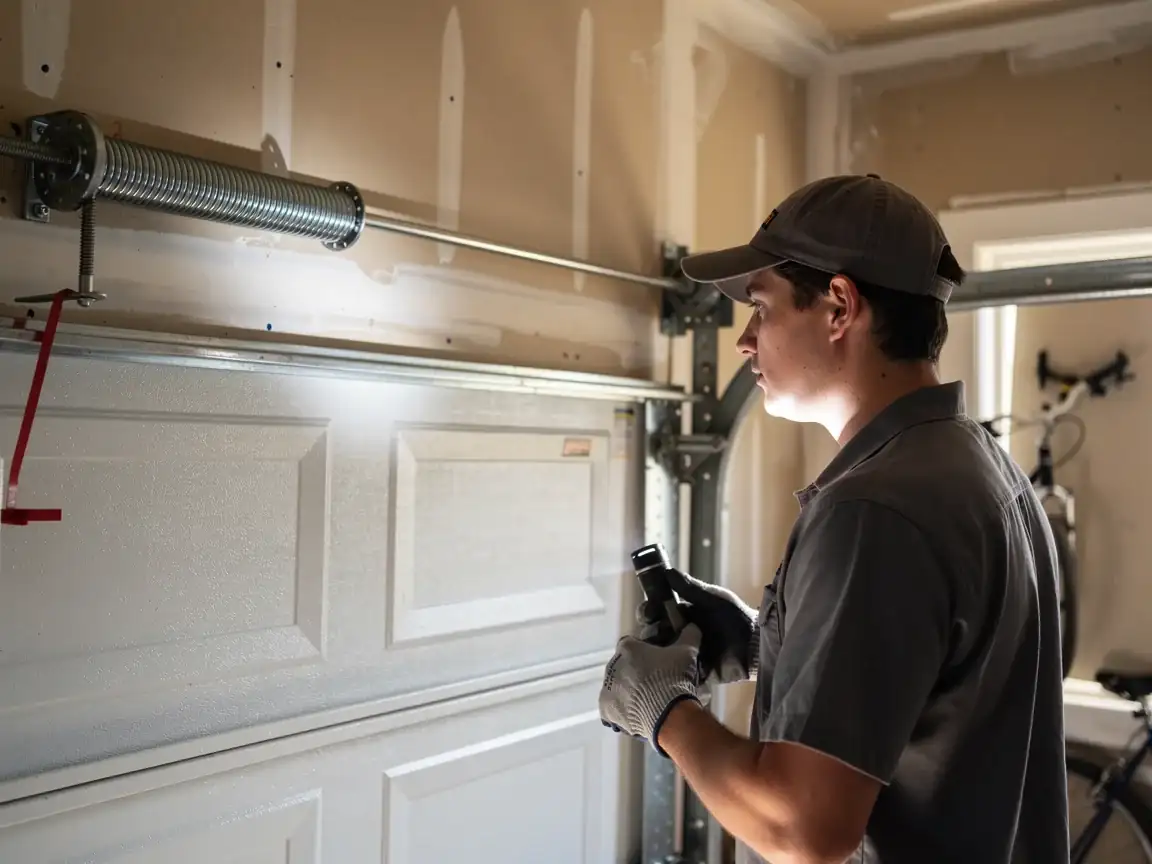
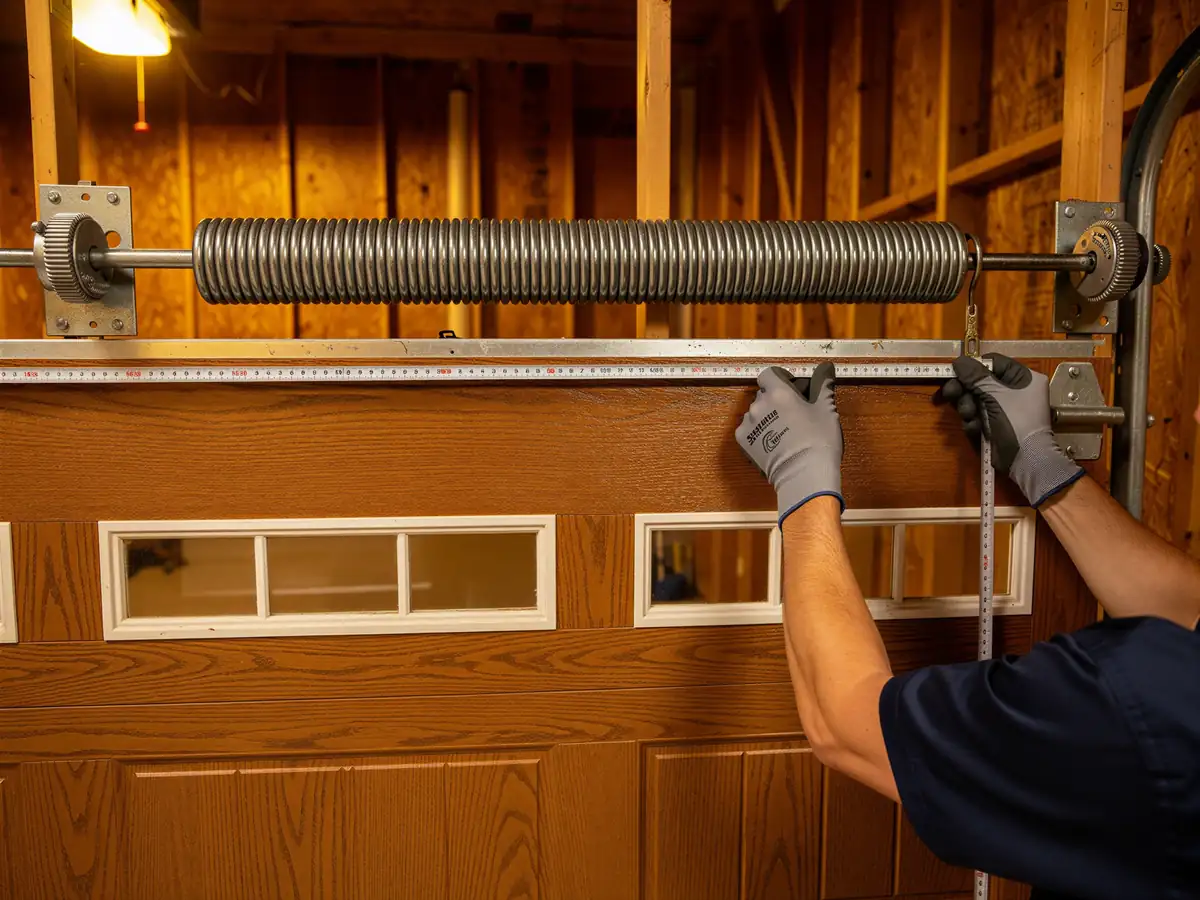
A service call in this climate starts with checking spring tension against the door's actual weight
Not just whether the door moves. We check the weatherstripping at the bottom panel too - with winters here, a gap that lets in cold air also lets in the moisture that rusts cable and hardware over a season. None of this is dramatic work. It's the kind of check that matters because of what the cold does slowly, not because anything broke overnight.
What It Costs
We don't have a flat number to put here, and we'd rather tell you that than make one up. What a call costs depends on what's actually wrong - a cable off a drum is a different job than a broken torsion spring on a double door, and parts availability varies by door age. What we can tell you is what drives the cost on a typical Moline house: this area's housing was mostly built between 1952 and 1998, with a lot of it going up in the 1960s and '70s, so a good share of the openers and spring systems we see are either original equipment near the end of their life or a first-generation replacement that's now old itself.
Household income here runs a median around $70,000, and most of the jobs we price reflect that - repair before replacement when repair actually solves the problem, and a straight answer when it won't. If a spring has already stretched its coils or a shaft is pitted with rust, patching it is a short-term fix that costs you twice.
Checking It Yourself
Before you call anyone, there are a few things worth a look, especially on a house from this area's 1960s-70s building wave. Pull the manual release and lift the door by hand - if it's heavy or drops instead of holding its position, the spring has lost tension and that's not a DIY fix. Look at the bottom corners of the door for rust bleed, which shows up faster here after a winter with road salt and slush sitting against the panel.
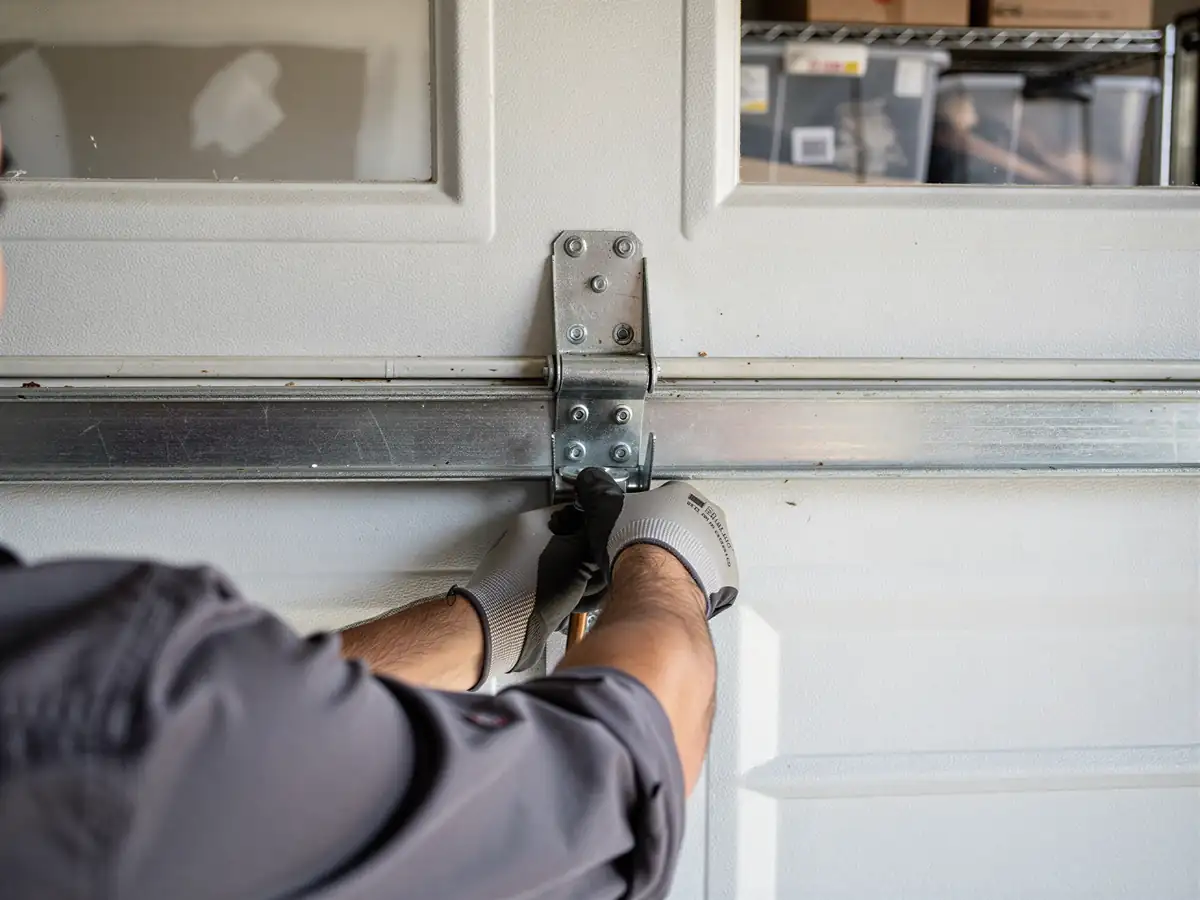
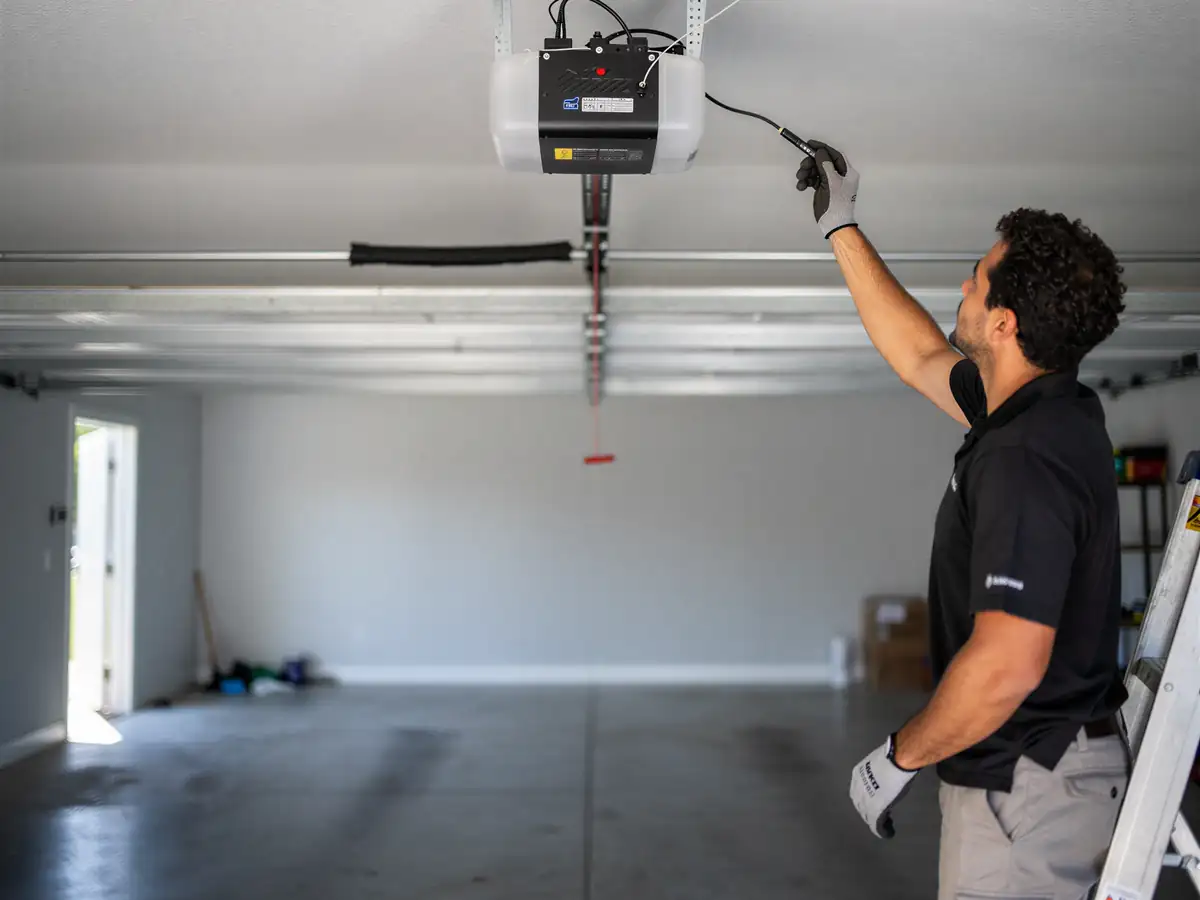
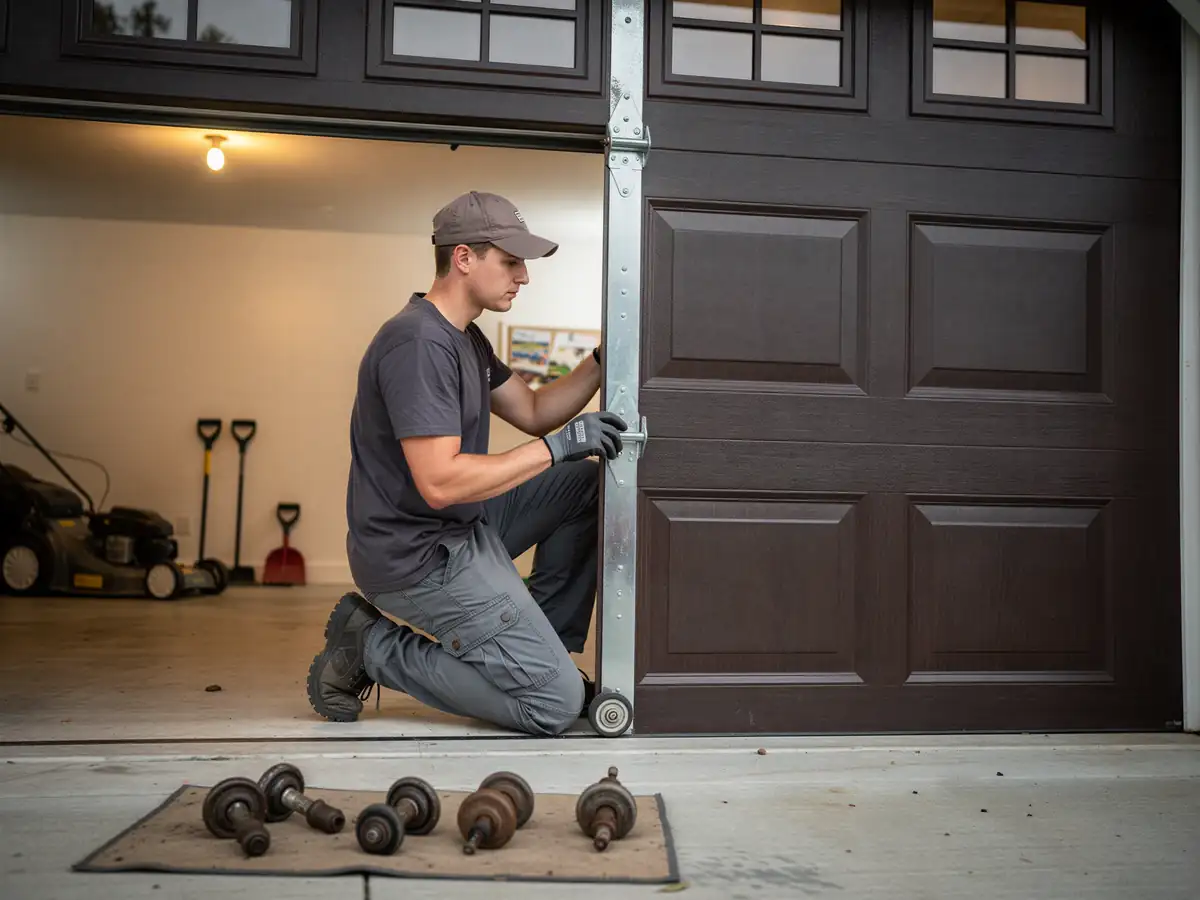
Check the track brackets for play - on doors from this era, the brackets are often the original screws into aging jamb wood, and decades of seasonal temperature swings loosen them. If the opener strains, reverses, or makes a grinding noise partway through the cycle, that's usually a drum, cable, or roller issue, not the motor itself, no matter what it sounds like. We won't tell you to replace an opener because it's noisy - noise and failure are two different things, and a lot of noisy openers have years left in them.
What Is Going On
Most of the service calls we run in and around Moline trace back to the same thing
A door and spring system that was sized for a house built decades ago, asked to keep working through another cold winter without anyone having looked at it. With housing across this area mostly dating to the 1950s through the 1990s, and plenty of it from the 1960s and '70s specifically, a lot of what we find is original torsion hardware that was never rated for the number of cycles it's now put through, paired with an opener that's been swapped once or twice since.
The area runs from Rock Island Arsenal a few miles out to Coal Valley, Rock Island, Milan, and East Moline nearby, and the door problems don't change much house to house
Cold-weather spring fatigue, rusted track hardware, and openers outliving the springs they were matched to. What changes is how long a homeowner waits before calling, and that's usually the difference between a repair and a full replacement.