Why It Happens Here
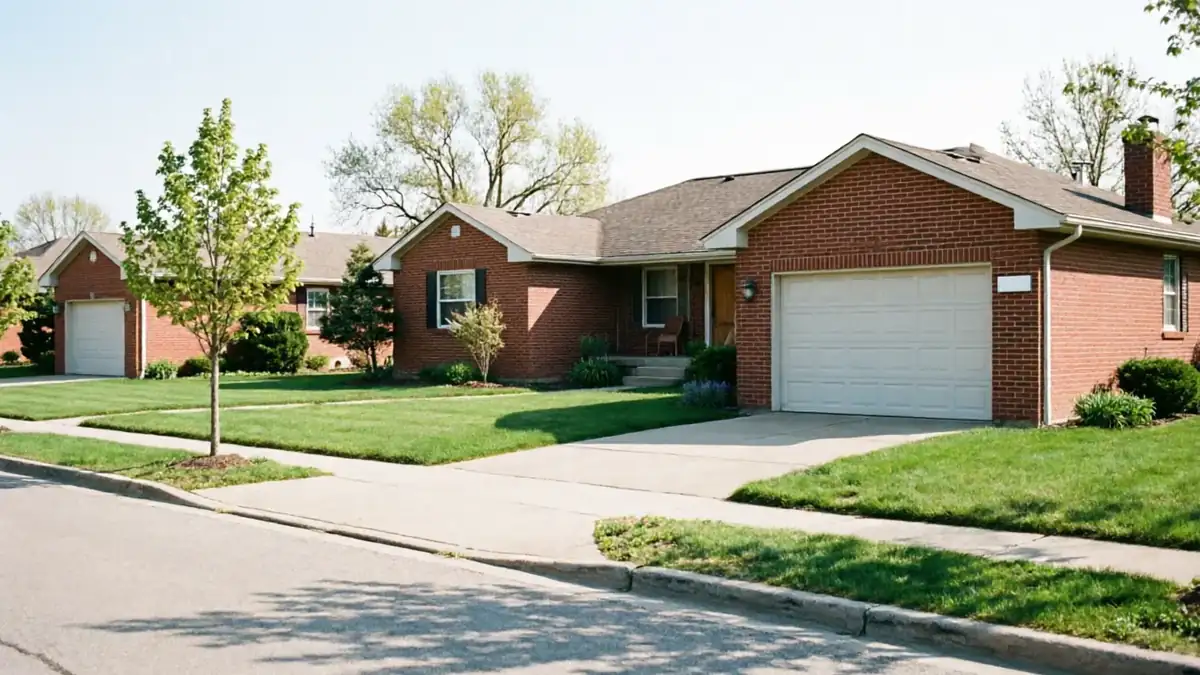
Most of the housing stock in this service area went up between 1952 and 1998
With the bulk of it dating to the 1960s and 70s across the twelve communities we cover, from Rock Island Arsenal out to Geneseo and Windsor. Doors from that era were hung with steel rollers riding in steel tracks, no nylon, no sealed bearings. Fifty-plus years on, a lot of those original rollers are still in service, worn down to a shape that no longer matches the track profile.
The climate here is the other half of the problem
This is a cold-moderate band, which means hard freeze-thaw cycles every winter. Steel rollers contract in the cold, the stems dry out, and the track edges pick up rust and pitting from condensation. A roller that's merely noisy in August turns into one that binds, chatters, or jumps the track the first cold snap in December. That's not a coincidence of timing - it's old steel meeting a track that's moved slightly out of true from decades of freeze-thaw flexing in the framing around it.
We see it on both single and double doors
But double doors carry more roller load per side, so they tend to show the wear first.
Getting It Booked In
Tell us the door's size, whether it's one piece or sectional, and whether you're hearing grinding, seeing a roller sitting crooked in the track, or watching the door hang up partway. That's enough for us to bring the right roller stock - nylon with sealed bearings is the standard upgrade from the original steel, and it runs quieter in cold weather since it doesn't contract the same way.
We're set up to work across the service area that sits around Rock Island Arsenal, Rock Island, Milan, East Moline, Coal Valley, Hampton, Colona, Sherrard, Port Byron, Cordova, Geneseo, and Windsor. If your house falls in the older part of that stock - anything built before the late 1970s - plan on the full roller set needing replacement at once rather than just the one that's complaining, since they wear at roughly the same rate.
One limitation worth saying plainly: if the track itself is bent or the cable drum is worn, roller replacement alone won't fix the symptom. We'll tell you straight if that's what we find instead of swapping rollers and sending you on your way with the real problem still there.
What You Are Seeing
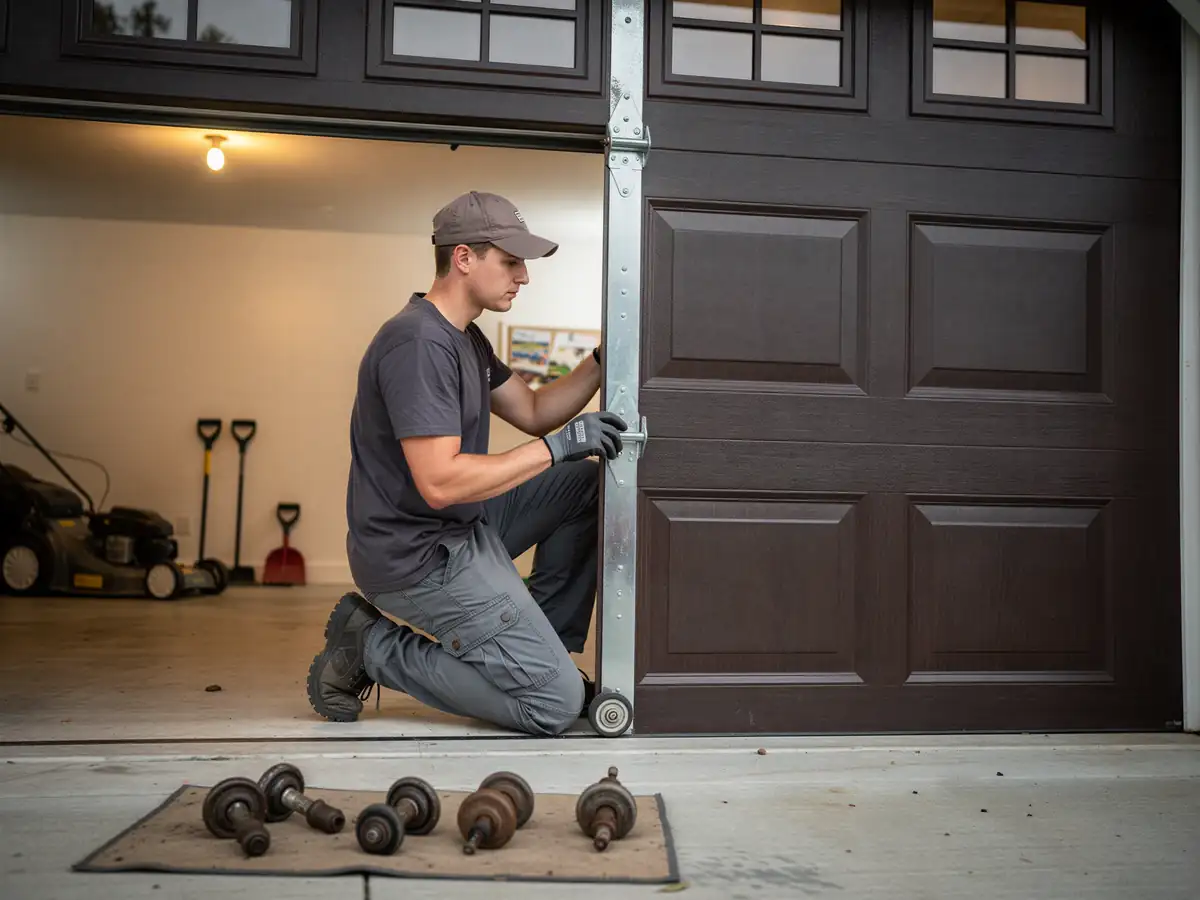
A grinding or rattling sound as the door travels, worse in cold weather, is the most common first sign. Next is a roller that's visibly worn down thinner on one side, or one that's cracked and no longer round. On older steel-roller doors from the 1960s and 70s stock common across this area, you'll sometimes see a roller that's actually popped partway out of the track - the stem has worn enough that it no longer holds the wheel square.
Some owners notice the door hesitating at the same spot every cycle, which usually means one roller is catching on a rust ridge or a dent in the track that's built up over the years. Others notice the opener straining harder than it used to, which can be rollers dragging rather than rolling.
If the door comes off the track entirely, stop using the opener. That's a bigger job than a roller swap, and running the opener against a stuck roller can bend the track further or strain the opener's drive gear.
How We Fix It
We pull the old rollers one at a time, supporting the panel so the door doesn't drop
And check the track alignment at each point as we go. On the older steel-roller setups common in this service area's 1960s and 70s housing, we're usually replacing the full set rather than one or two, since the wear pattern across all the rollers is close enough that doing it piecemeal just means another call in a year.
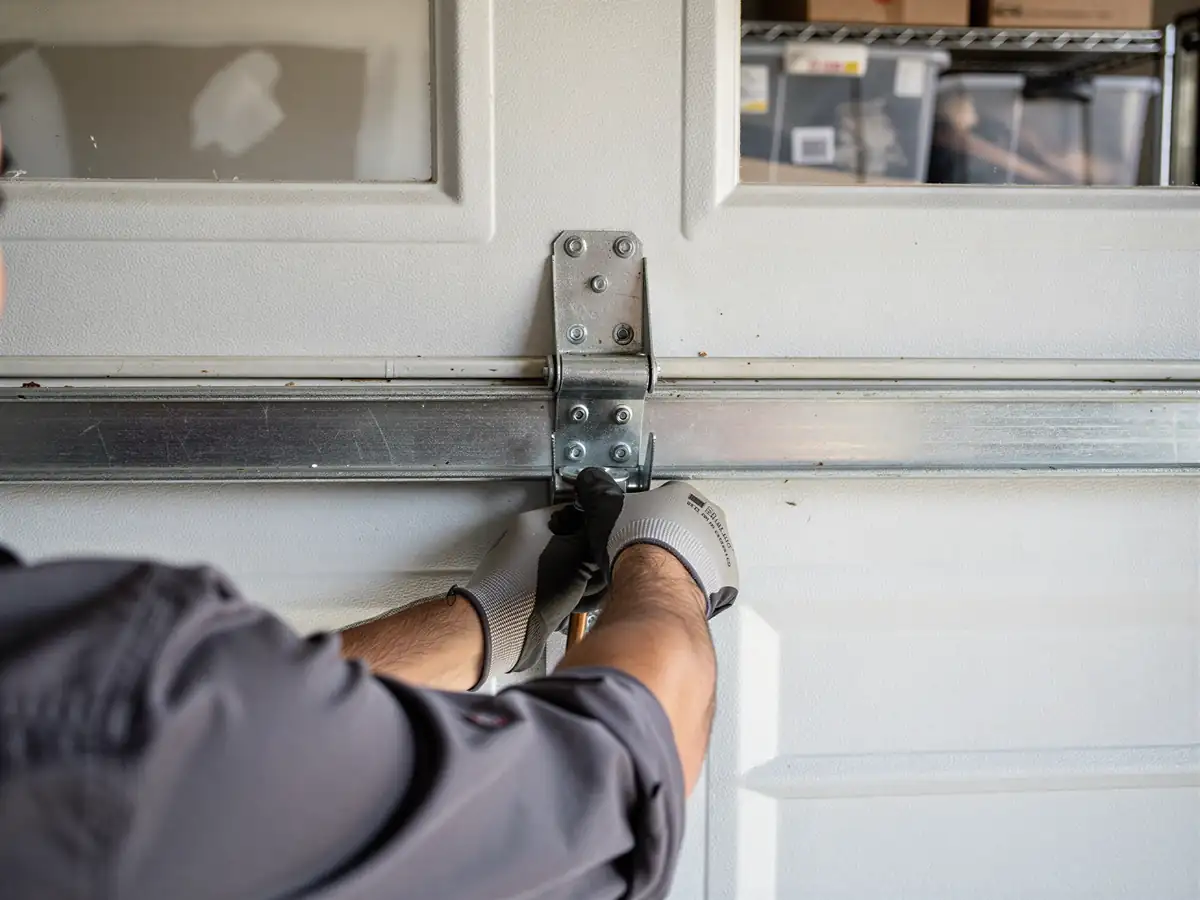
We check hinges and the roller stems at the same time
Because a roller can look fine but still bind if the hinge it's seated in has opened up. On doors where the track has been pitted by years of winter condensation, we'll clean and true it before setting the new rollers, so the nylon wheels aren't riding against the same rough surface that chewed up the steel ones.
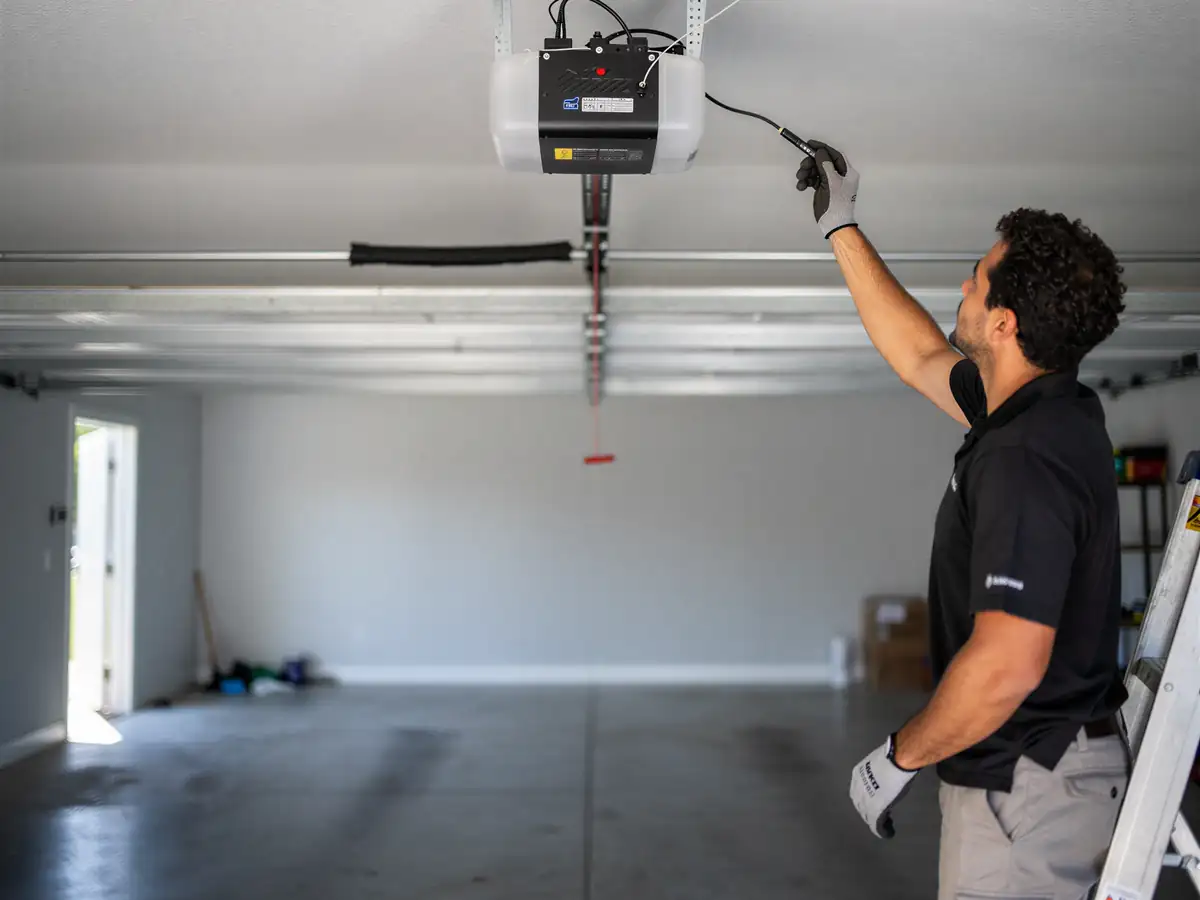
We test the full cycle under opener power before we leave
Listening for anything that still catches. If the track itself is bent beyond truing, that's a different job, and we'll say so rather than force new rollers into a track that won't hold them.