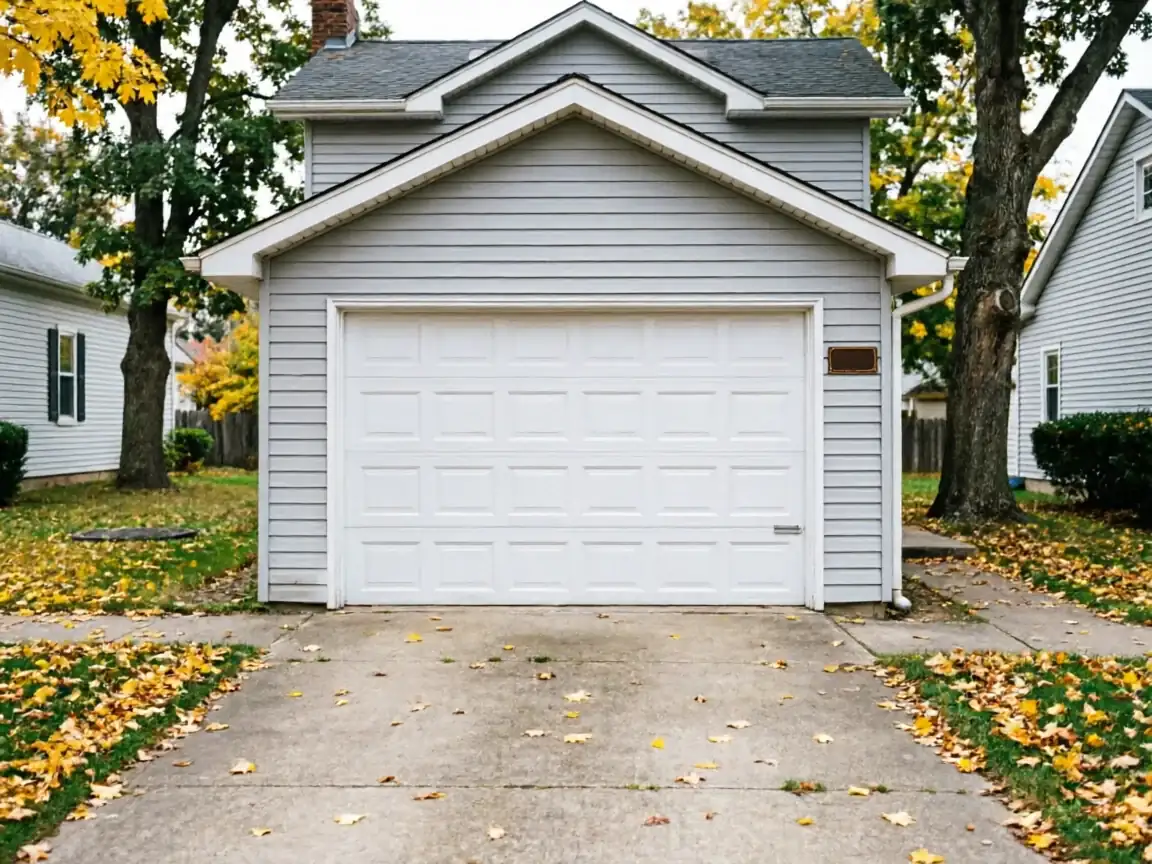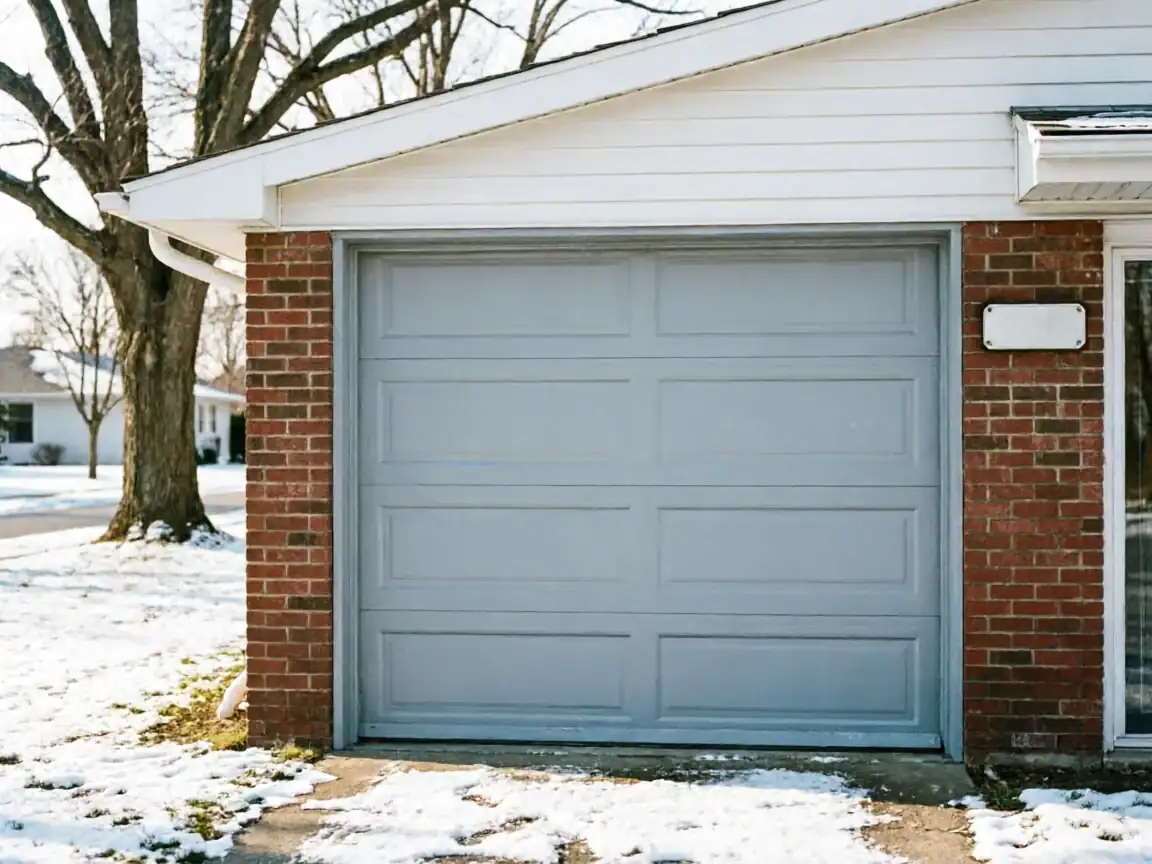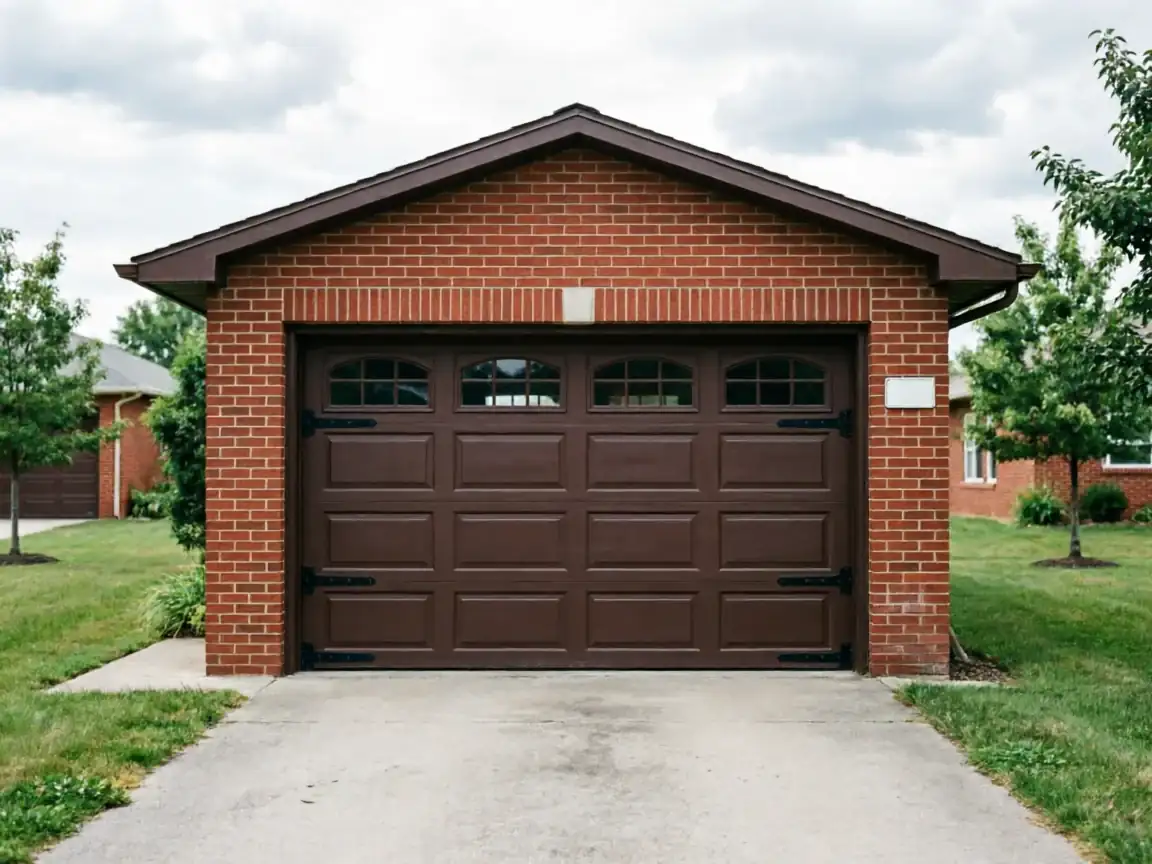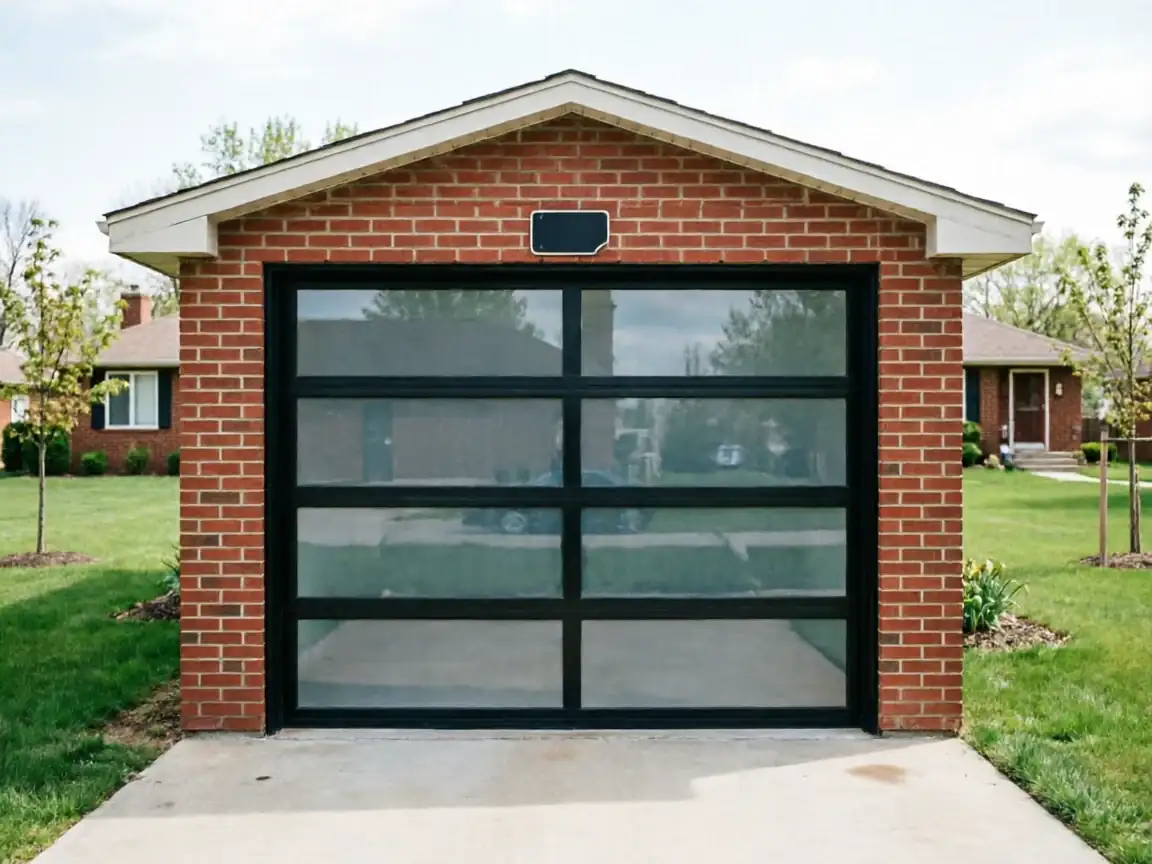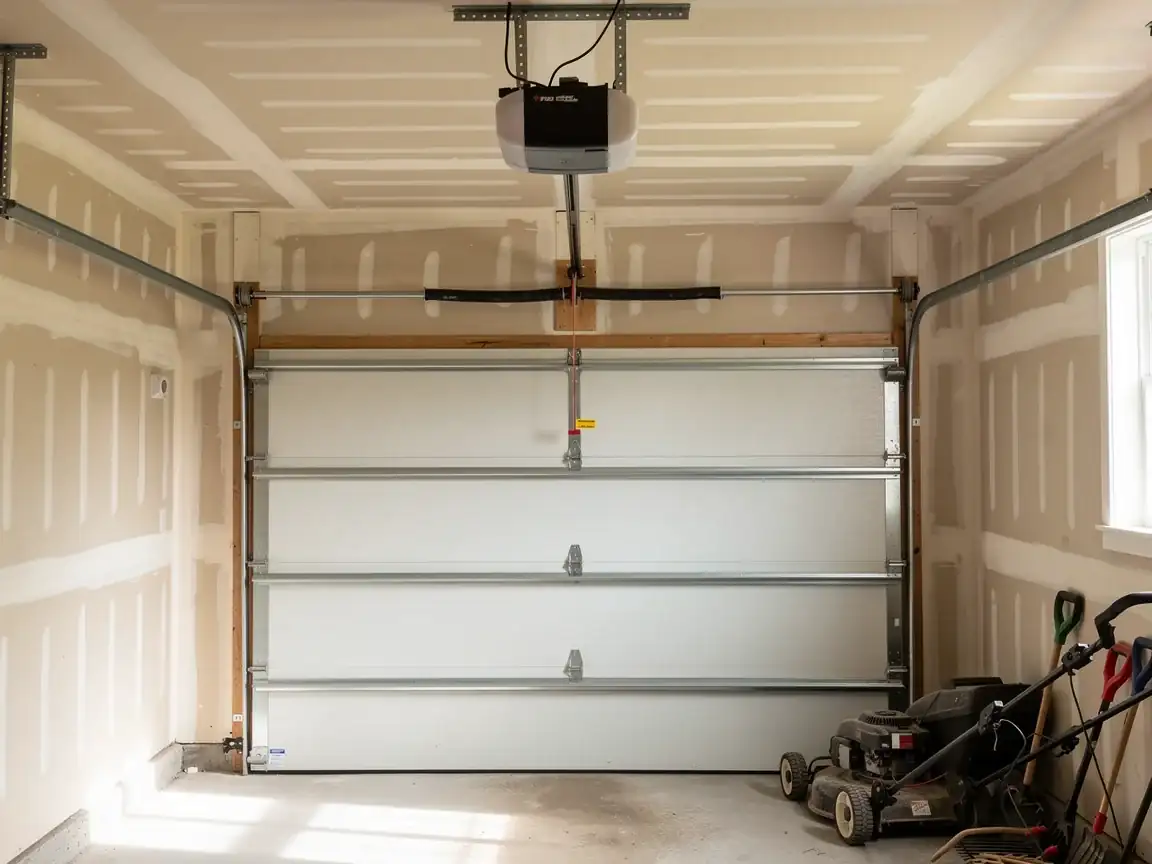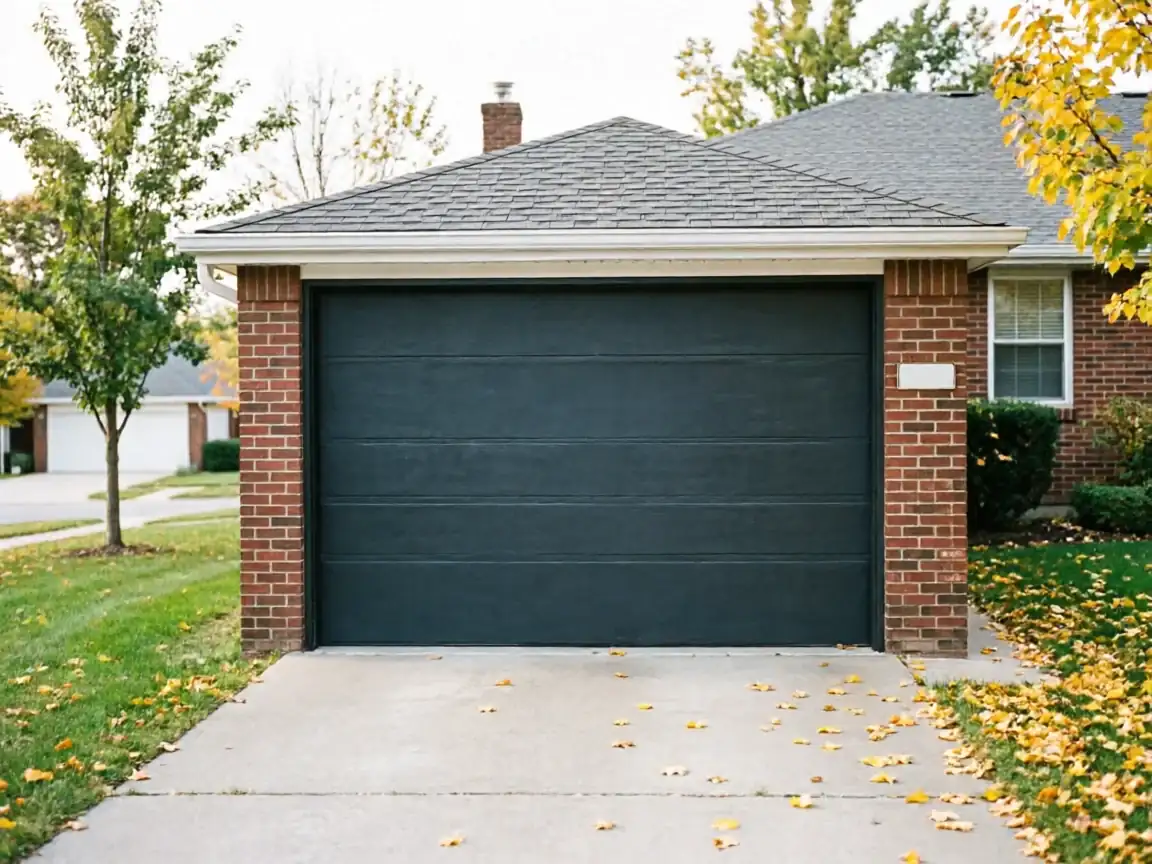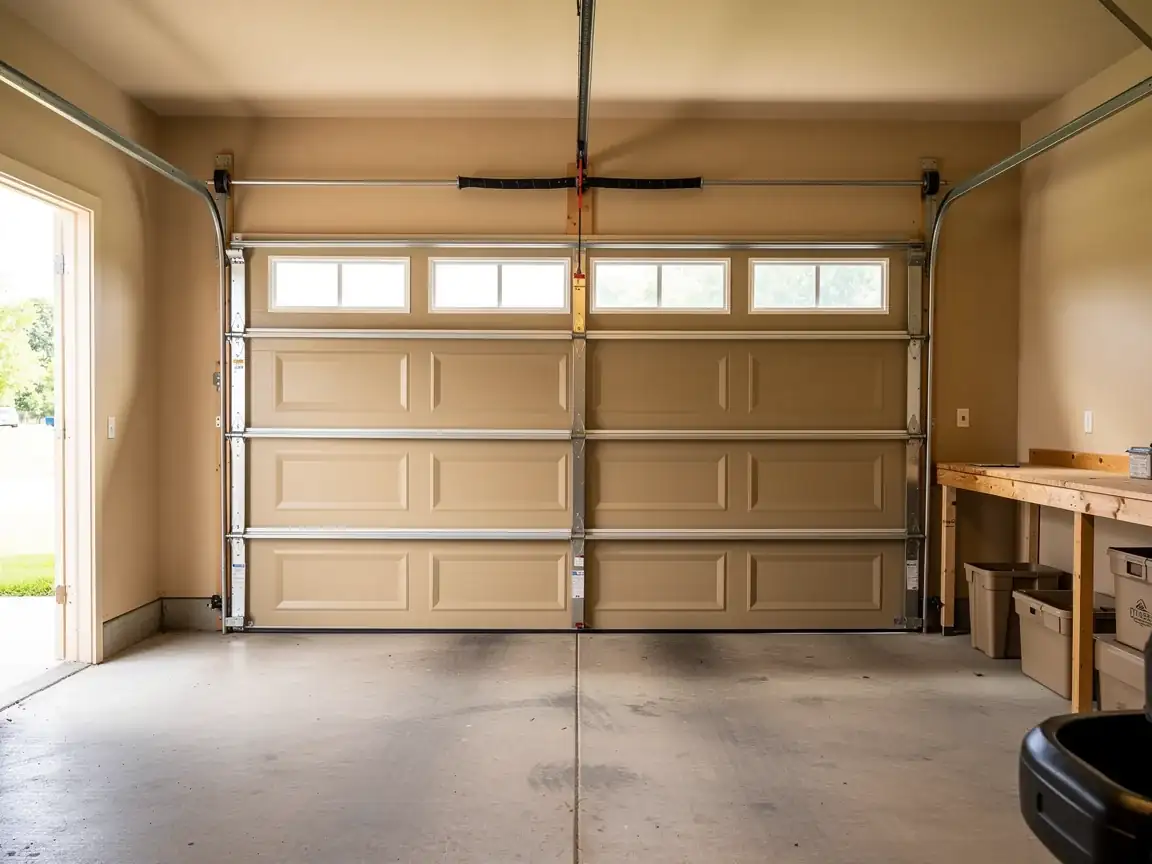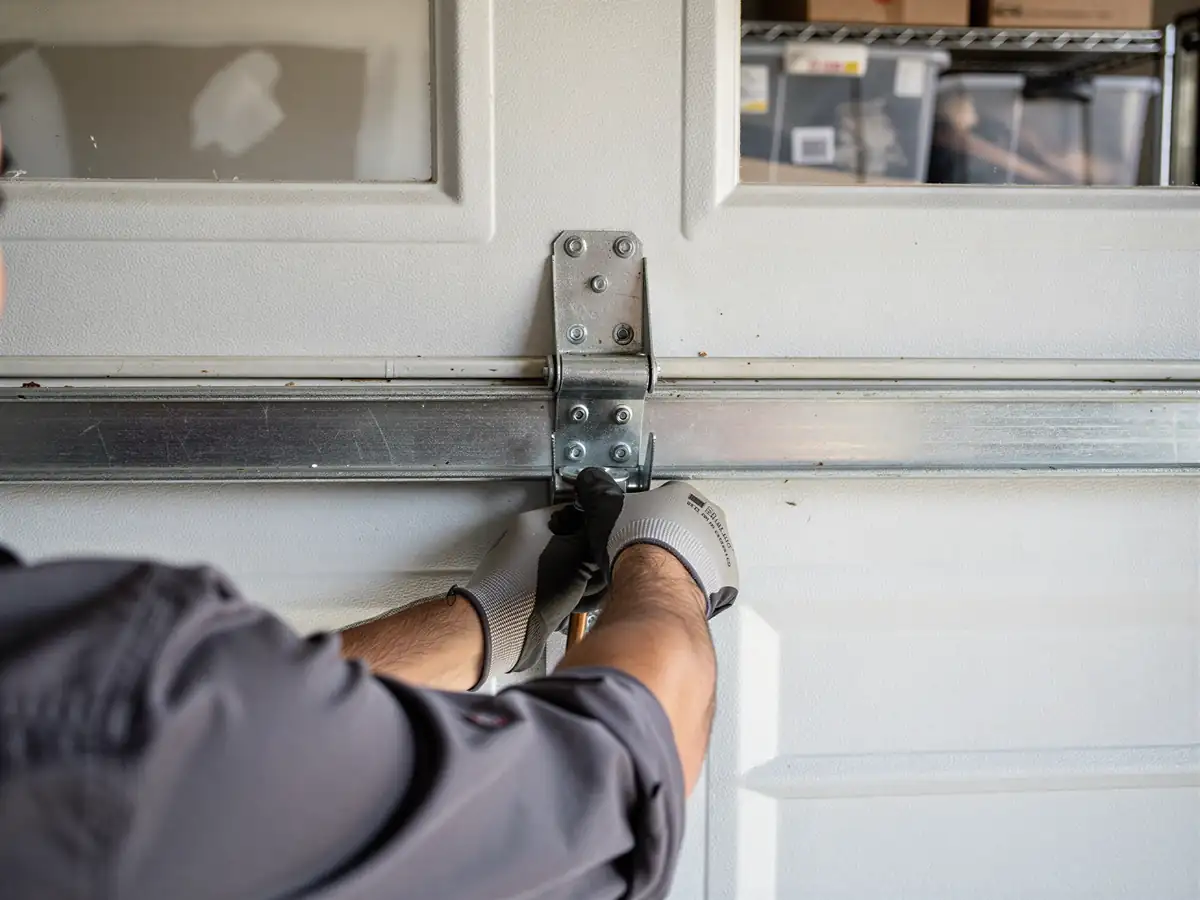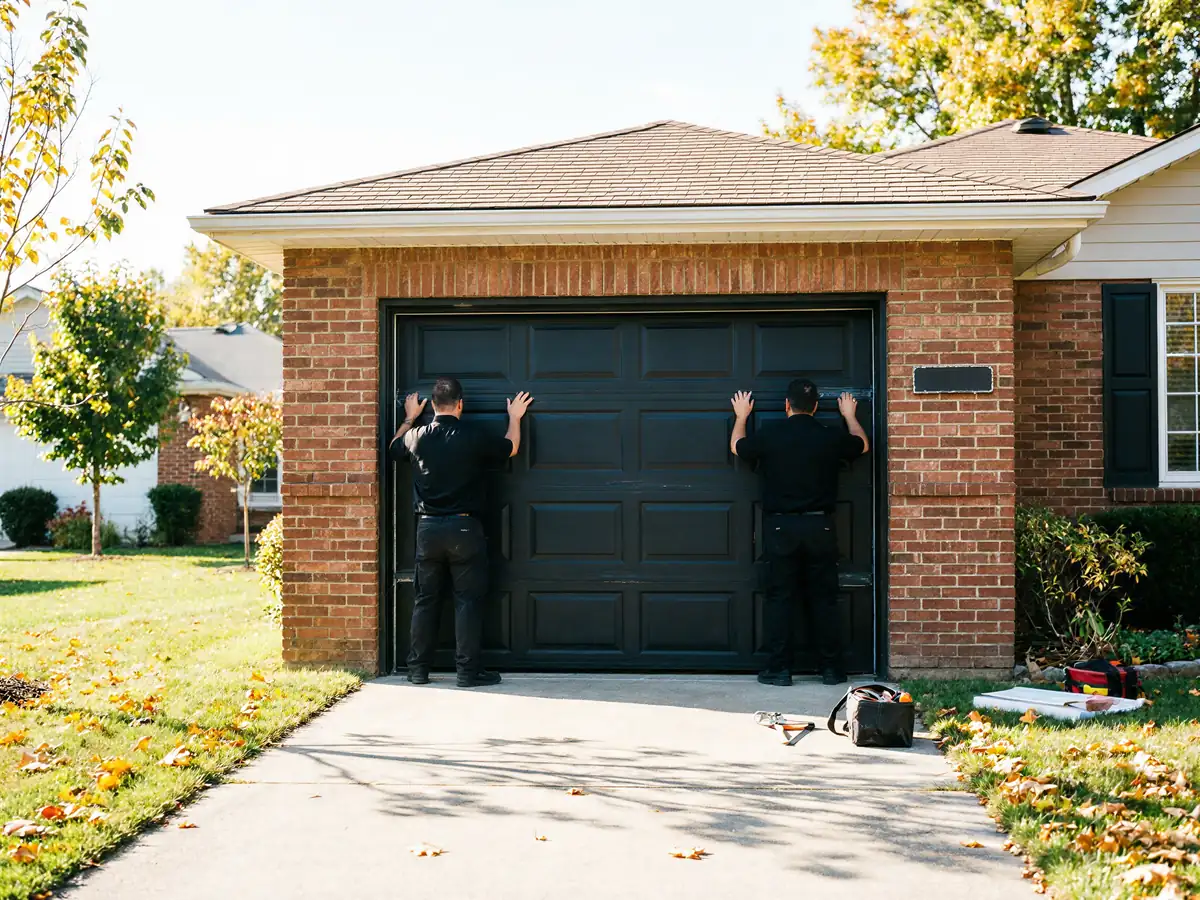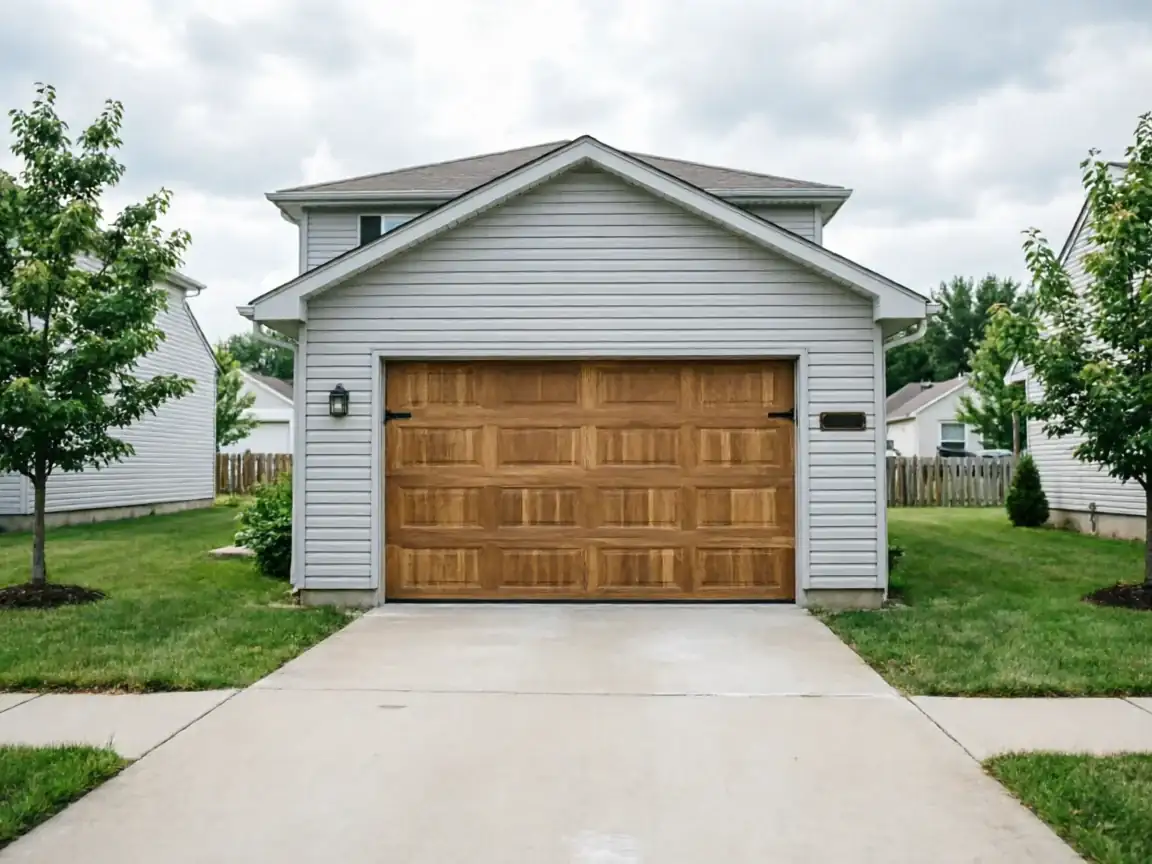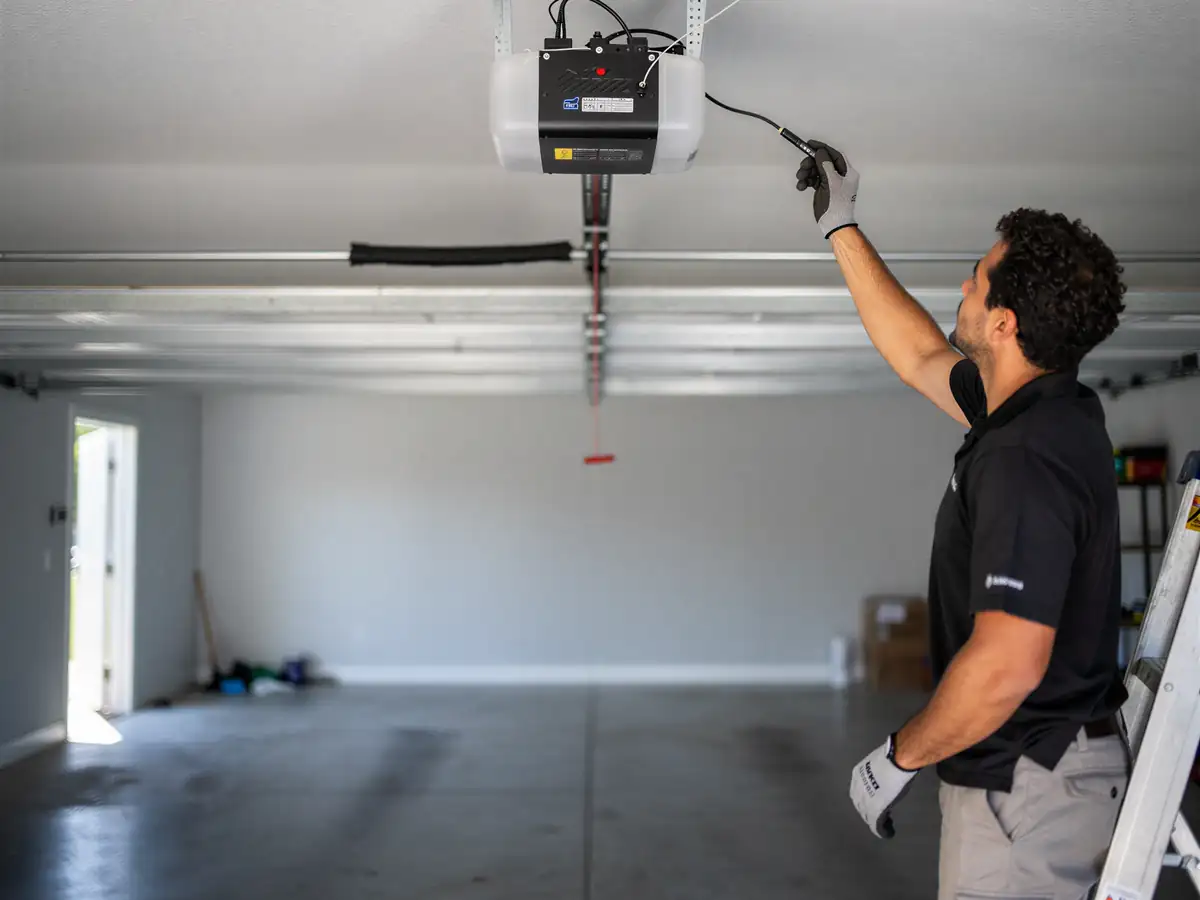
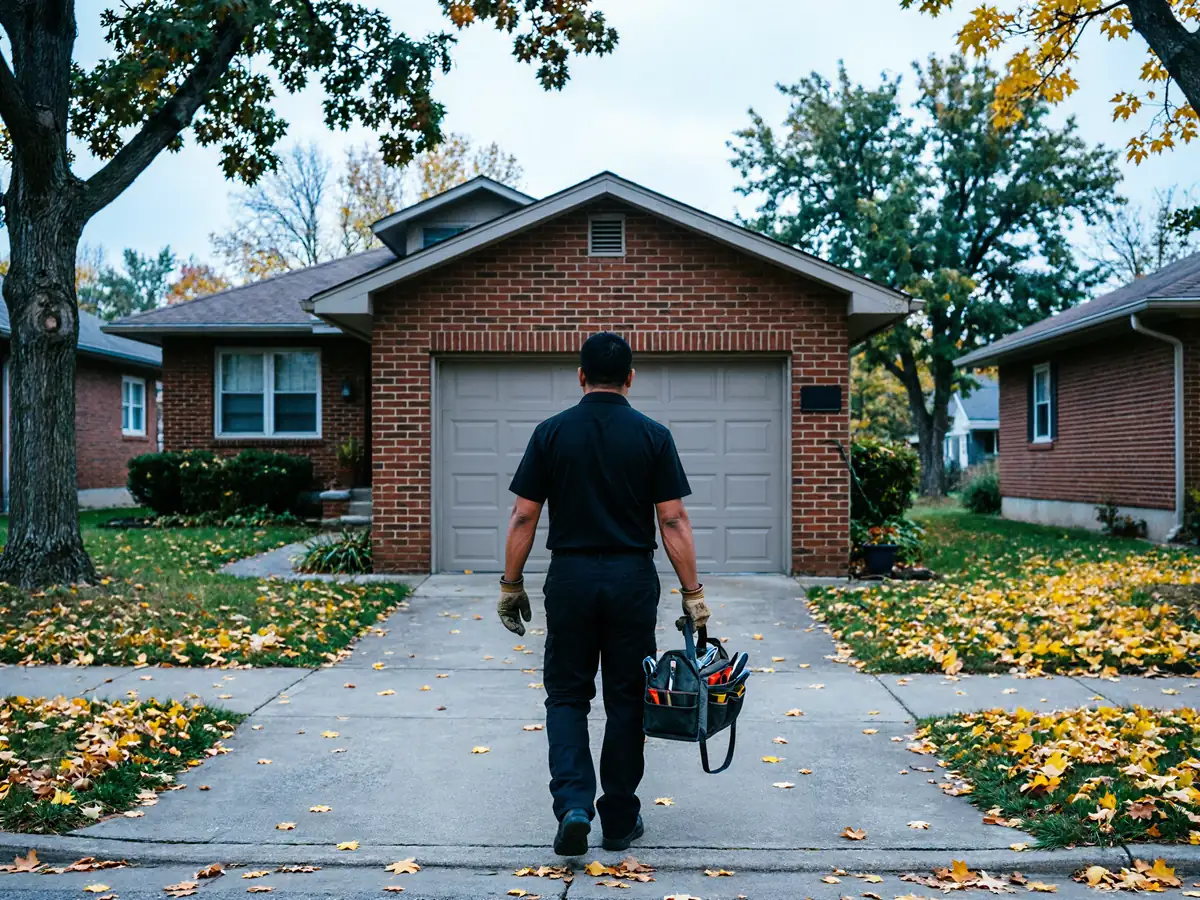
What You Are Seeing
When a door won't move, the first question is what's actually failed, not just that it's stuck
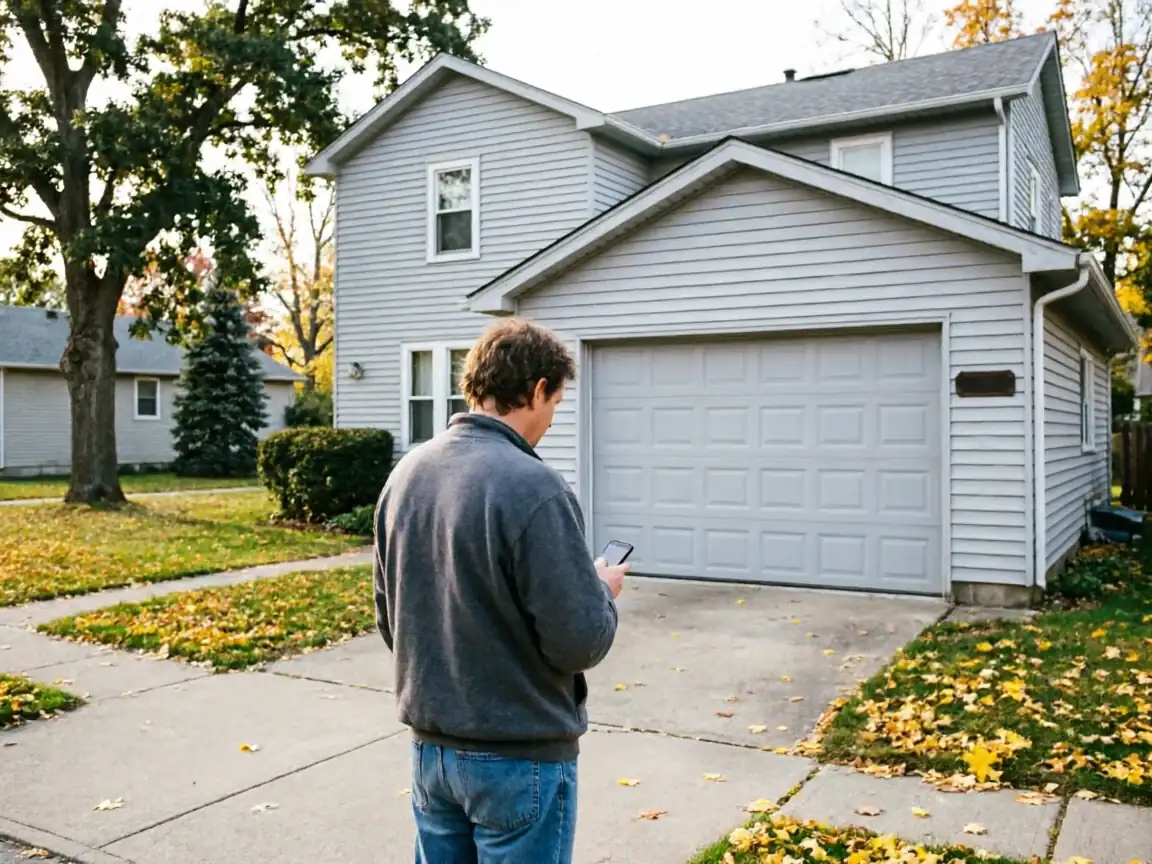
In Coal Valley, most houses went up around a median year of 1988, which puts a lot of the garage stock here a couple decades newer than what you'll find closer in toward Moline, where building spans back to the early 1950s. That gap matters.
A door and opener installed in the late 1980s or early 1990s is now pushing 30-plus years old
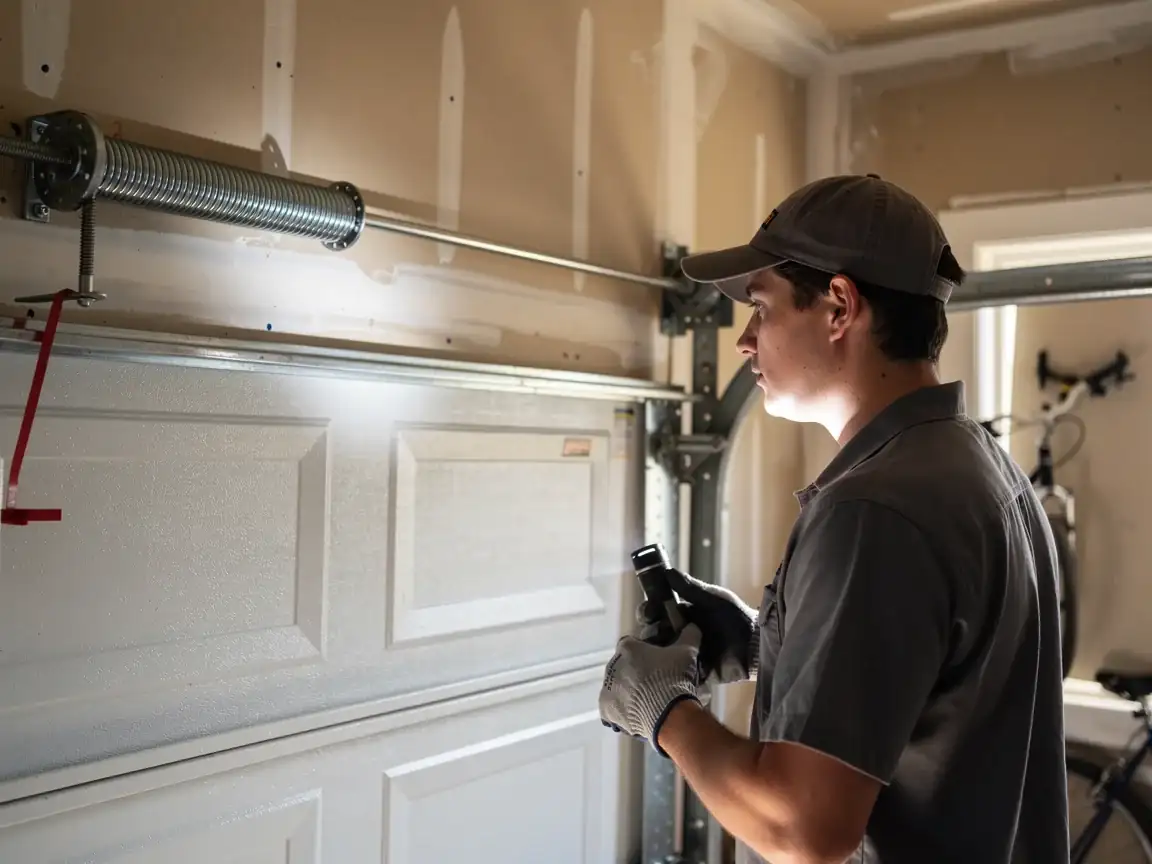
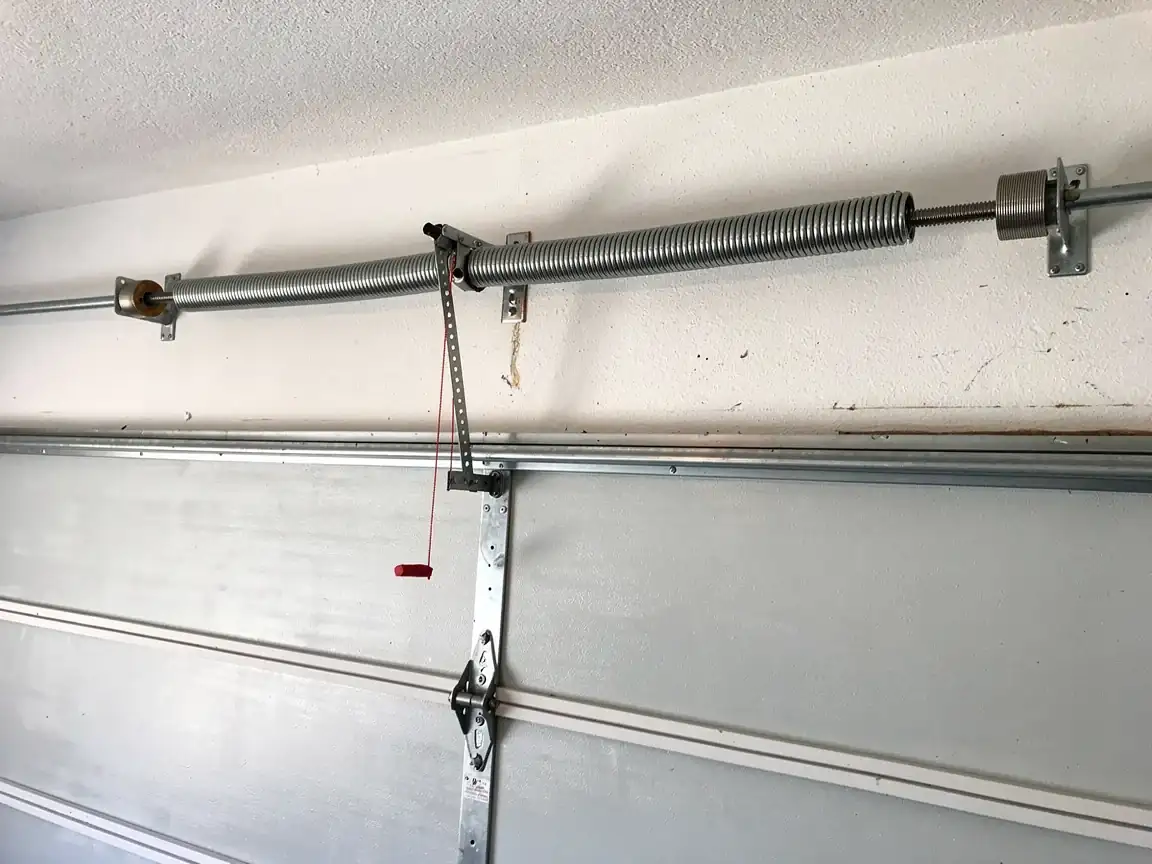
That's long enough for a torsion spring to hit the end of its cycle life, for an opener's circuit board to start failing intermittently, and for steel panel doors from that era to show rust at the bottom section where water sits. You're less likely to be dealing with the original wood-panel, extension-spring setups we see on the oldest housing in the wider service area, and more likely dealing with a steel sectional door on torsion hardware that's simply worn out from three decades of daily use.
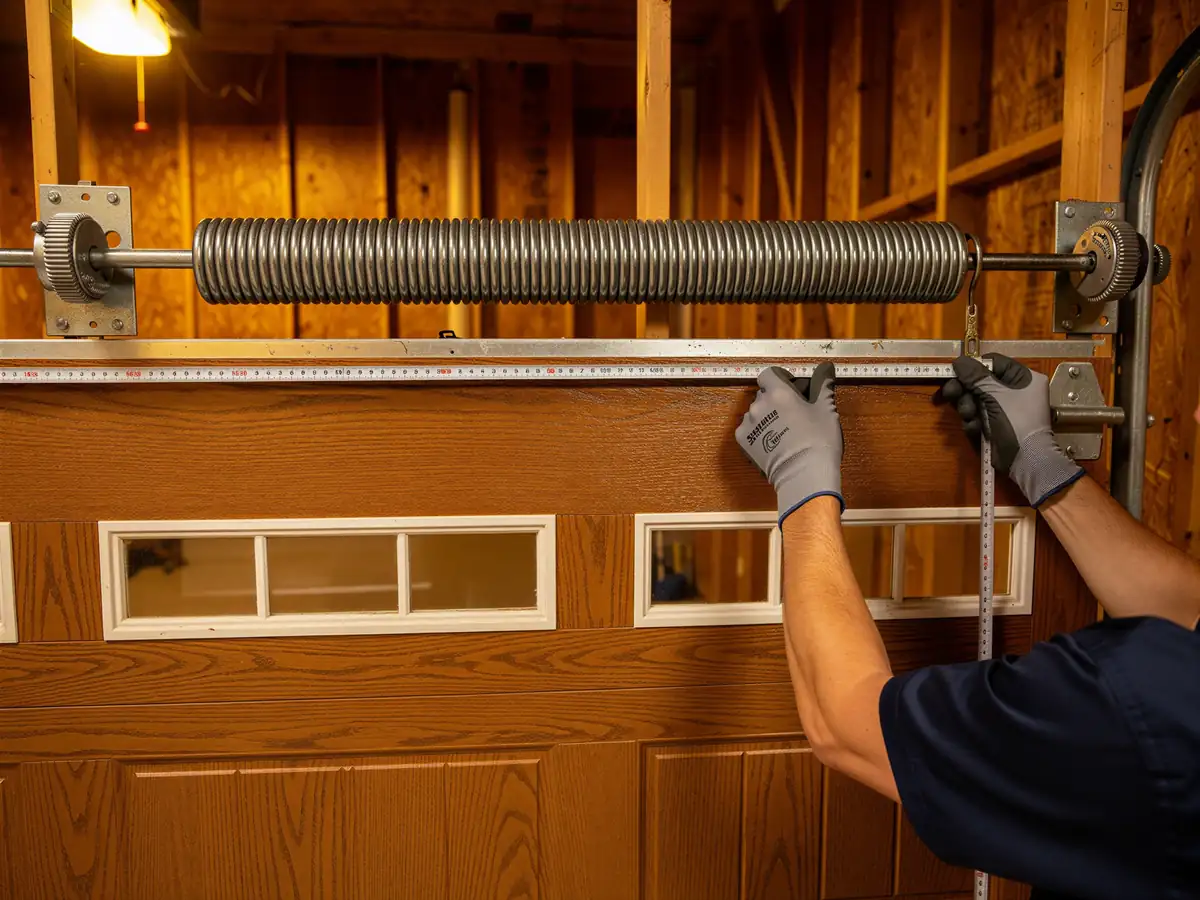
If the door won't budge at all, suspect a broken spring first
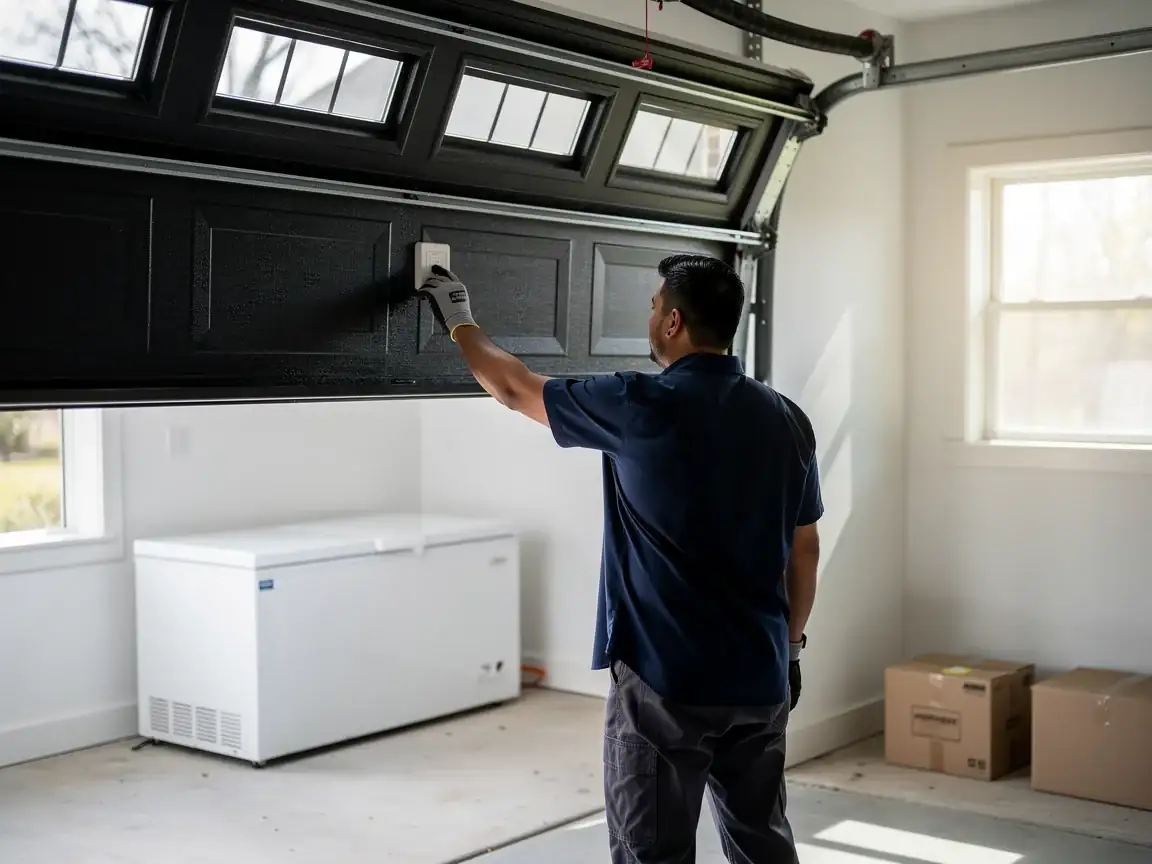
If it moves but the opener doesn't respond, or responds erratically, that's usually the board or the logic board's relay failing - common on openers from this build era once they pass the 25-30 year mark.
- 30 year
What Is on the Truck
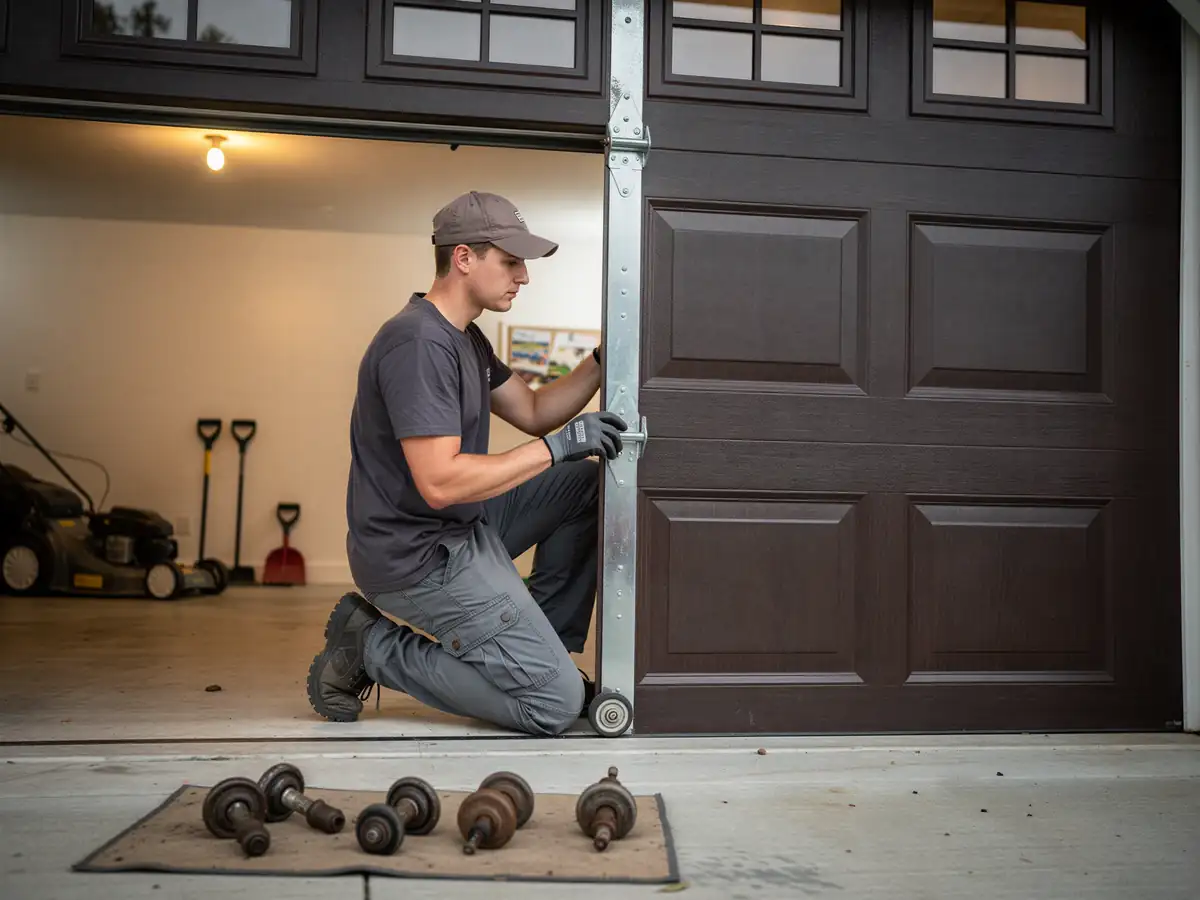
For a service call into Coal Valley, the truck carries parts sized for what's actually out there: torsion springs in the common residential weights, steel roller and cable sets, and opener circuit boards or full opener units compatible with chain-drive models that were standard through the late '80s and '90s. We also carry weatherstrip and bottom seal stock, since steel doors from that period tend to need it at the base section first.
What we don't carry on every truck is a part for every possible opener model ever made. If your opener is an older or less common model, the board might need to be ordered, and that's a limitation worth saying up front rather than promising a fix that stretches past what's in stock that day. Travel into Coal Valley from Moline is about 4 miles, which keeps the parts call short if a second trip for an ordered part is needed.
What It Costs
We don't publish a flat price here, because a broken spring job and a full opener swap aren't the same bill, and neither is quoting it blind over the phone fair to you. What we can say is that the county's income profile in this service area runs higher than much of the surrounding footprint, and a household budgeting for a repair here is often weighing it against replacement sooner than a homeowner in an older part of town might, simply because these doors and openers are closer in age to each other - when one part fails, others aren't far behind.
The honest answer on cost comes after we see the door and the opener model, not before.
What Can Go Wrong
Past the obvious broken spring, the failures we see on doors from this build era cluster around a few things
Chain-drive openers from the late '80s and '90s often run on logic boards that weren't built with the same surge protection as current units, so a power blip can take out the board without any visible damage - the door just stops responding. Steel panels on these doors can also develop rust at the bottom where condensation collects, which weakens the panel enough that a spring or cable failure tears through it instead of just disengaging cleanly.
Cold-weather cycling plays a role too
This area sits in a moderate-cold climate band, and metal hardware that's been flexing through 30-plus winters gets brittle at the weld points and fasteners, which is part of why older torsion springs here tend to go without much warning.
Doing It Yourself
A torsion spring under tension is not a DIY repair - that's true regardless of the town, and it's the one place we won't talk you through a fix over the phone. What you can safely check yourself: whether the opener's logic board light is blinking an error code, whether the track is visibly bent, and whether the door moves freely by hand with the opener disconnected. If it's heavy or binding by hand, the spring is doing less than it should.
We'll also say plainly when a repair isn't worth it. An opener from this era with a failed board and a rusted-through bottom panel is often better replaced than patched twice.
How Long It Takes
We don't quote a guaranteed response window, since that depends on the day and what's ahead of you on the schedule. What we can tell you is the drive from Moline into Coal Valley is short, around 4 miles, so travel time isn't the bottleneck once a call is scheduled. The repair itself, once the truck is there, usually comes down to whether the part is in stock - a spring or roller job is a same-visit fix, while an opener board that needs ordering means a return trip.