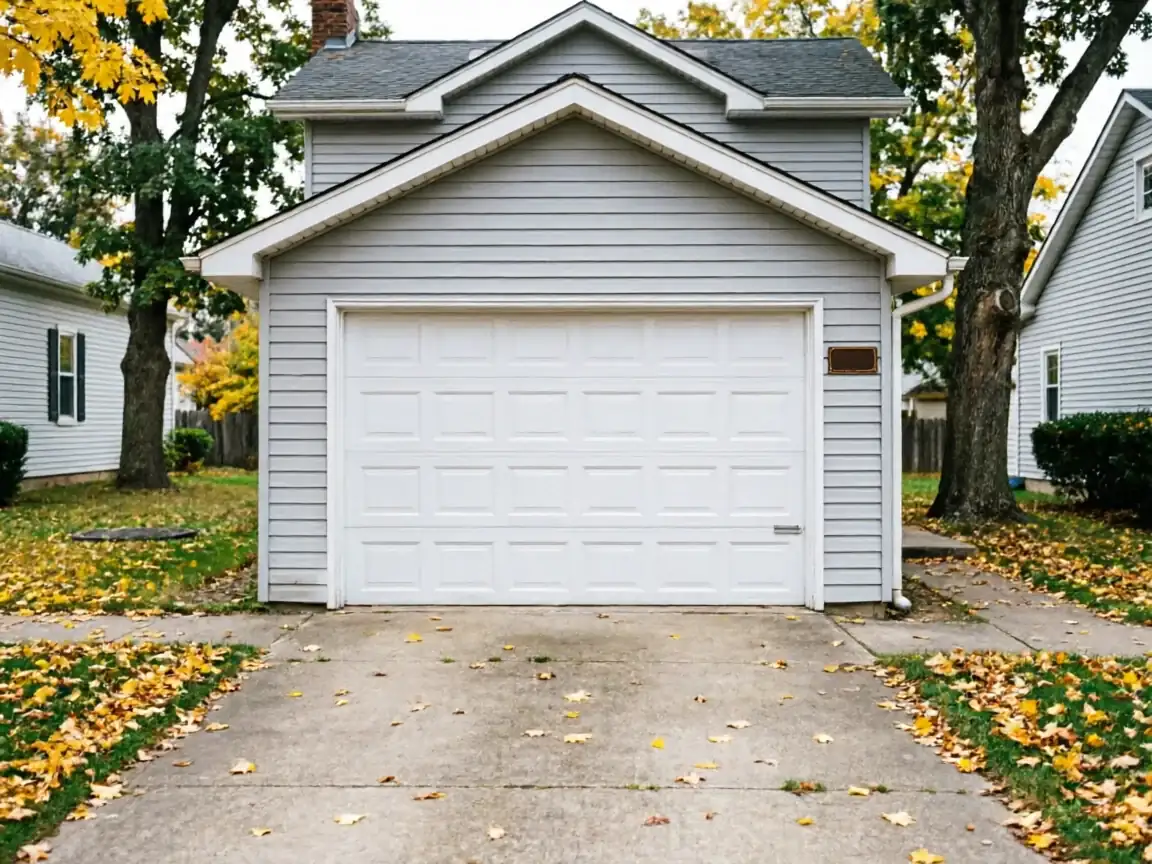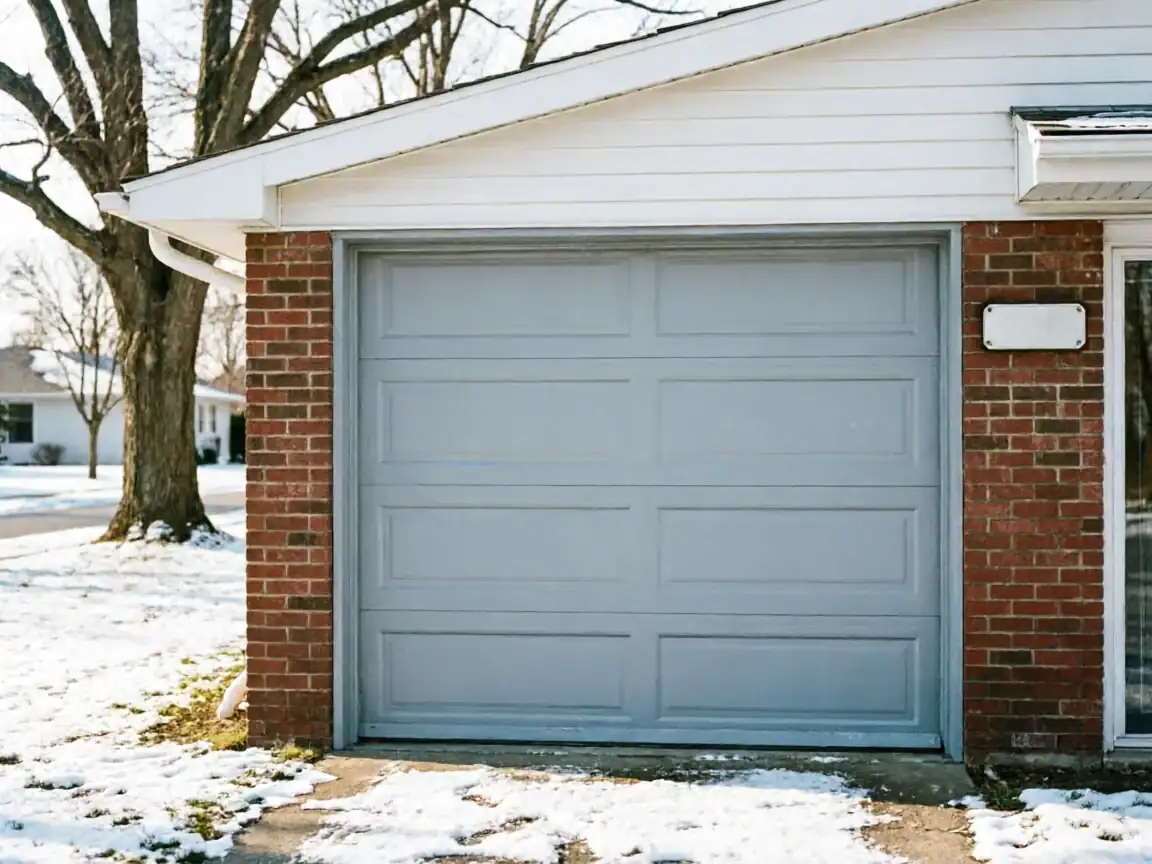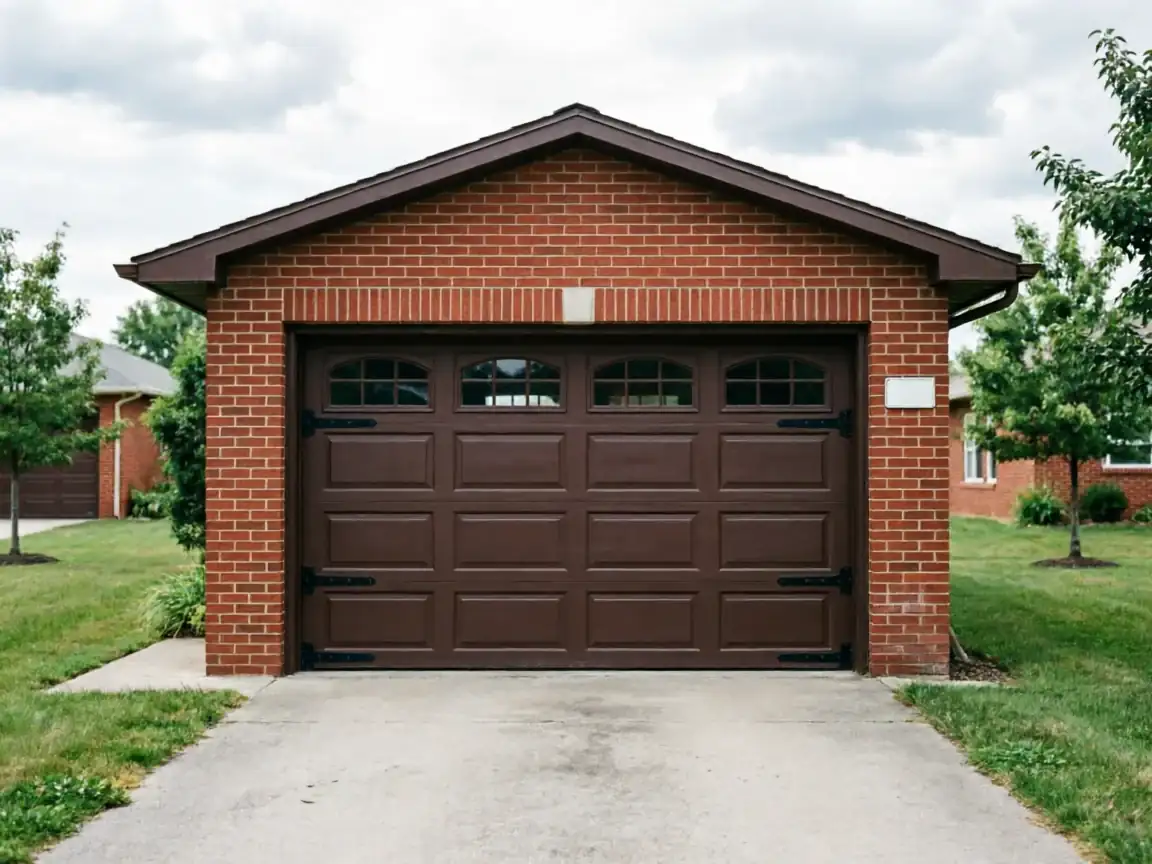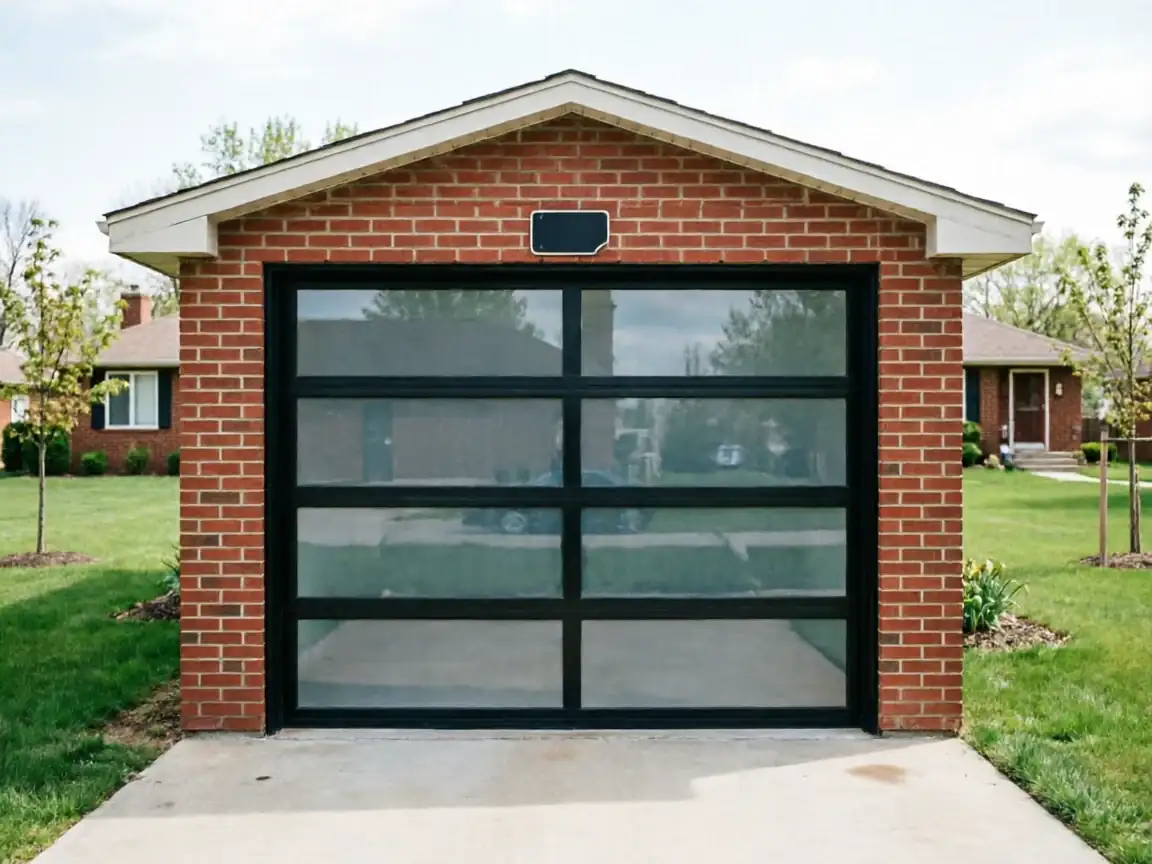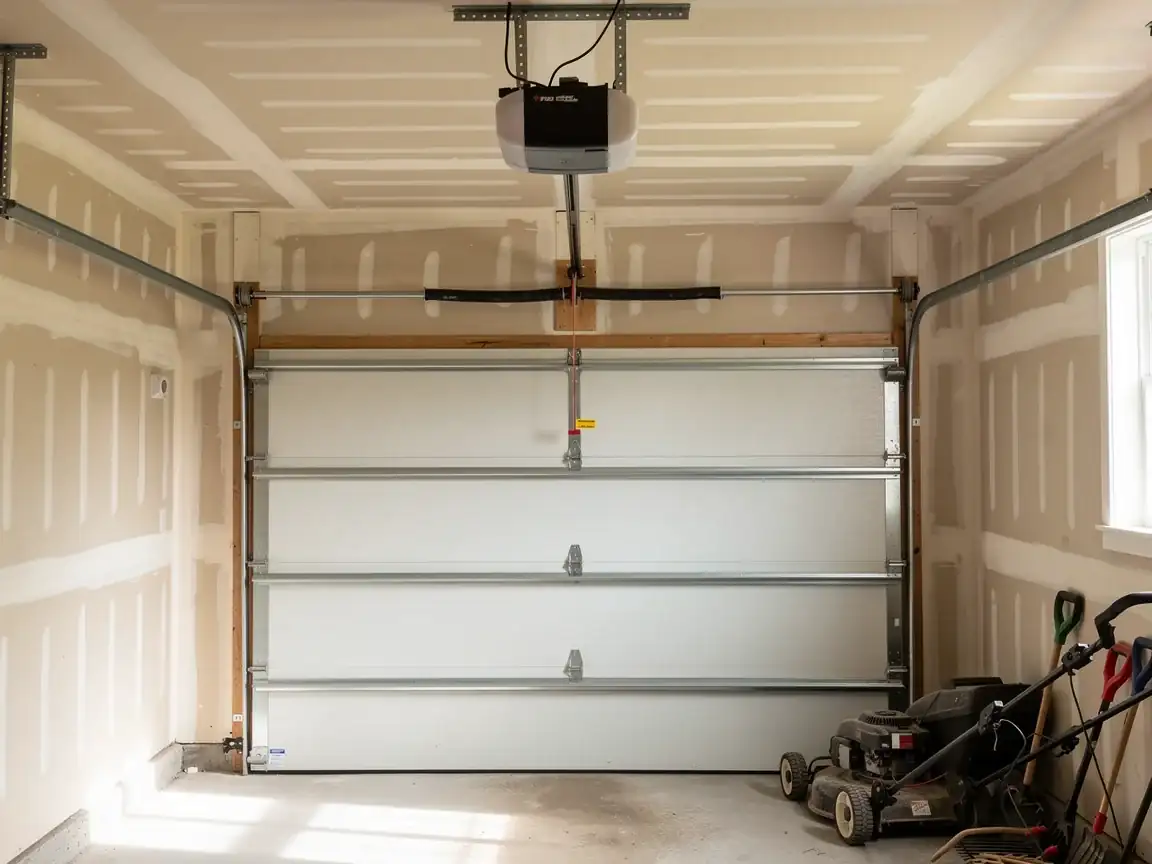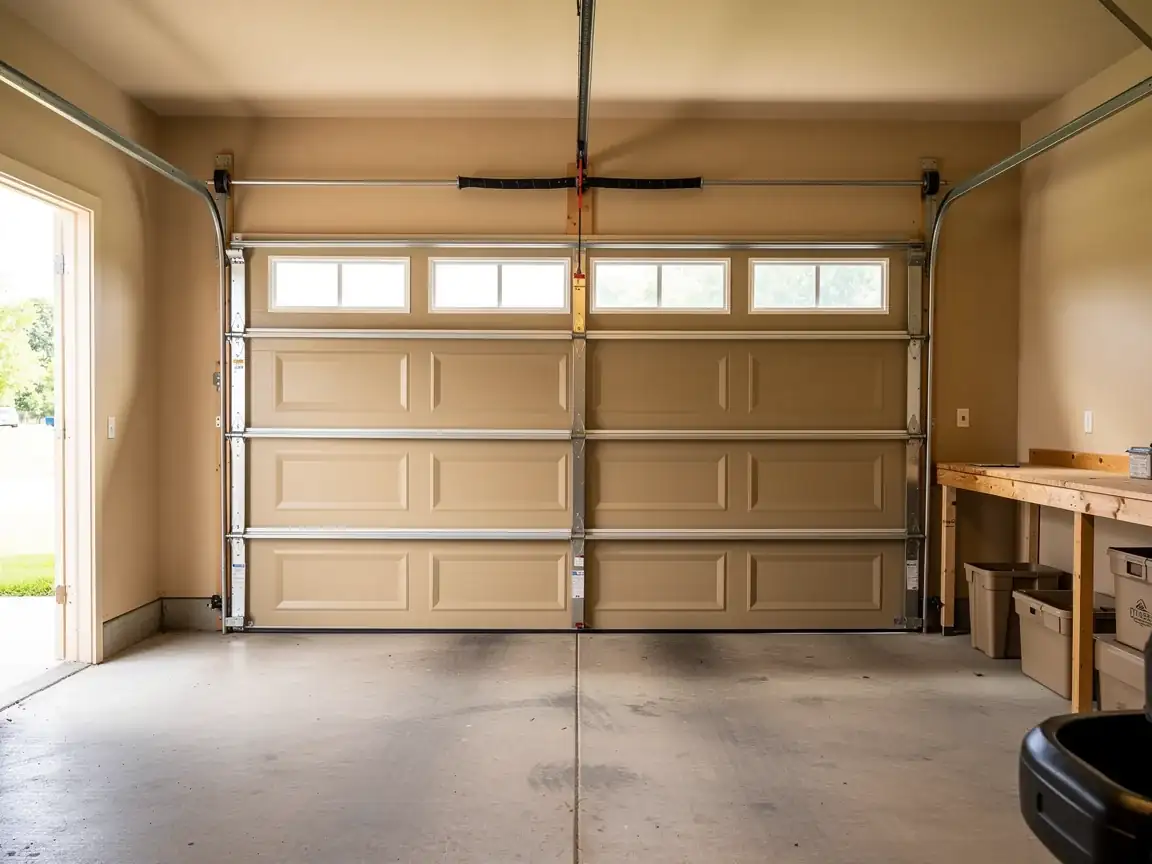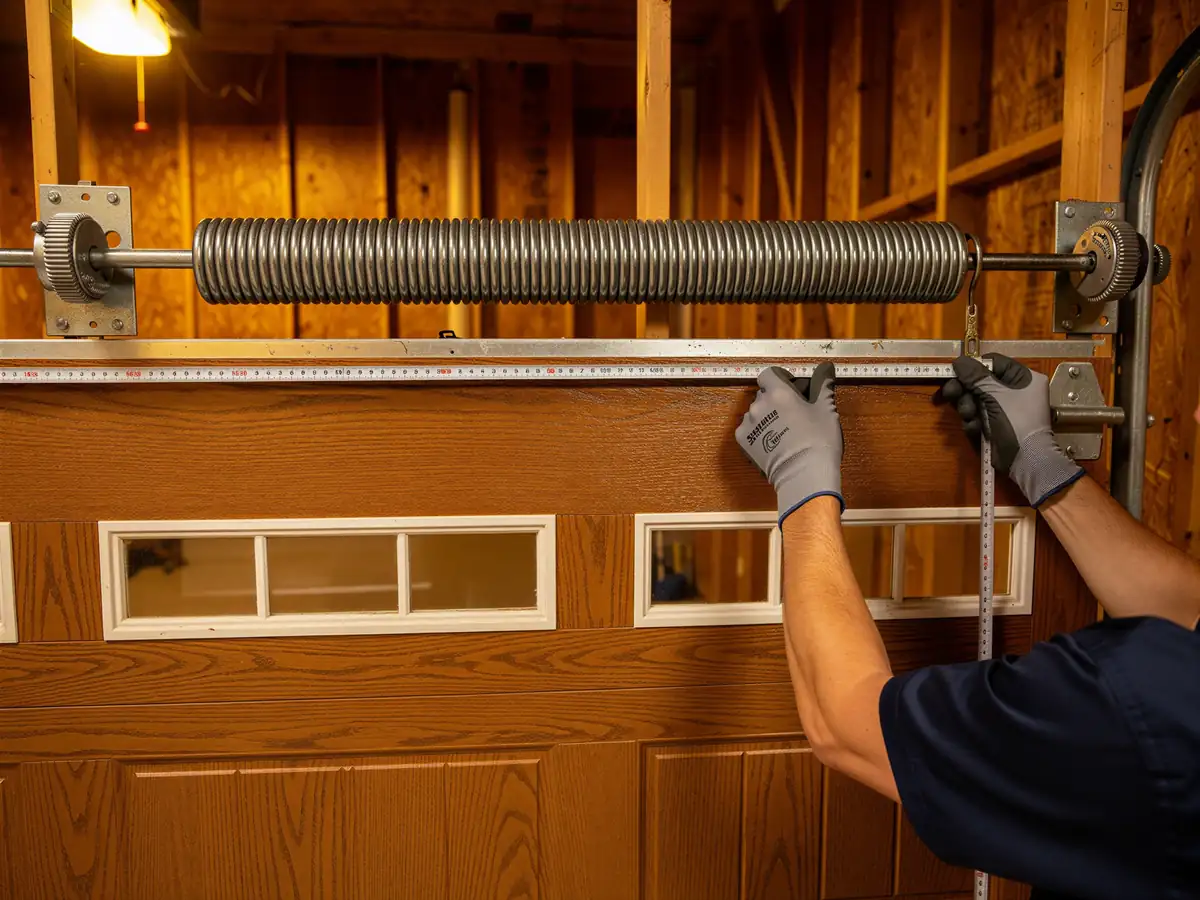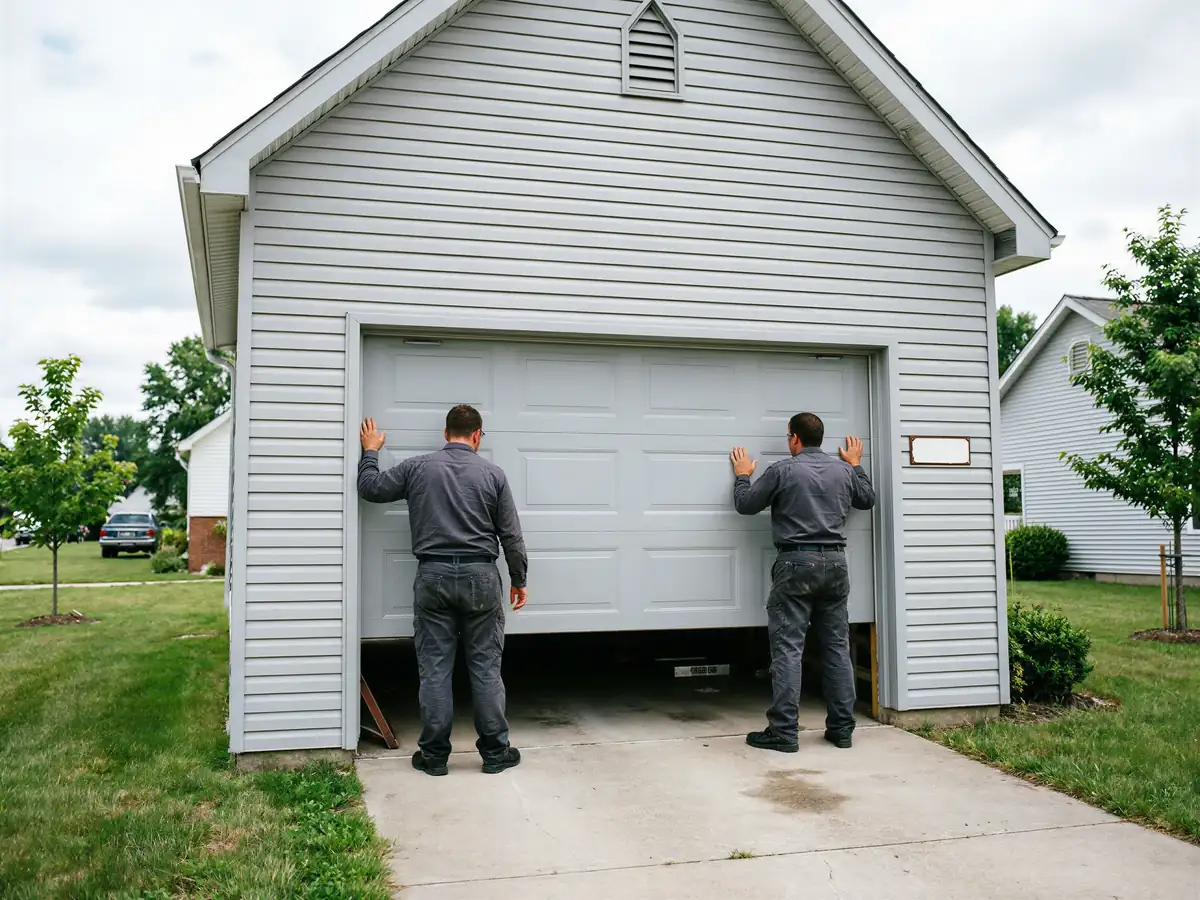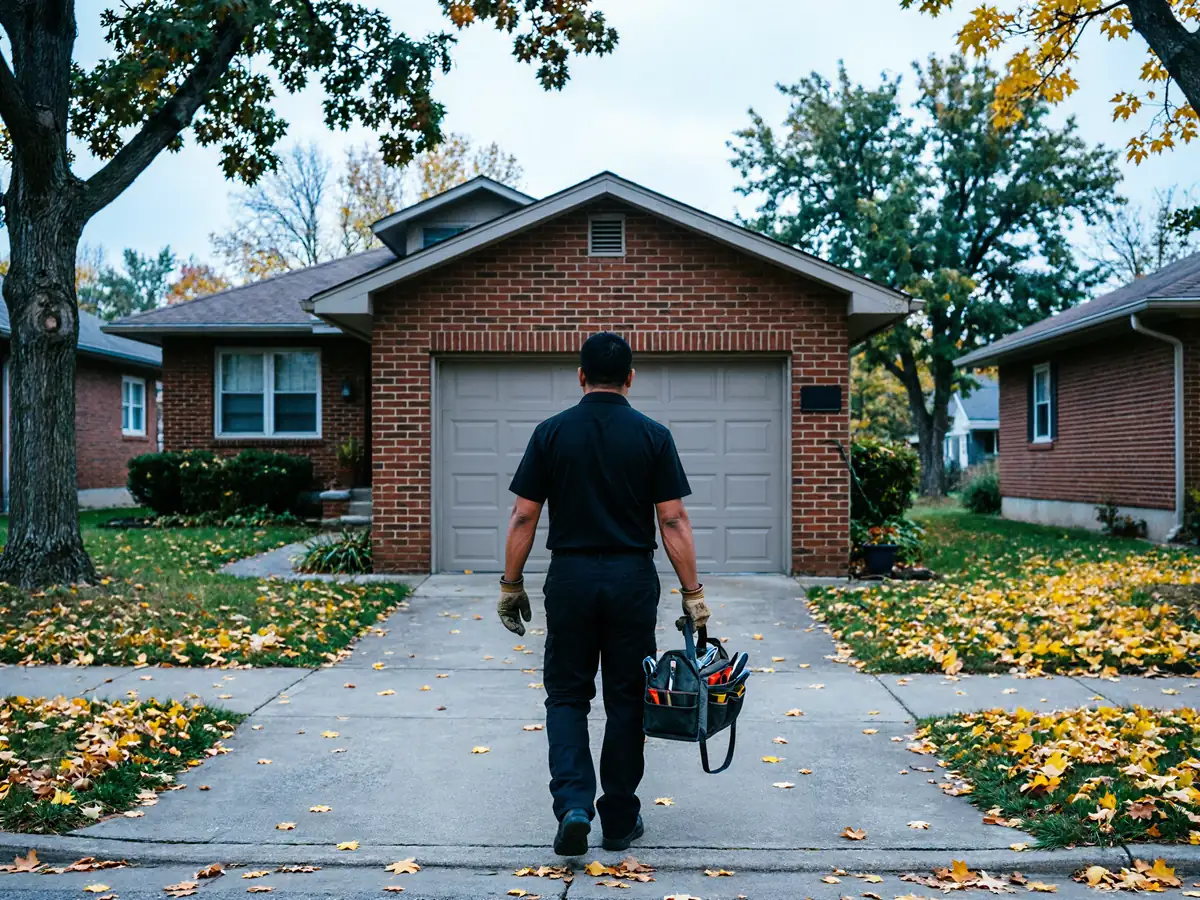
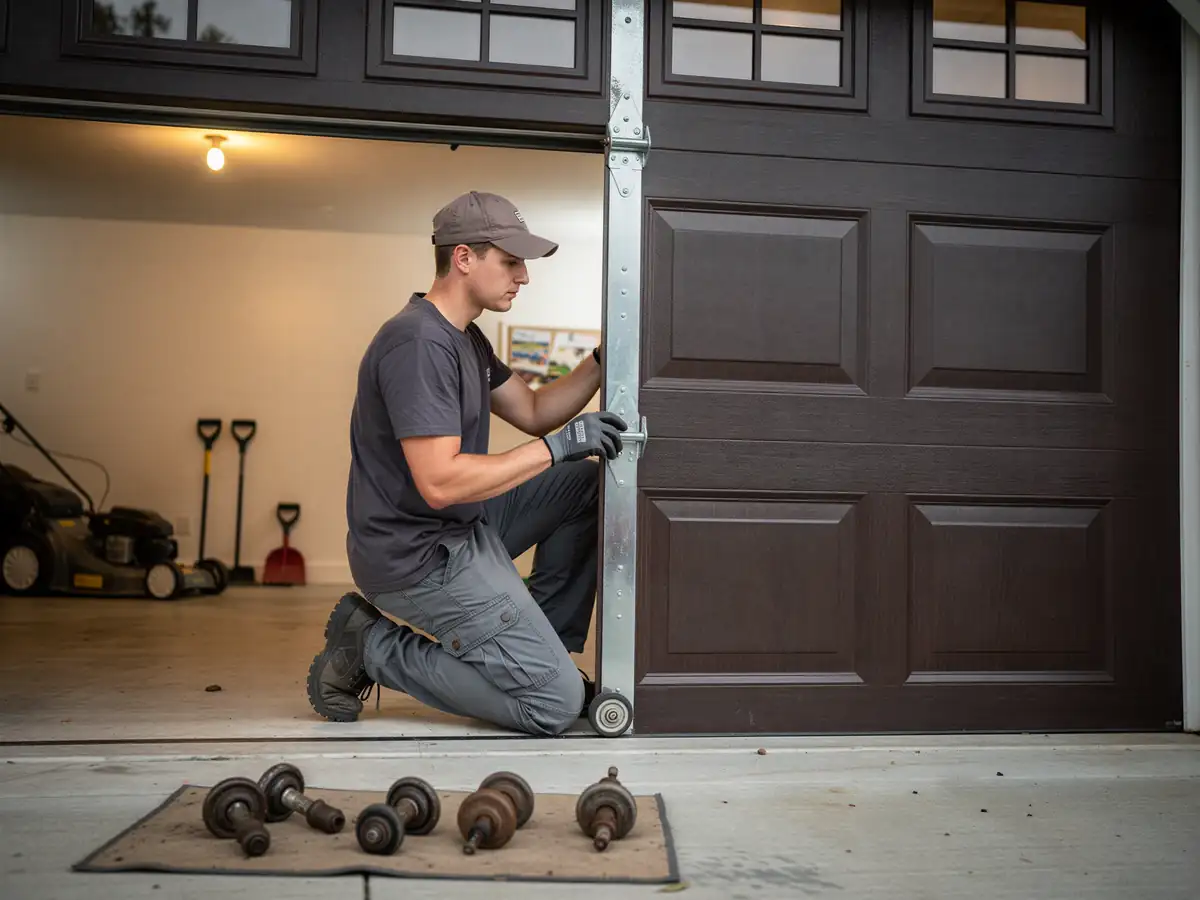
What You Are Seeing
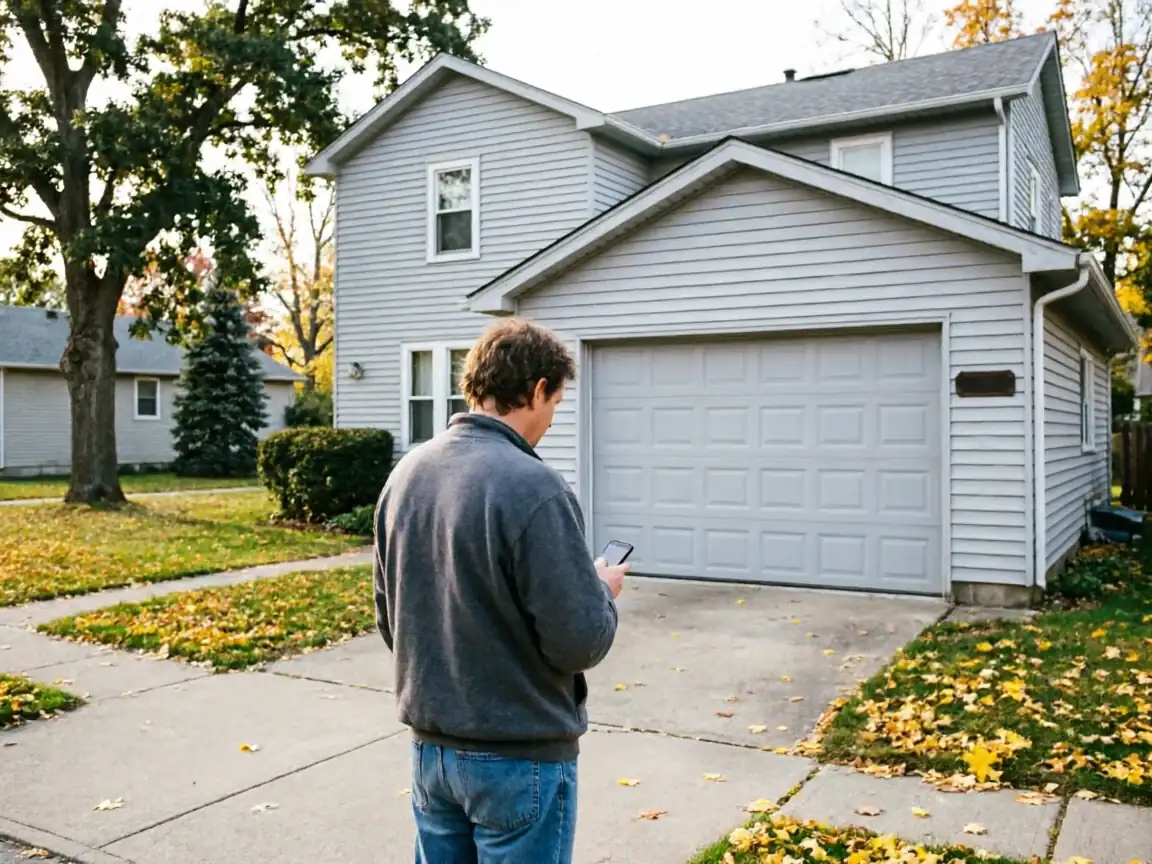
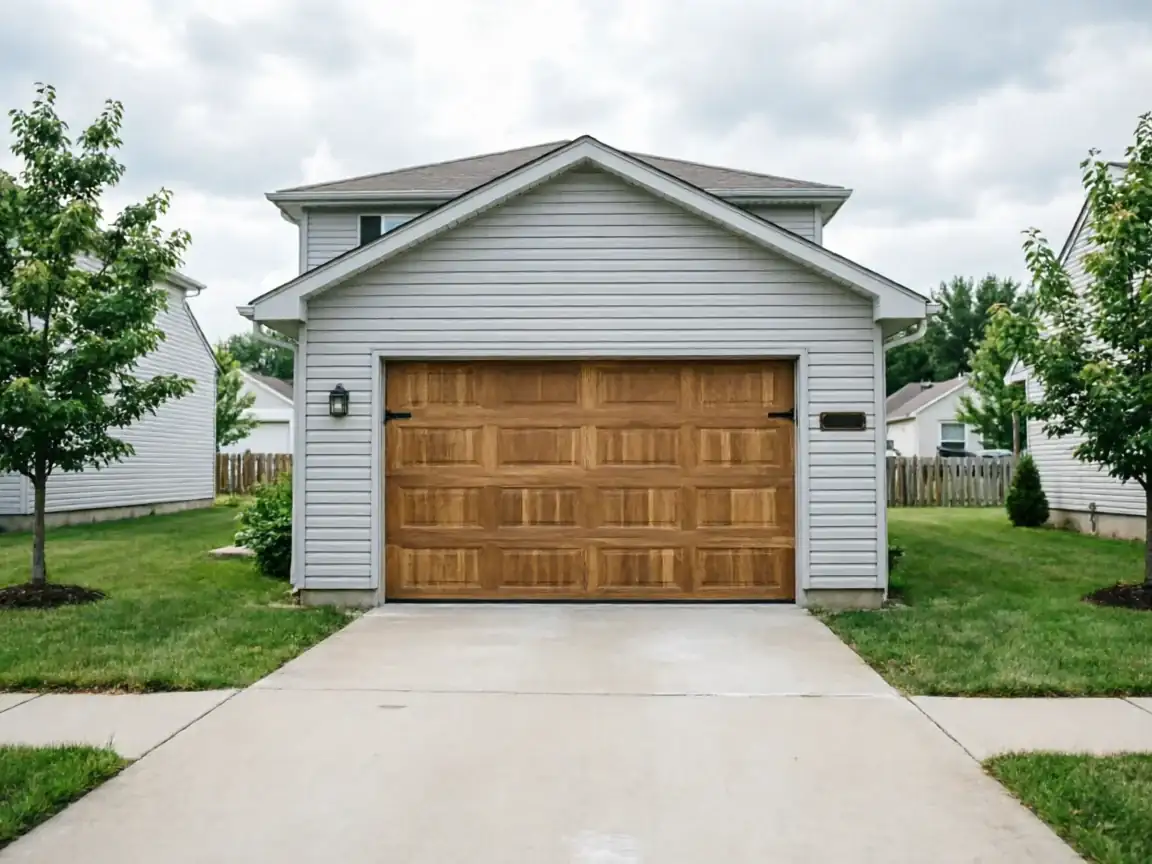
Most houses in Coal Valley went up around 1988
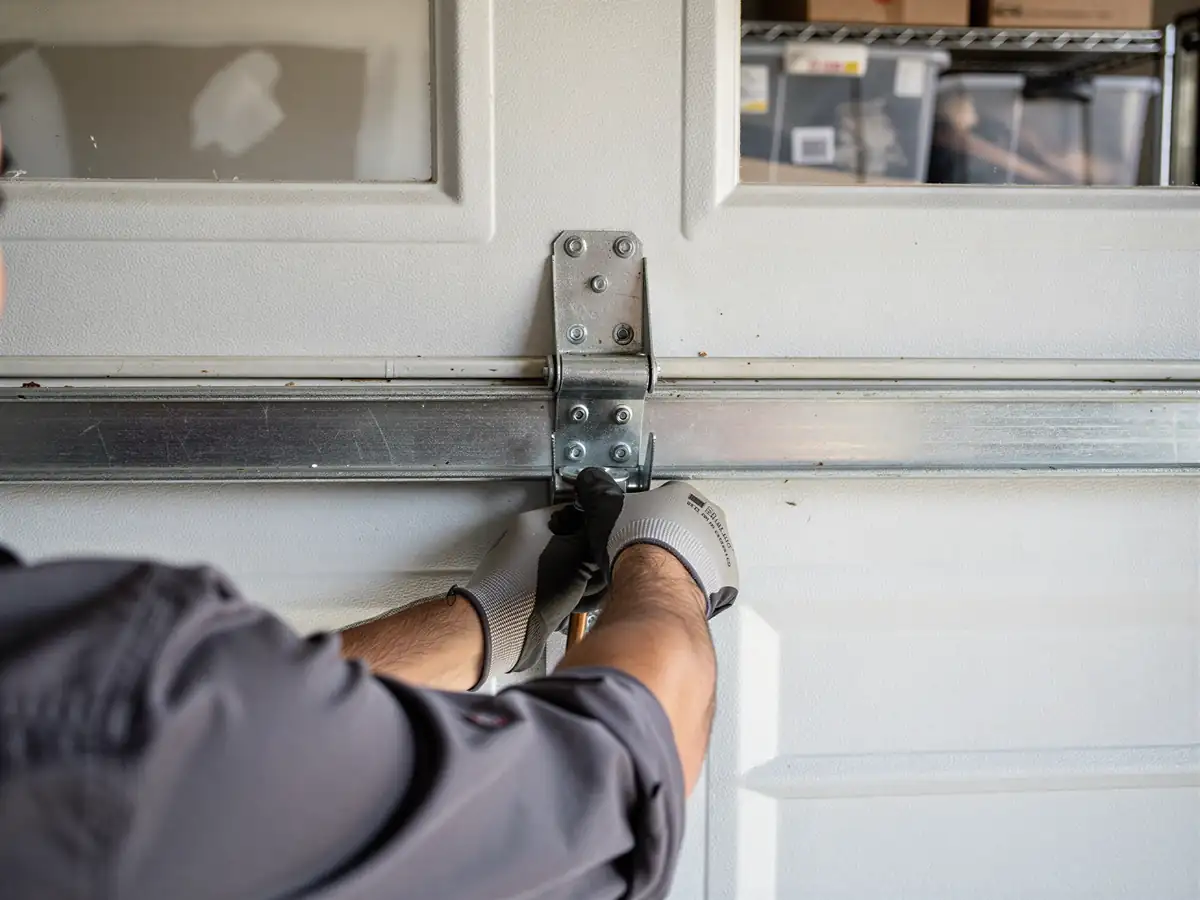
Which puts this town a good two decades newer than the 1968 median for the wider service area. That matters for rollers. By the late 80s, builders had mostly moved off the plain steel rollers with no bearings that you still see on older stock nearby, and onto 7-ball bearing steel rollers or early nylon rollers riding in galvanized track. If your door is original to the house, you're likely looking at one of those two setups rather than the bare stamped-steel rollers common on 1960s and 70s doors a few miles away.
The symptom is usually the same no matter the roller type
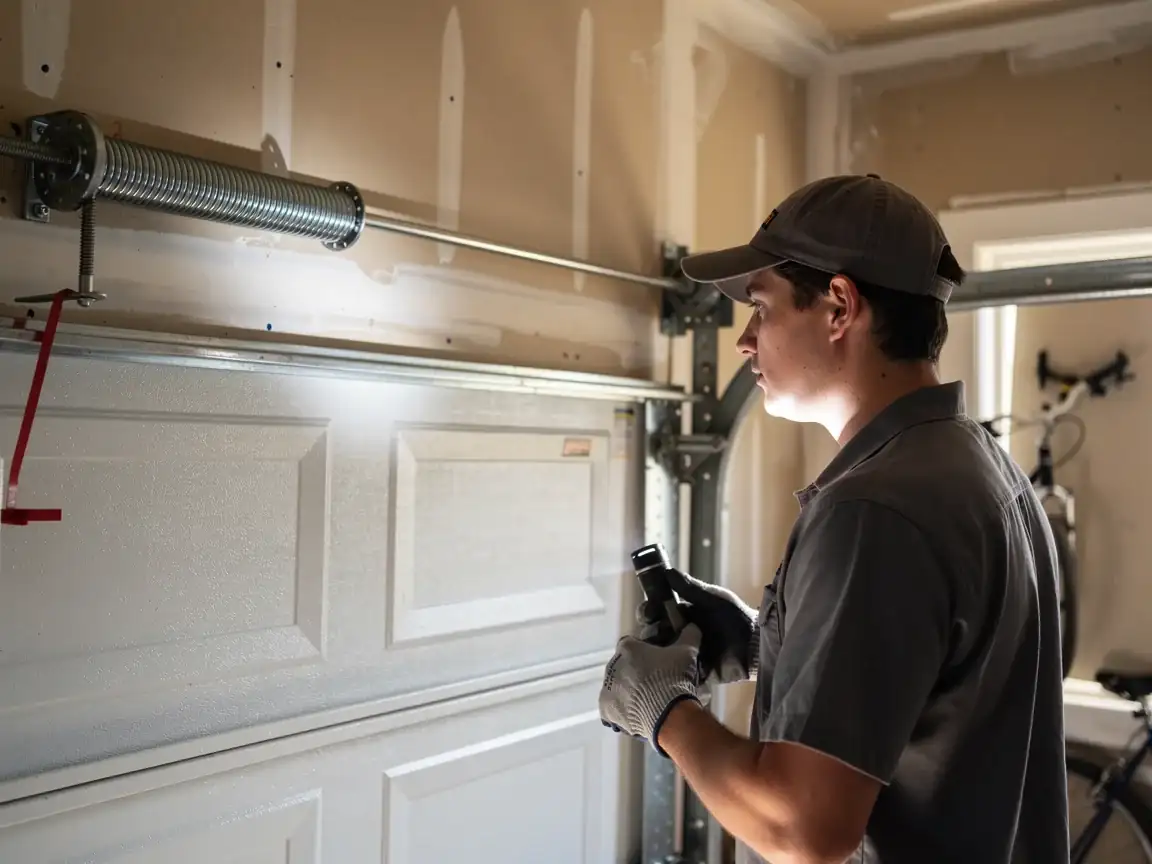
A grinding or rattling sound as the door travels, worse at the bend where the track curves from vertical to horizontal. Steel rollers tend to wear loud and gradual. Nylon rollers with worn bearings tend to go from fine to rough fairly fast, sometimes in a matter of weeks, because once the bearing seal fails, grit gets in and eats the rest of it.
Sagging or a door that hesitates at the curve is often the roller, not the opener
Worth checking before anyone replaces a motor that was never the problem.
What Is on the Truck
For Coal Valley calls, the truck carries nylon rollers with sealed bearings as the standard replacement, since that's the upgrade path for most doors built in the late 80s and after. Steel ball-bearing rollers are stocked too, for older doors in the broader area or for owners who specifically want steel back. Full sets run 10 rollers for a standard double door, fewer for a single.
Track brackets and roller stems come along as well, since a worn roller sometimes takes the bracket hole with it, and swapping just the roller into an elongated hole doesn't hold. If the track itself is bent or dented from a roller that jumped it, that's a separate repair and not always one that gets done the same visit, depending on how far the damage runs.
What It Costs
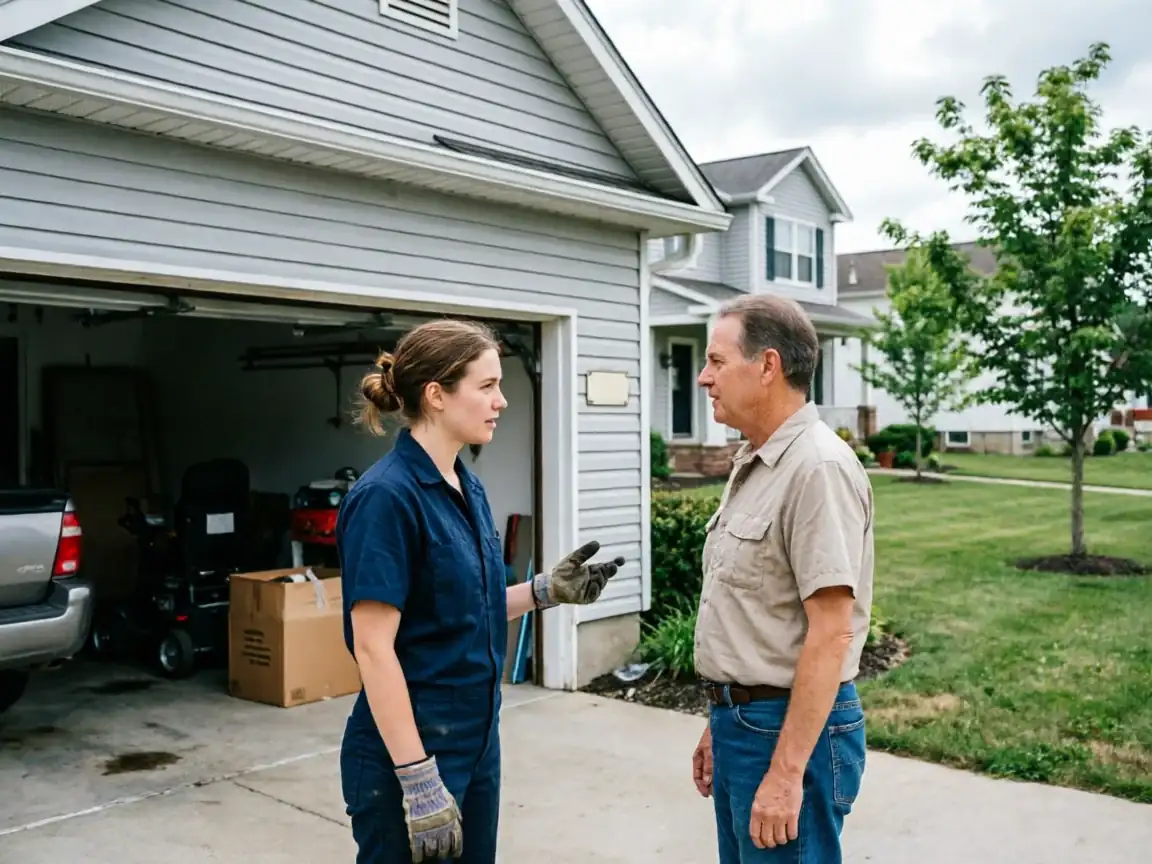
No price list here. Cost depends on how many rollers are shot, whether it's steel or nylon, and whether the track or brackets need attention too. A couple of worn rollers on an otherwise sound door is a small job. A full set plus bent track is a bigger one. Ask for a number on the actual door, not a general quote, since guessing low and padding it later helps nobody.
What Can Go Wrong
The most common surprise on a 1988-era door is finding that only the bottom rollers are shot while the top ones are fine
And an owner wants to just do the bad ones. That's a reasonable call on a budget, but mismatched roller types on the same track wear unevenly, so steel next to nylon tends to mean a repeat call sooner than you'd like.
The other thing that comes up
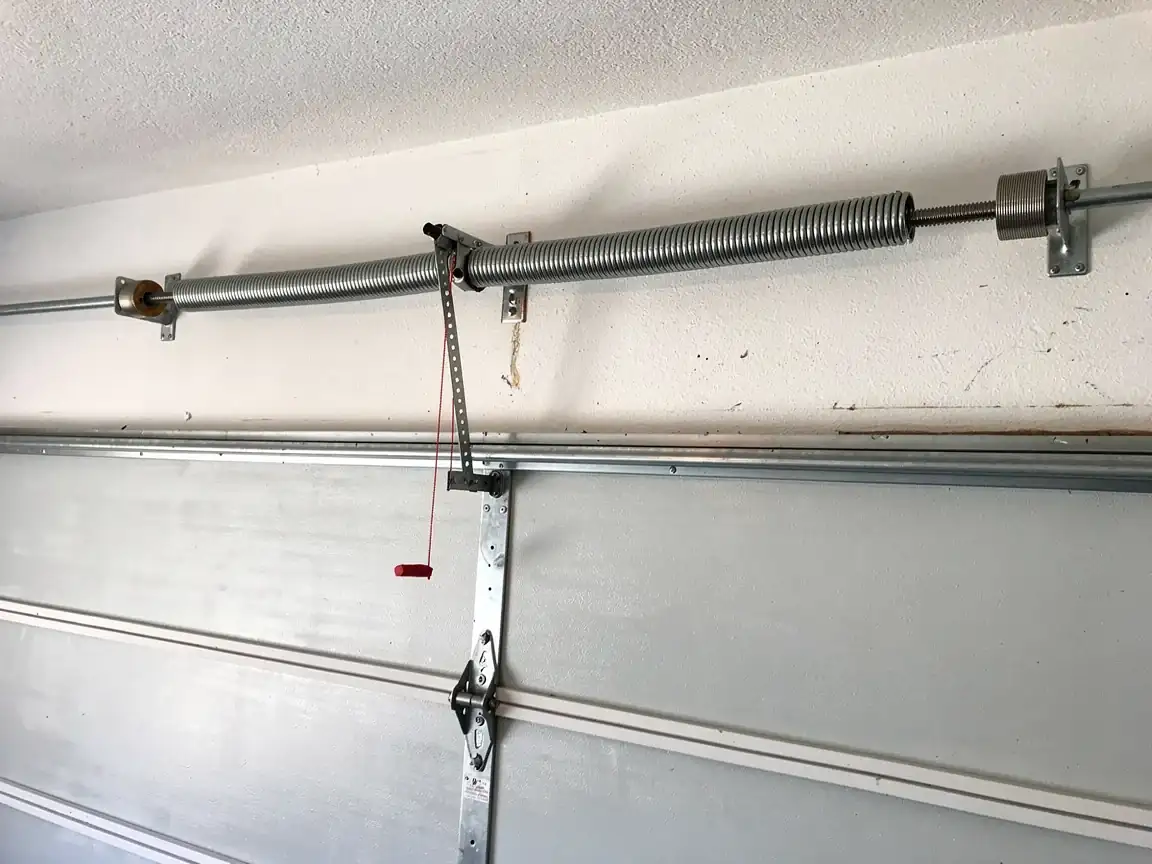
A cable or spring that's been quietly overcompensating for a dragging roller. If the door's been rough for a while, it's worth a look at the spring too, since a spring working overtime on a door that drags doesn't last as long as one that doesn't.
Honest limit here - if the track itself is rusted through or bent badly enough that it won't hold alignment after straightening
Rollers alone won't fix the door. At that point, track replacement is the real job, and it's better to say so up front than sell rollers that won't solve it.
Doing It Yourself
Rollers are one of the more doable DIY jobs on a garage door, with a caveat: do not touch the bottom roller on either side of a door under spring tension without releasing the door from the opener and securing it first, and never work near a torsion spring you haven't had looked at. Top and middle rollers on a door that's otherwise sound are a reasonable weekend task for someone comfortable with a ladder and a socket wrench. Bottom brackets carry more load and more risk, since they're attached near the cable system - that's where a mistake costs a finger, not a repair bill.
How Long It Takes
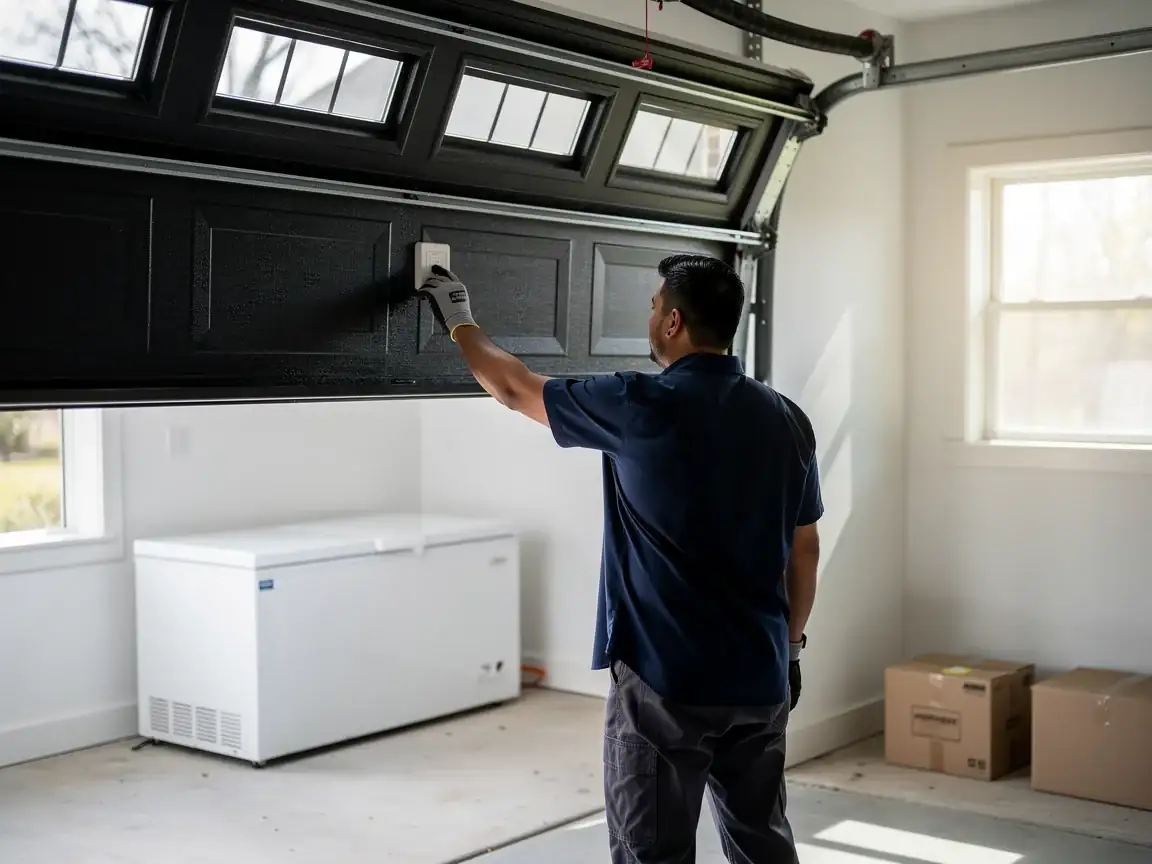
A straightforward roller swap on one door, steel or nylon, is usually finished within the hour once the tech is on site. Add time if the track needs straightening or a bracket's stripped out. The drive from Moline out to Coal Villa is about 4 miles, so travel isn't the long part of the visit - the work itself is.