
What Can Go Wrong
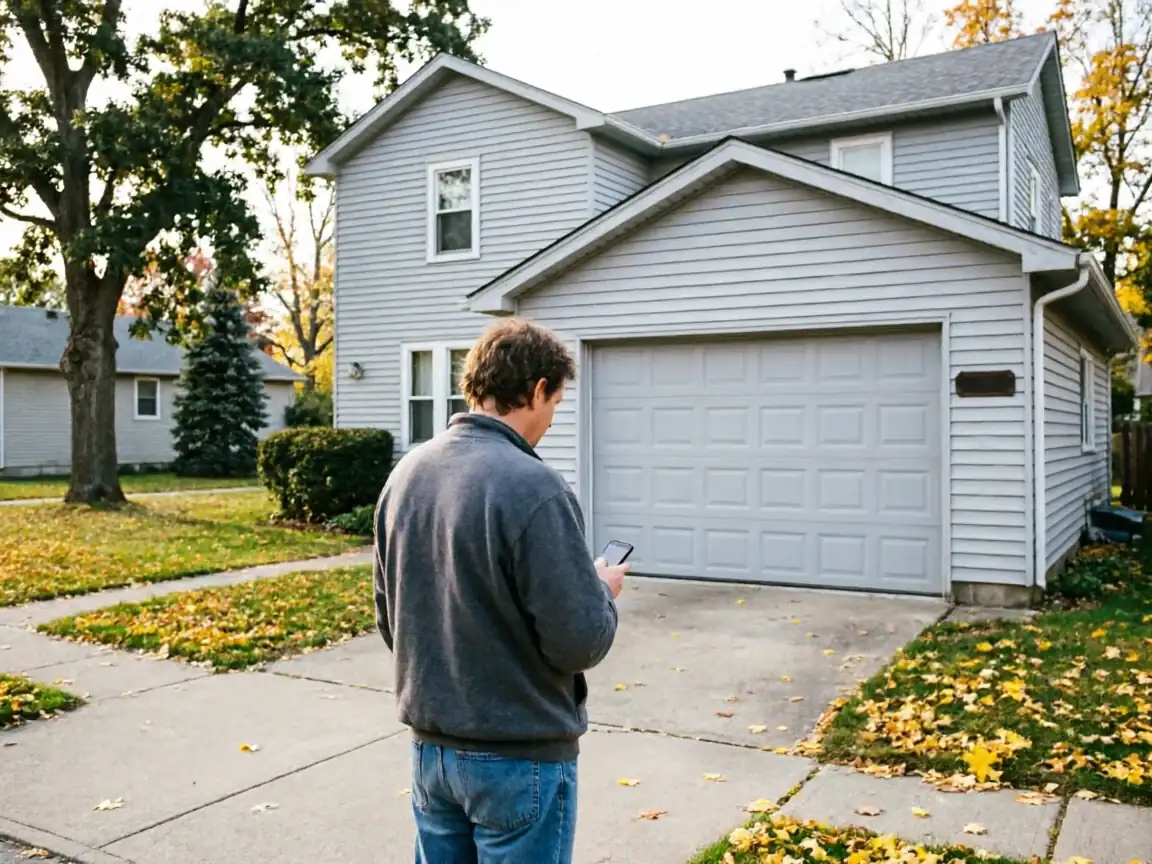
The typical East Moline house dates to 1967
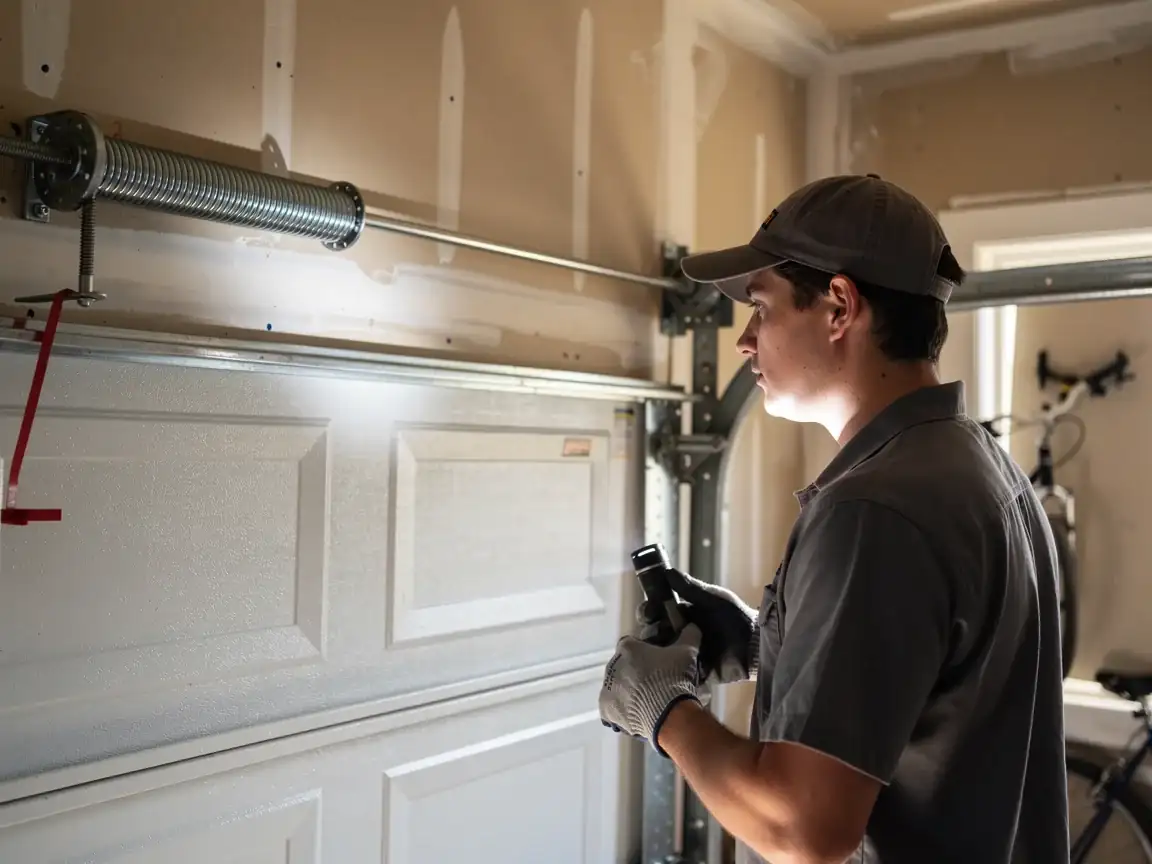
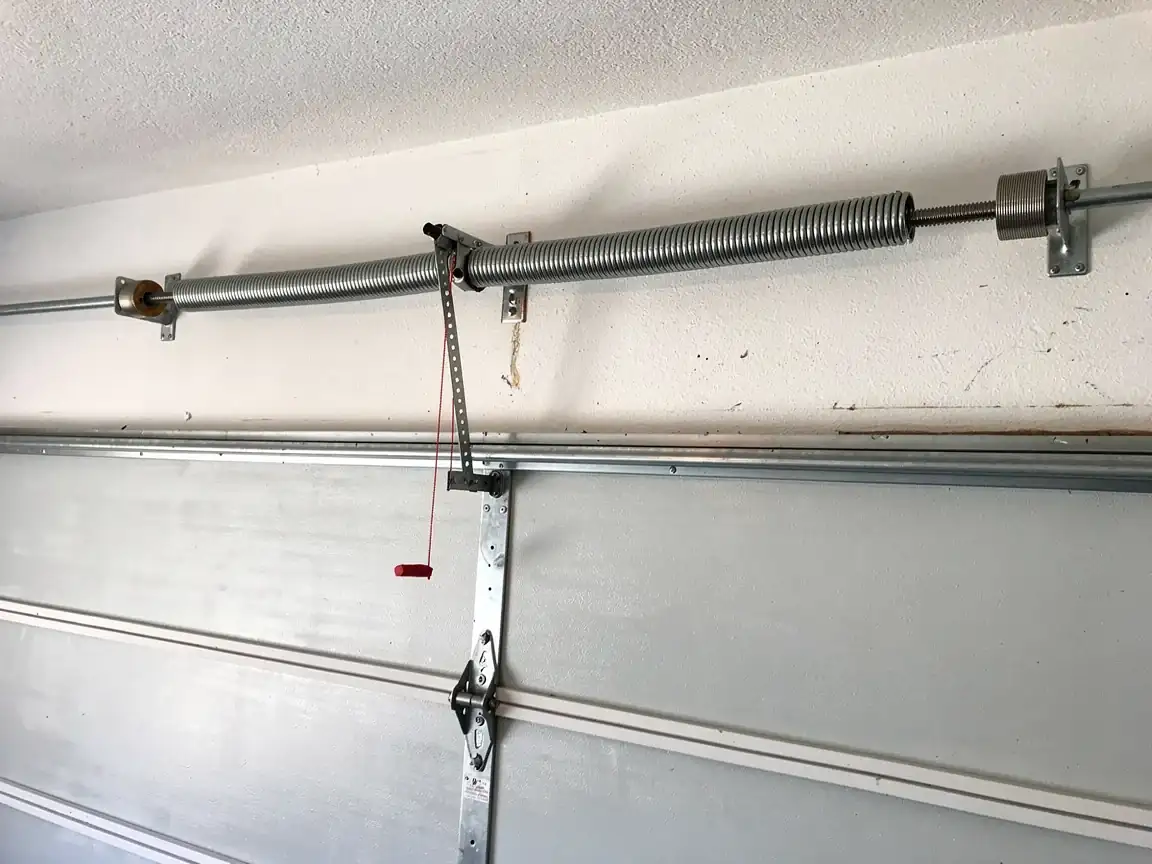
Right in the middle years when builders were shifting from heavier wood-panel doors to lighter steel sectional doors on torsion springs. That transition shows up in the service calls. On the older end of that stock you still find single torsion springs sized for doors that have since been swapped for heavier insulated panels - the spring is undersized and snaps early, usually on a cold morning when the steel has contracted and the first lift of the day puts the most load on it.
We're in a cold moderate climate band here, and that matters more than people think
Grease that was fine in August turns stiff by January, rollers bind in the track, and openers that were already working hard against a tired spring finally give out. The other common call is a cable that's frayed through on an original drum that was never replaced when the door was.
What we don't see much of in East Moline is the newer double-spring
Heavier-gauge setup you'd expect on a house built after 2000 - the stock here just doesn't run that late. That's useful to know before a repair starts, because it tells us what's likely on the wall before we even open the truck.
How Long It Takes
We come from Moline, about 6 miles out, so travel time is part of the window, not an afterthought. We don't quote a response time here because it depends on where we're coming from on the route and what's ahead of your call that day - we're not going to promise a number we can't back up.
Once we're on site, a broken spring or a snapped cable on the kind of door common to this area is usually a same-visit fix. Opener boards and circuit issues sometimes take longer if a part isn't the one we carry and has to be sourced, which happens more often on older openers paired with newer logic boards than it should.
How We Fix It
First thing we do is match the door to its era. A 1960s-70s single-car door on a house built close to 1967 usually runs on a single torsion spring and a lighter track than what's standard today, so we check spring size against door weight before we touch anything - that mismatch is the root cause behind a lot of the 'it just snapped' calls.
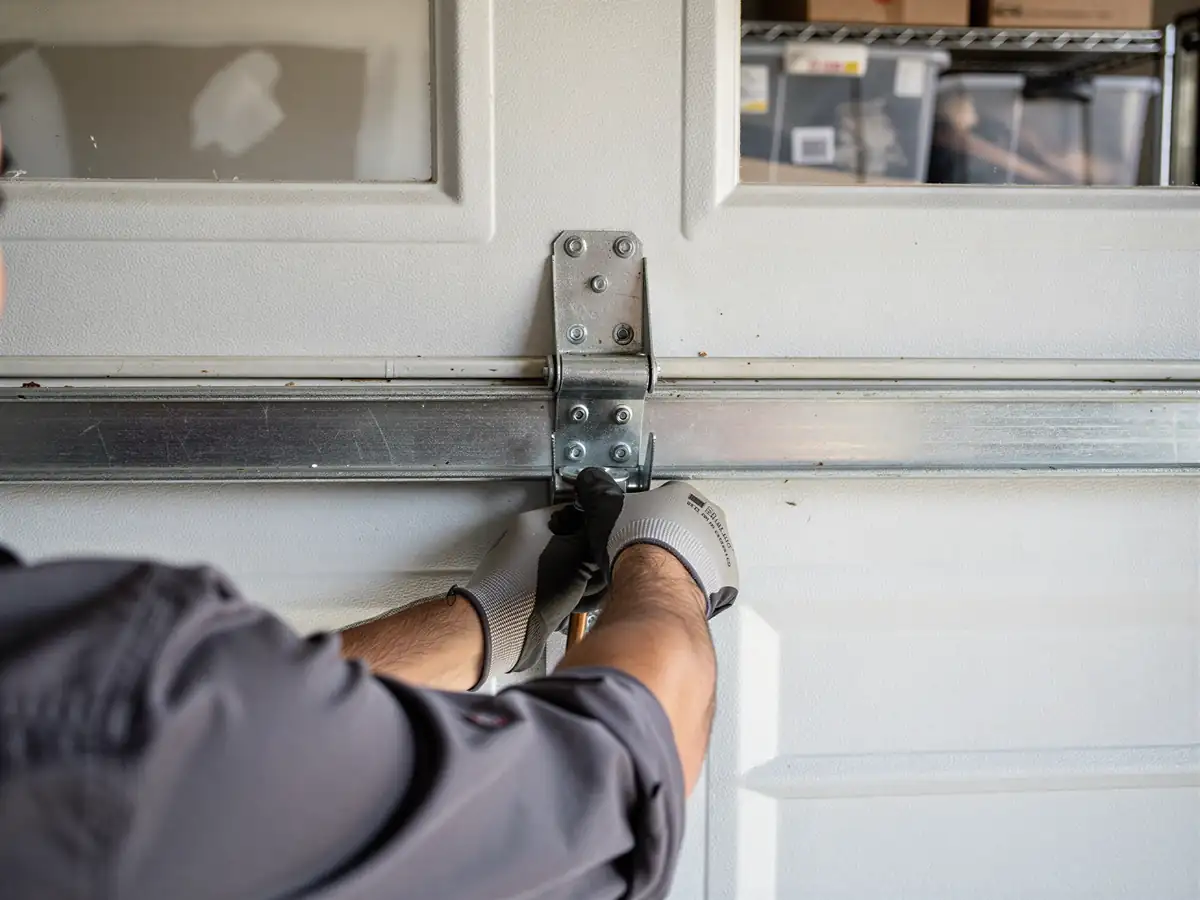
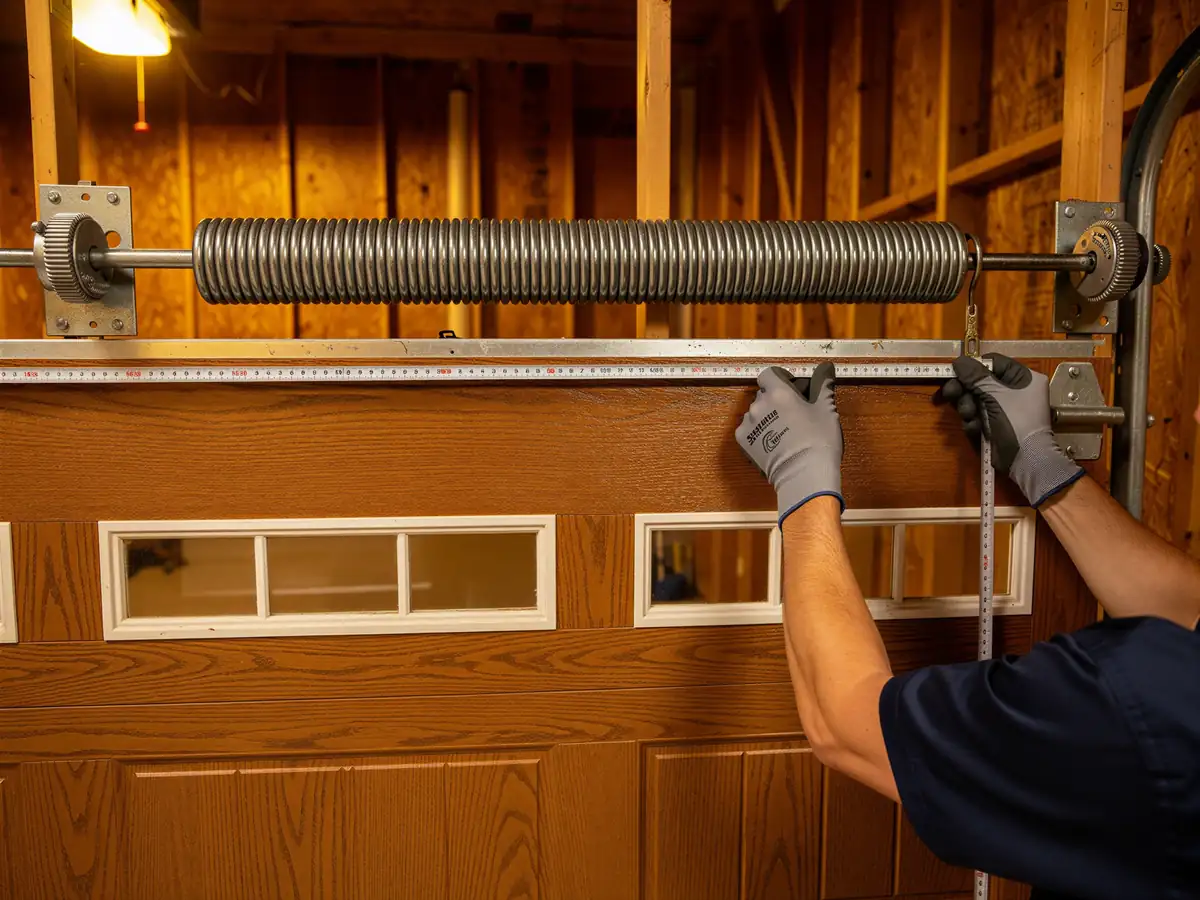
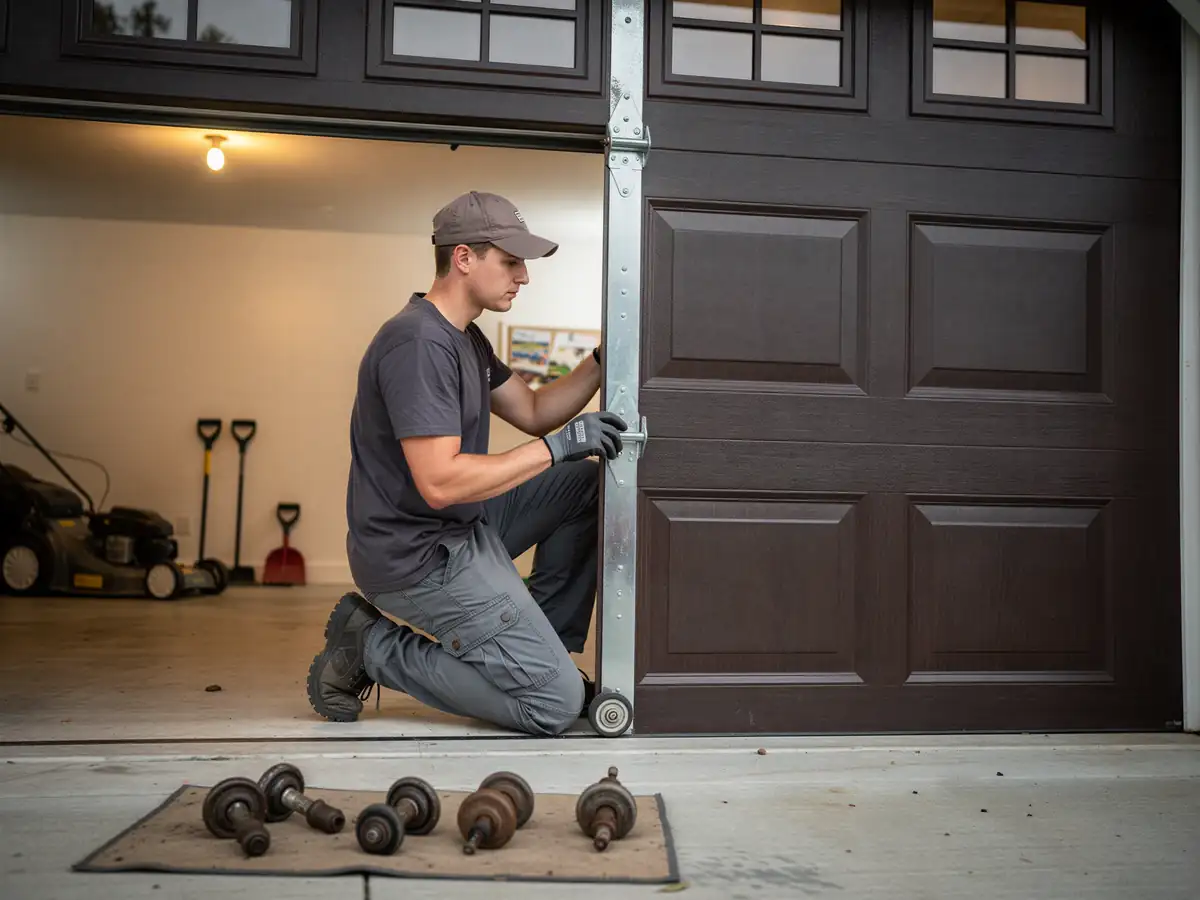
For a broken spring, we unwind what's left of the old one under tension (never by hand, never with the door down and unsecured), measure the door's actual installed weight, and size the replacement to that weight rather than to whatever's listed on the faded sticker. For a derailed door, we check the track alignment and the roller condition before resetting it - a bent track on an older house is sometimes from decades of settling, and forcing the door back onto a track that's still crooked just breaks something else inside a month.
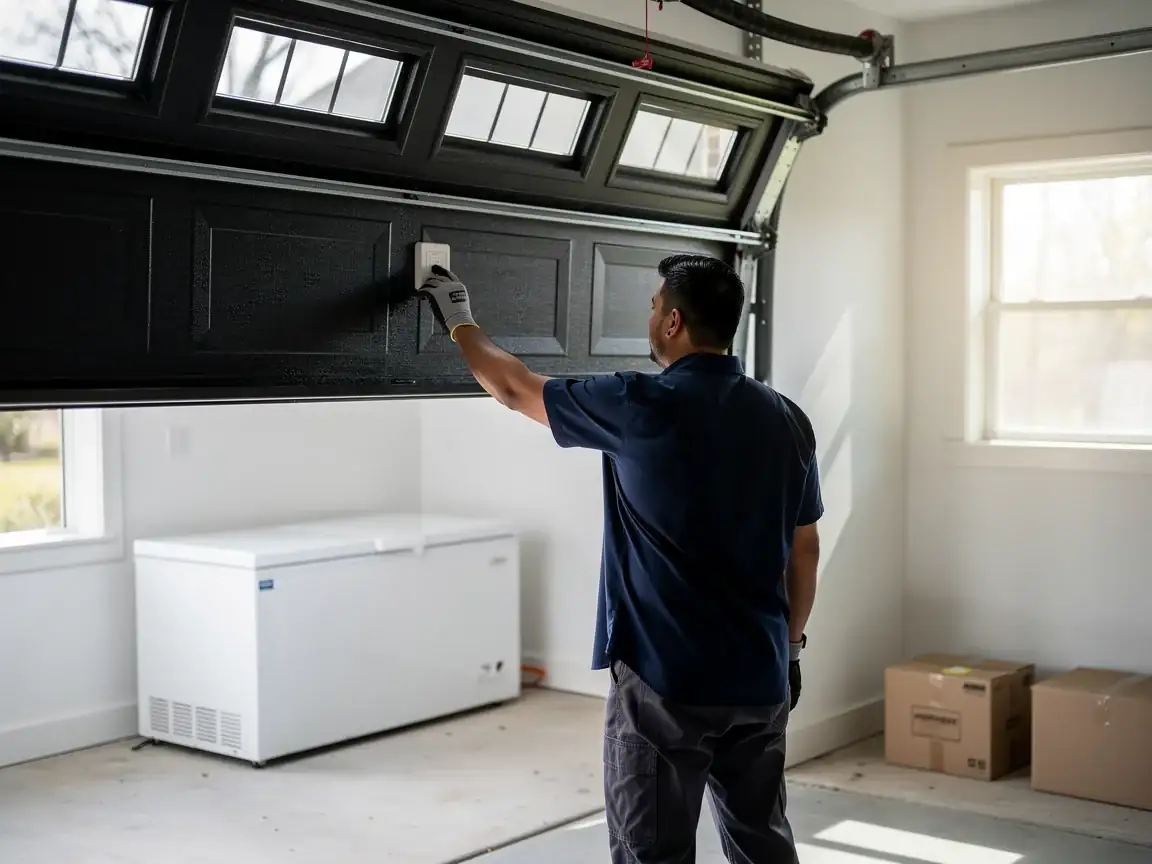
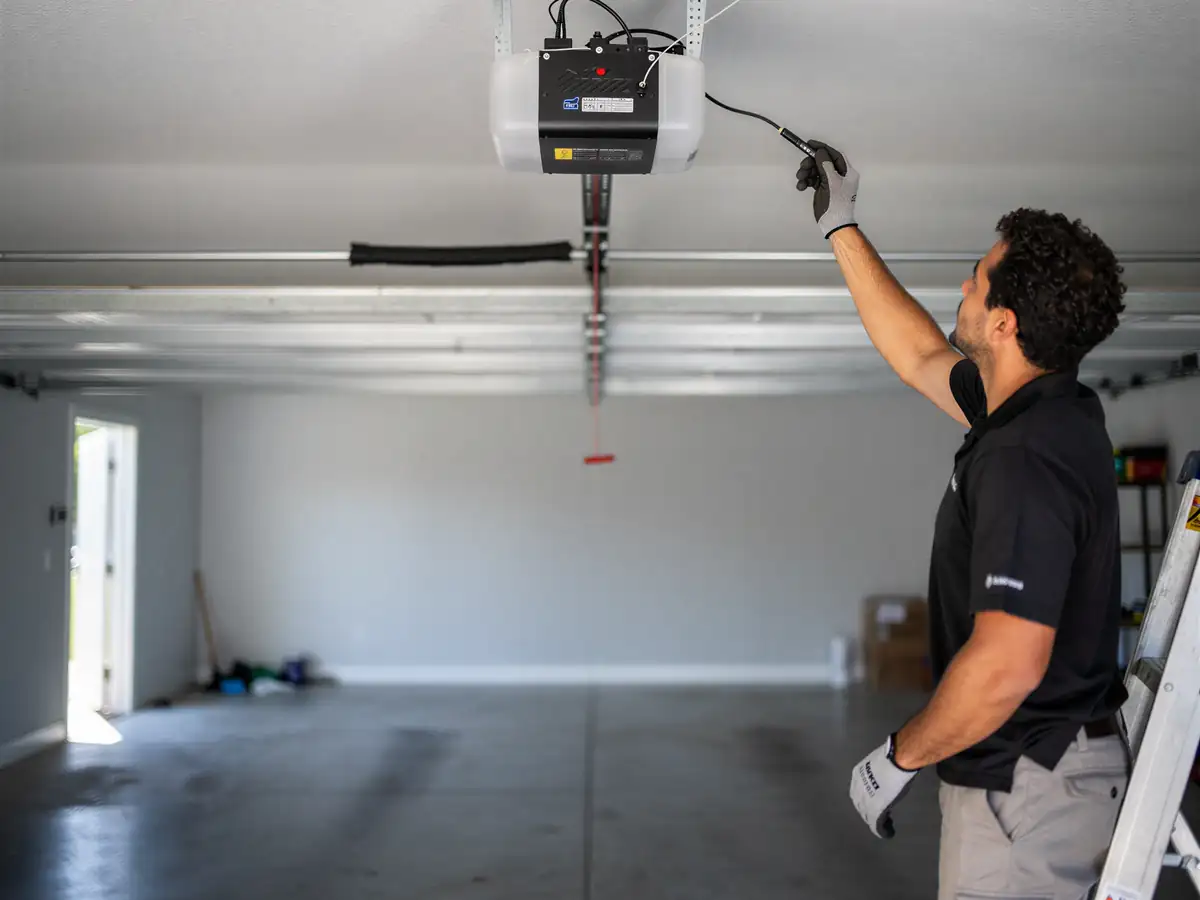
If the opener's the problem, we test the logic board and the safety sensors before replacing anything. Half the openers we're called out for aren't broken, just miswired or blocked.
What It Costs
We don't have a published price list for East Moline specifically
And we're not going to make one up to fill this space. What we can tell you is that the job itself - spring, cable, opener board, roller set - is priced the same whether the door is in East Moline or anywhere else we drive to, since the part and the labor don't change with the zip code. The variable that does change is what's actually wrong, and that's shaped by the age of the door more than anything else.
If you want a number before we're on site, call and describe the door
Age of the house, whether it's a single or double door, and whether the opener is original. That gets you a closer estimate than anything we could print here.
What Is on the Truck
Because so much of East Moline's housing dates to the 1960s and 70s, we carry torsion springs sized for the lighter, single-spring setups that era used, not just the heavier double-spring stock built for newer insulated doors. We also carry standard-drum cable in the gauge that matches those older setups, since a mismatched cable is a fast way to end up back at the same house in six months.
What we don't carry are specialty parts for high-end custom doors - if a door's got a proprietary track or a manufacturer-specific opener board that isn't common, that part may need to be ordered, and we'll tell you that up front instead of pretending we can fix it on the spot.
Doing It Yourself
A torsion spring under load can break a bone or worse if it's released wrong - that's not a job to do with a wrench and a YouTube video, full stop. Where a homeowner can safely help themselves: lubricating rollers and hinges before cold weather sets in, checking that the track bolts haven't worked loose, and testing the auto-reverse safety feature by setting a piece of wood under the door and making sure it reverses on contact.
If the door's original to a 1960s or 70s build and you're not sure what's on it, that's exactly the case where calling first saves money. Guessing at spring size on an unknown door usually ends with a second call.