How Long It Takes
The six-mile trip from Moline is short, but it still shapes how a call gets scheduled rather than squeezed in. We don't keep a branch in East Moline, so every job here starts with that drive, and we plan the truck's stock before we leave rather than after we find out what's wrong. Diagnosis on most opener calls takes under an hour once we're on site - testing the logic board, checking travel limits, confirming whether the sensors or the motor are the actual problem. If the fix is a board, a sensor pair, or a drive gear kit, we carry those and finish the same visit. If the motor itself is seized or the circuit board is a model we don't stock on the truck, that part has to be ordered, and we're upfront about that rather than padding the first visit. We won't promise a same-day fix on every call, because on an older opener the actual cause isn't always obvious until the cover's off.
How We Fix It
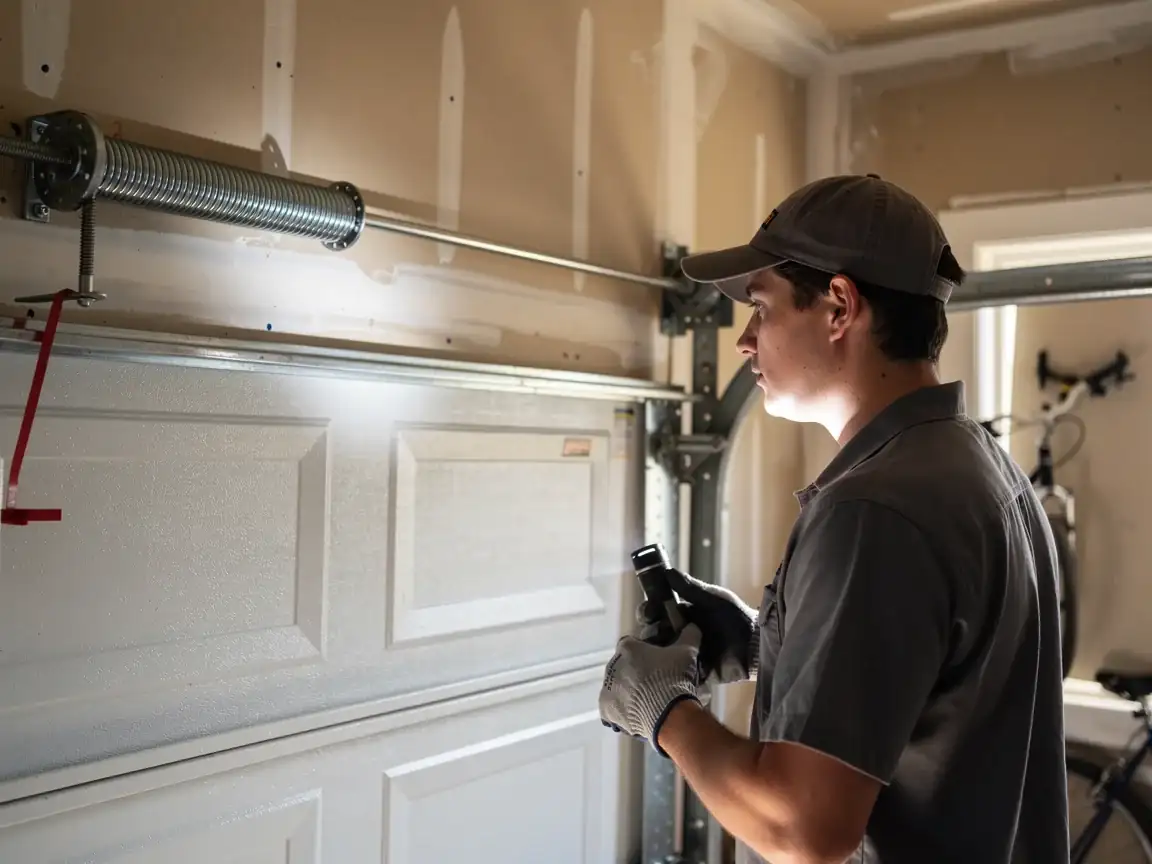
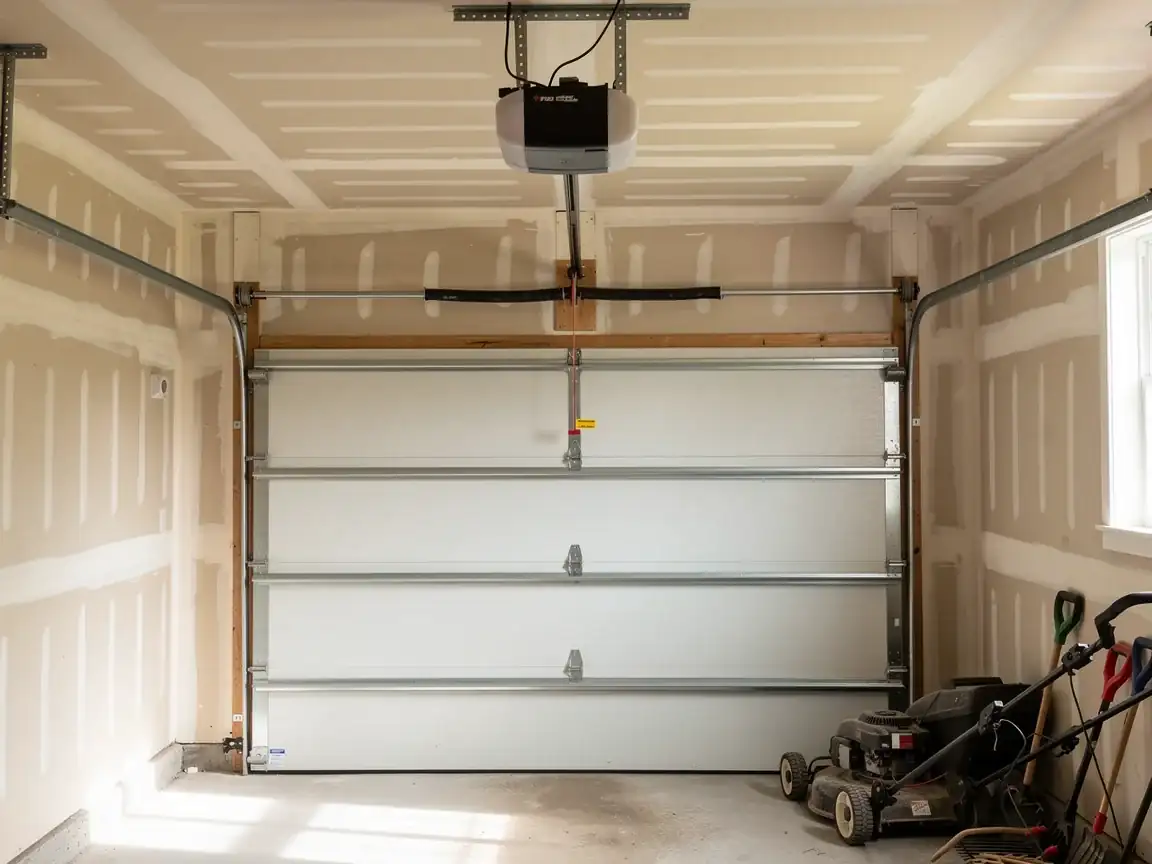
We start by running the door through a full cycle and watching where it hesitates - that tells us more than the owner's description usually can. Chain slack, worn gear sprockets, and failing capacitors all show up differently once you watch the motor work. On the 1960s and 70s housing stock common here, we check the drive gear and sprocket first, since those plastic parts wear out faster than people expect and are a known failure point on openers from that era. Sensor alignment gets checked next, especially after a hard winter, since frost movement in the slab is common in this climate band and throws sensors out by a fraction of an inch - enough to trip a safety reversal with nothing visibly wrong. If the logic board is the issue, we test for board failure specifically rather than replacing the whole opener on a guess, because a board swap is a fraction of the cost of full replacement. We tell you what we find before we touch anything further, and if the unit is old enough that a repair would cost close to a new opener, we say so instead of running up a bill on a motor near the end of its life anyway.
What Is on the Truck
Because East Moline's housing stock skews to the same 1960s-70s era as the rest of the service area, our trucks carry drive gears and sprockets sized for the chain and belt-drive openers common to homes from that period, plus safety sensor pairs and logic boards for the mid-era replacement units that followed the originals. We stock universal remotes and wall controls that cover most of what's still running on these openers. Capacitors and limit switches are standard stock too, since those fail steadily on motors this age regardless of brand. What we don't carry on every truck is a board for a brand-new smart opener - those are less common on this stretch of housing, so if that's what's installed, we may need to order the specific part rather than fix it same visit.
Doing It Yourself
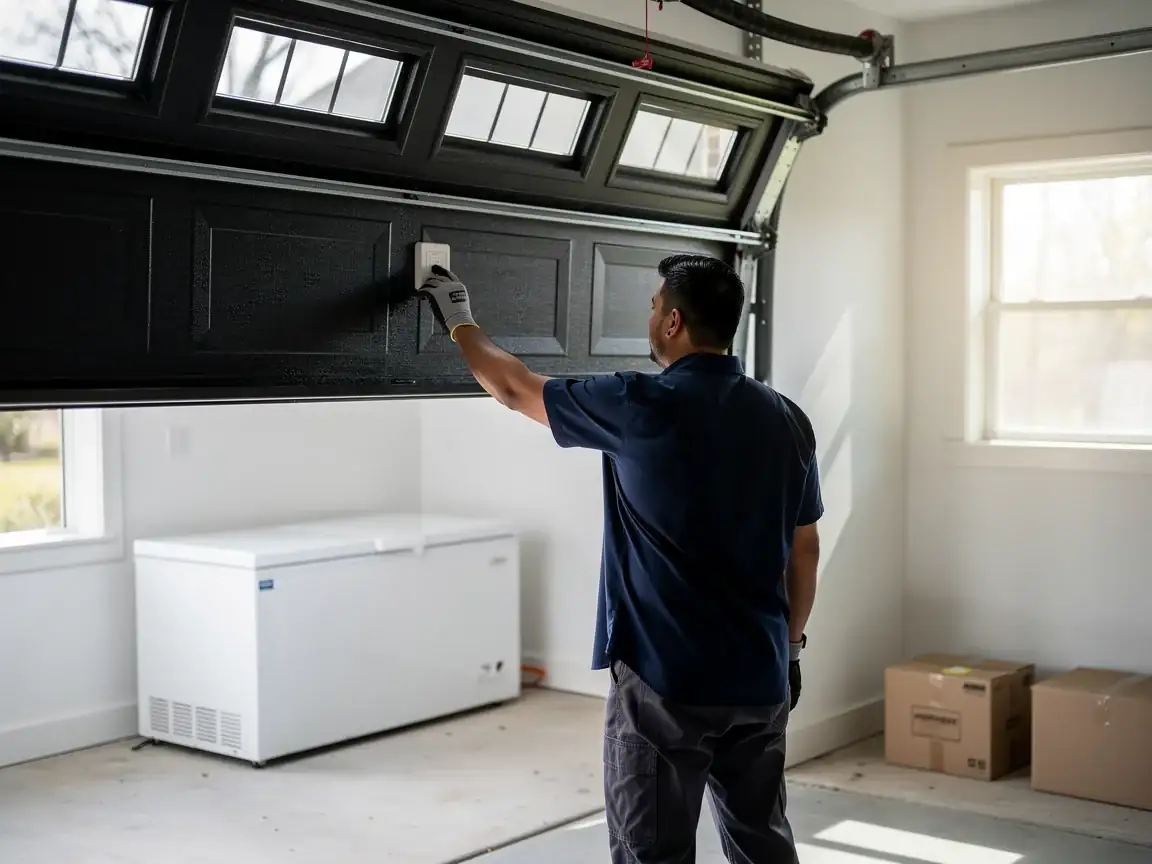
Checking the sensor alignment yourself is reasonable - two LED lights, one on each side of the track near the floor, should both glow steady. If one blinks, nudge it gently until the light holds; that alone fixes a good share of 'the door won't close' calls on its own. Tightening the chain or checking for obvious slack is also safe to look at before calling anyone. What we don't recommend touching is the motor housing or the logic board. Capacitors in older opener motors hold a charge even unplugged, and a board you don't recognize isn't worth guessing at - it's a cheap part to replace correctly and an expensive one to replace twice because the wrong fix got applied first.