What You Are Seeing
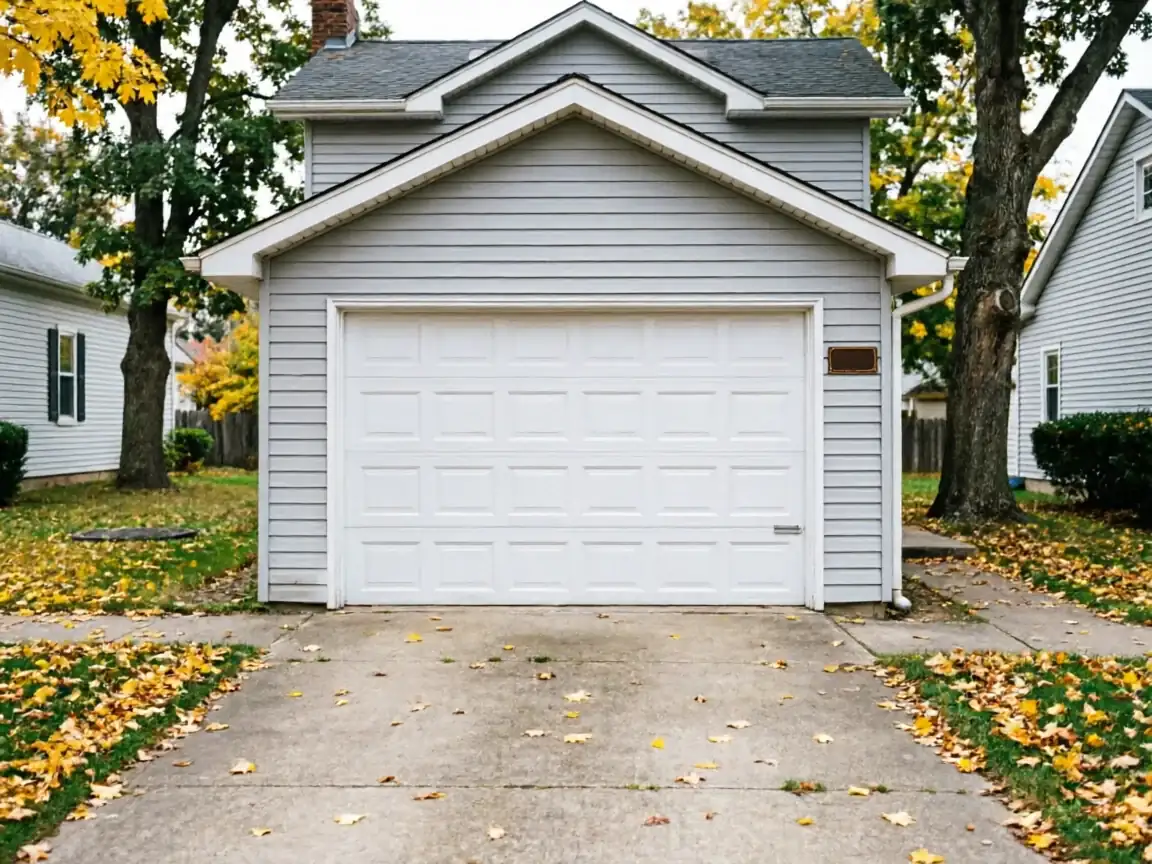
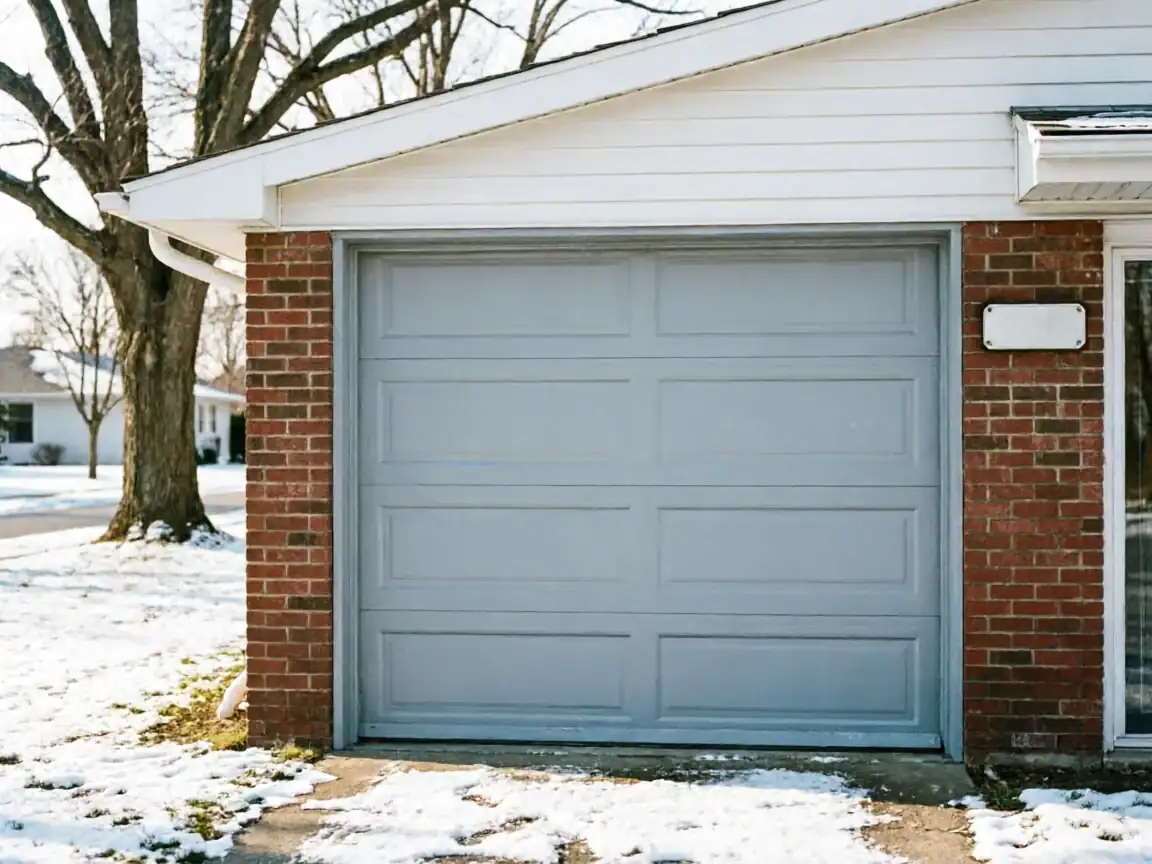
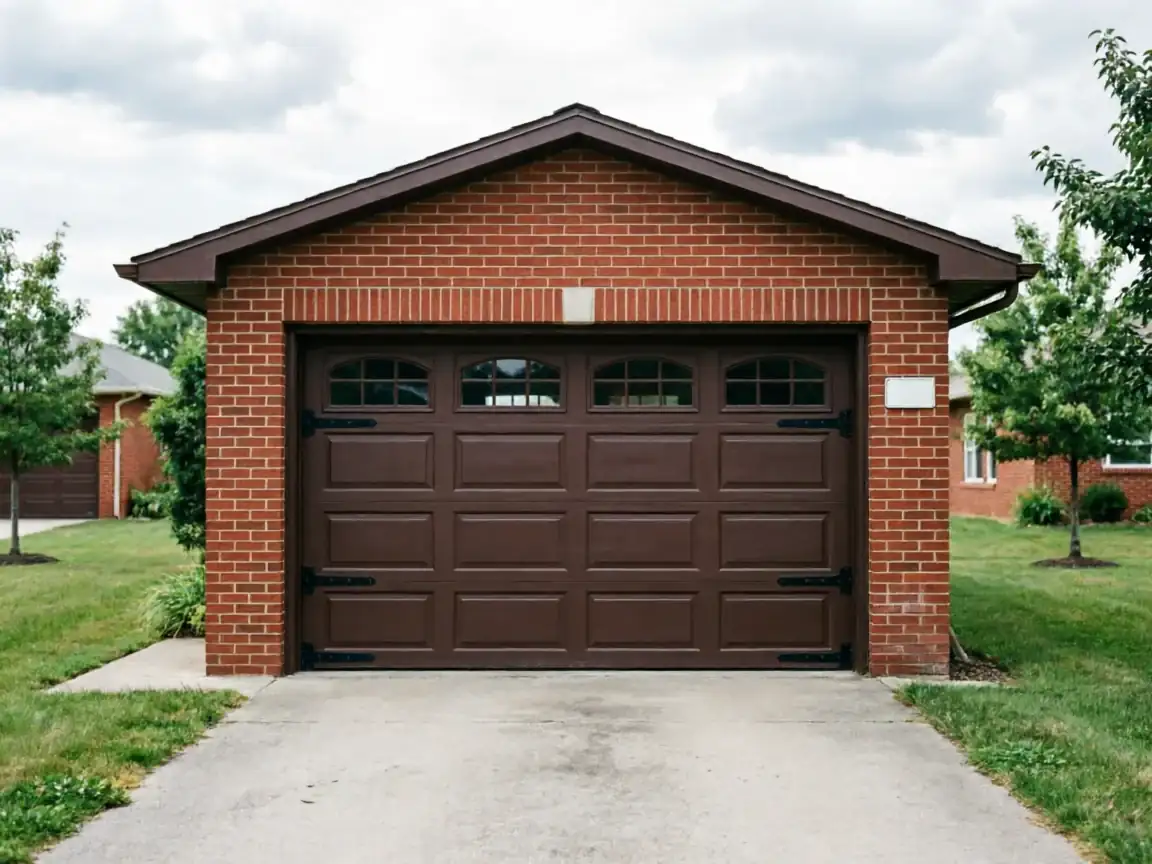
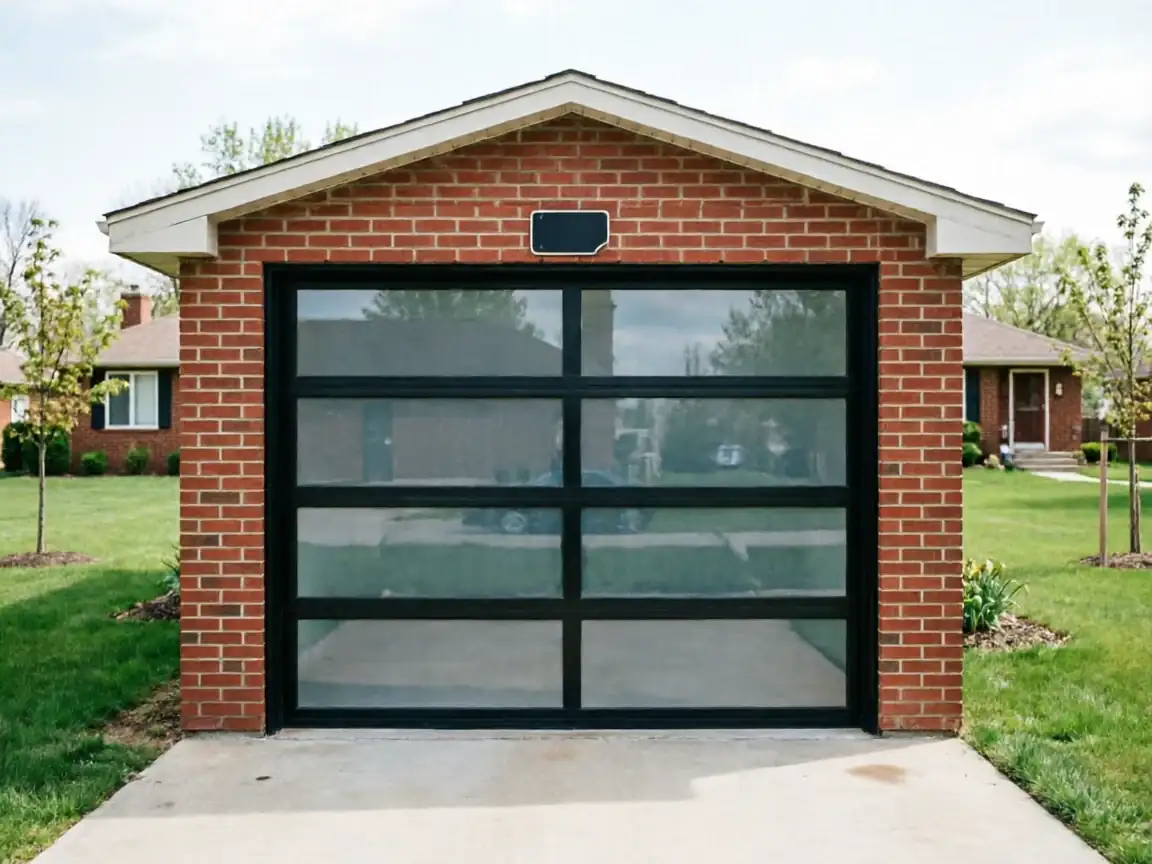
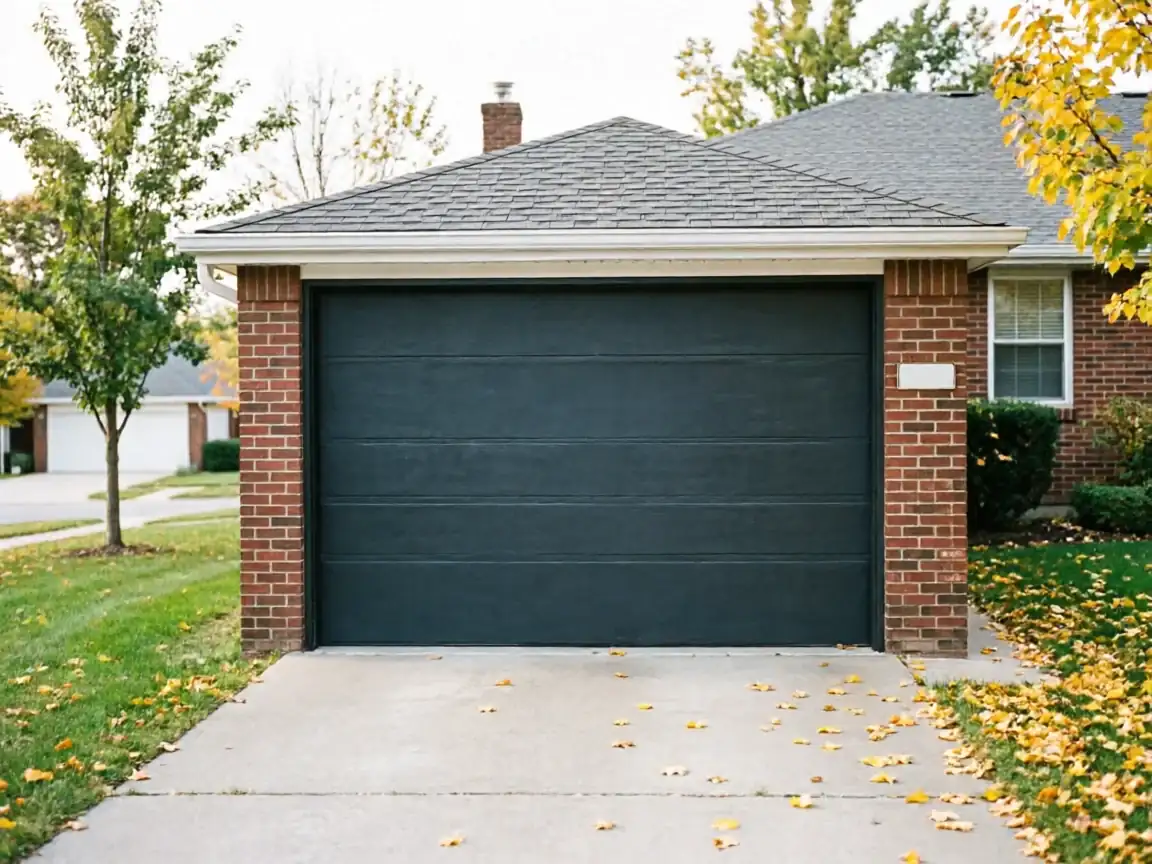
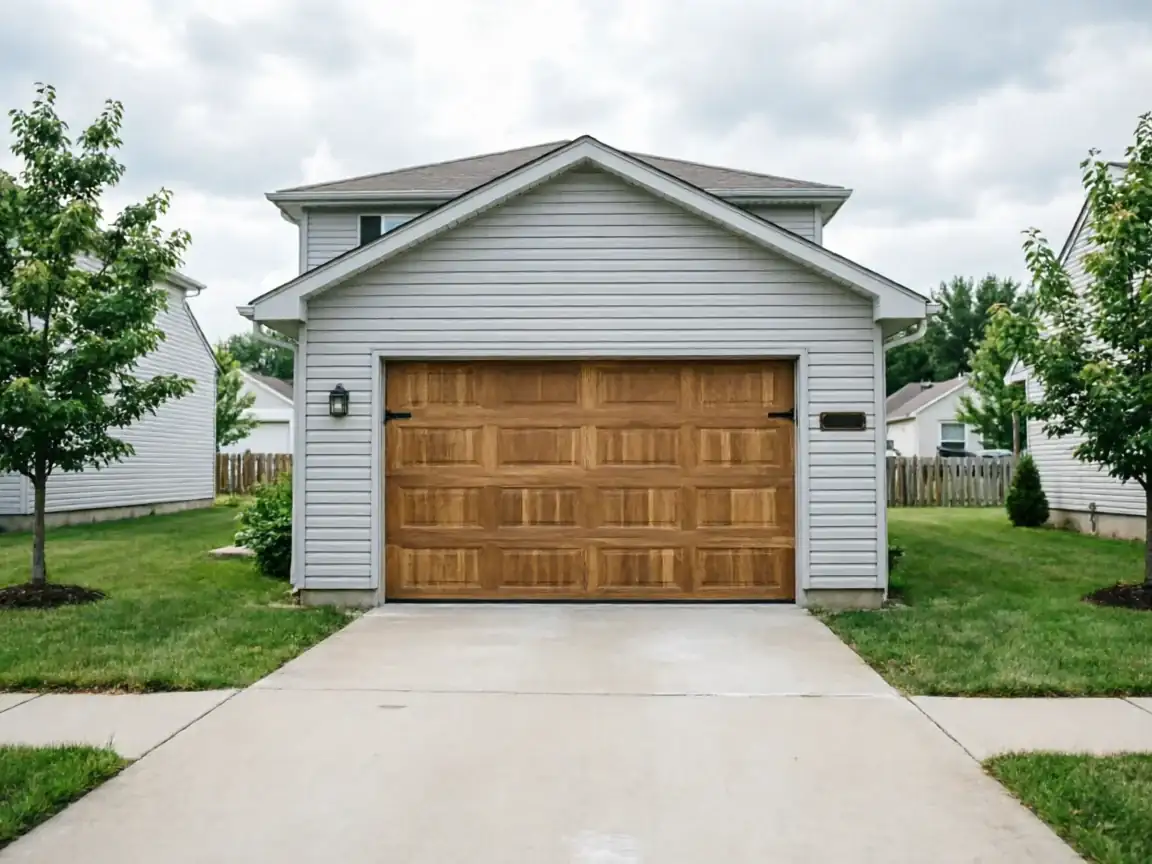
Most garage doors we run into in Geneseo went up around 1962
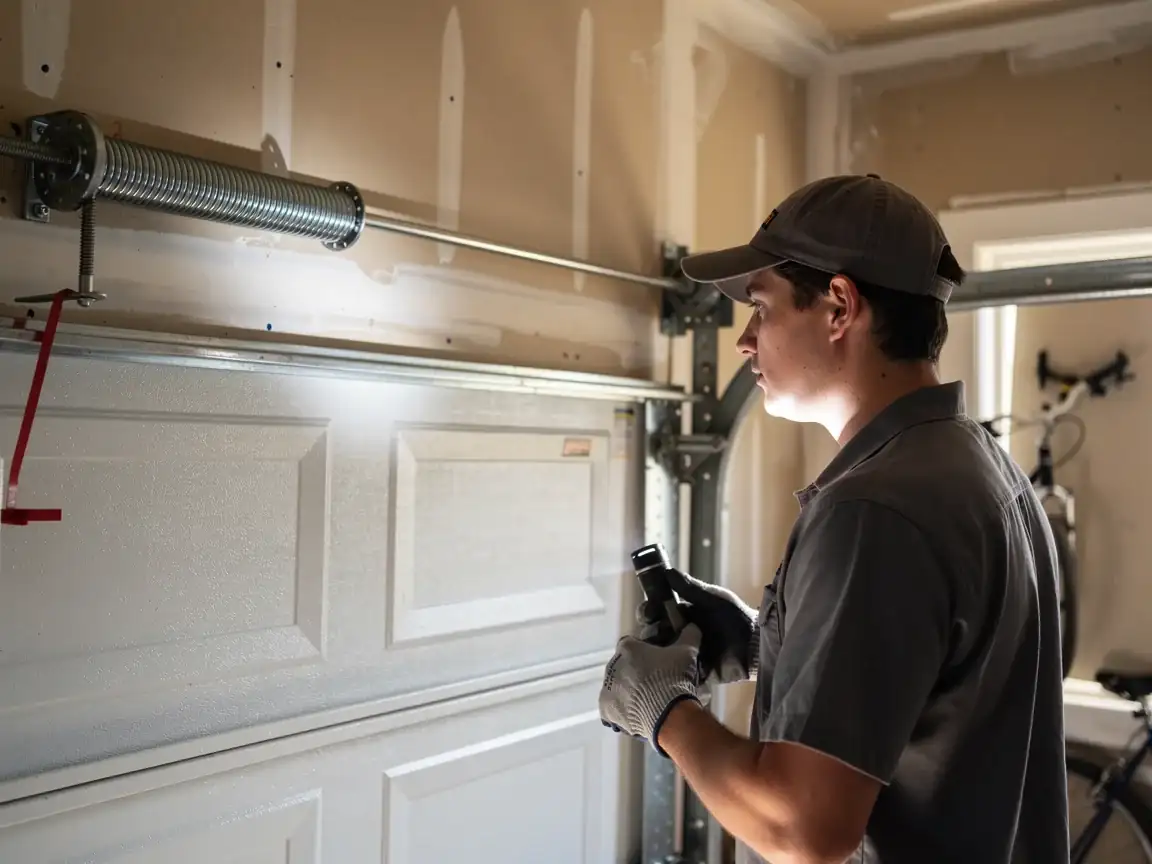
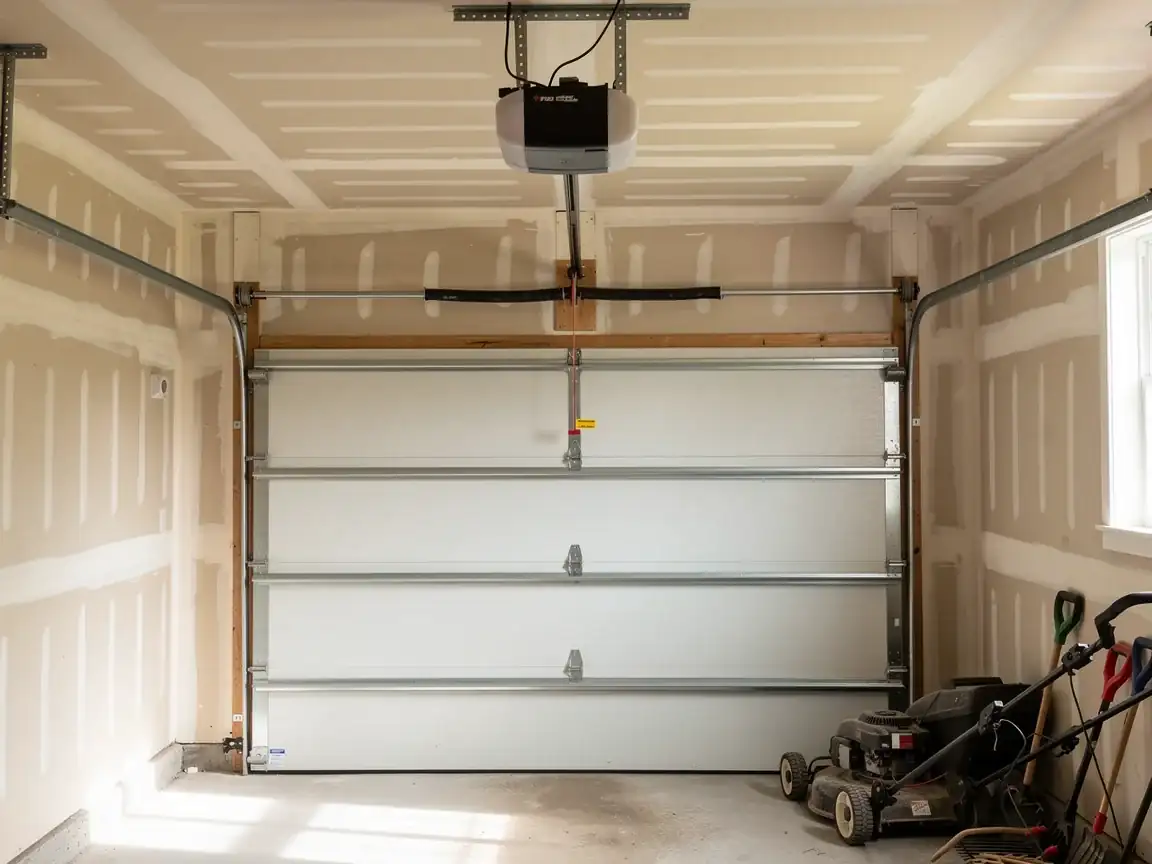
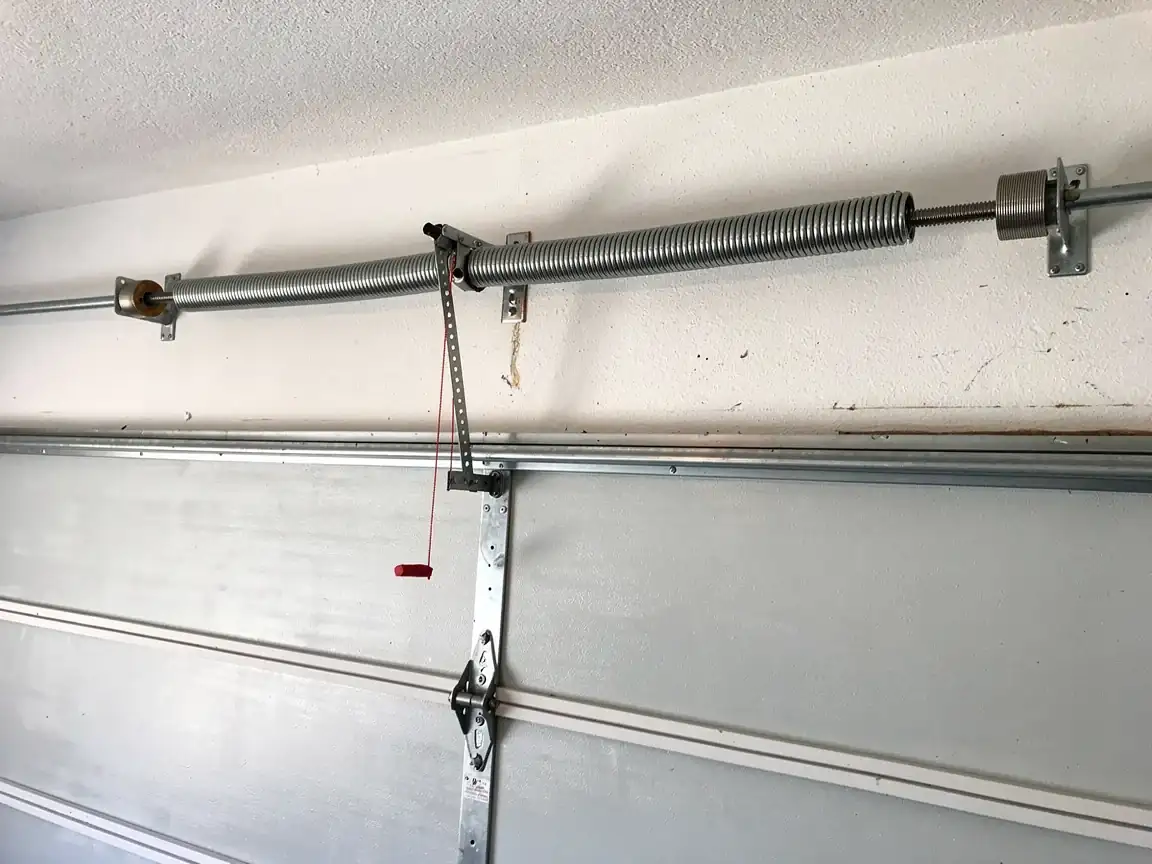
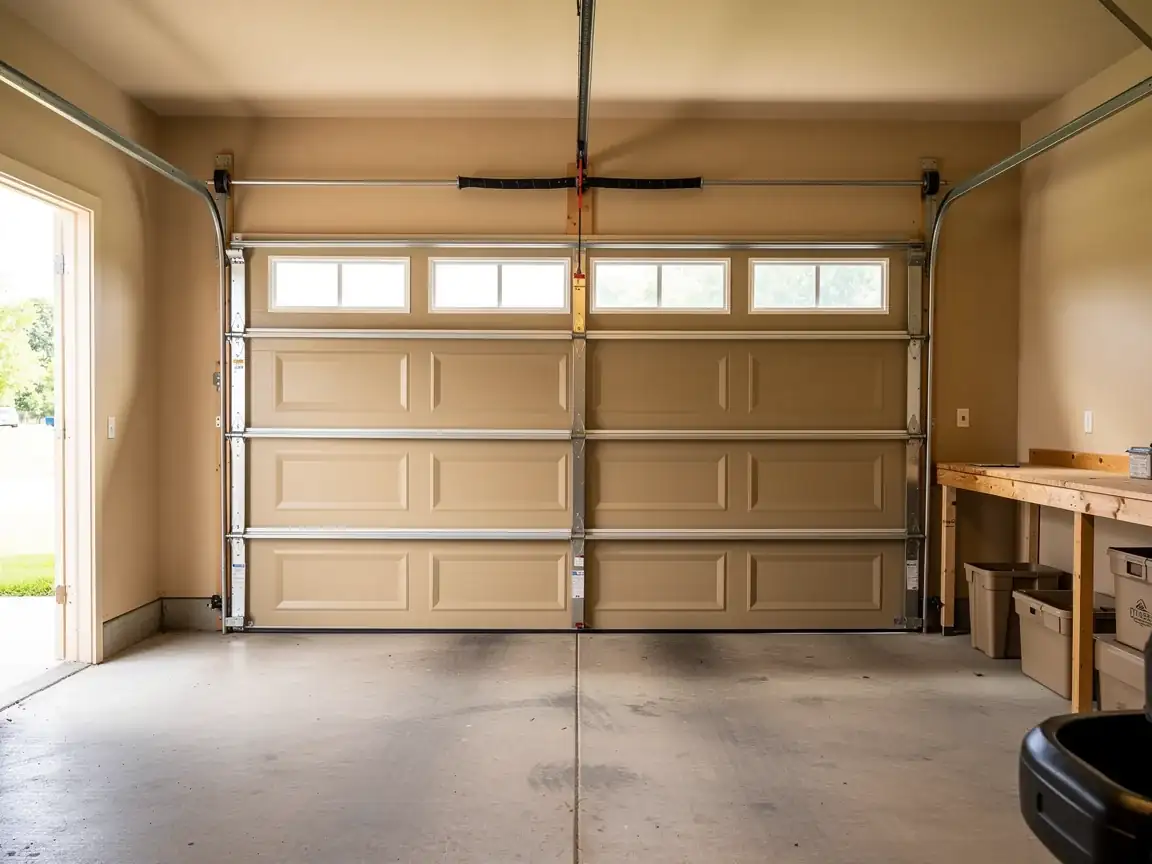
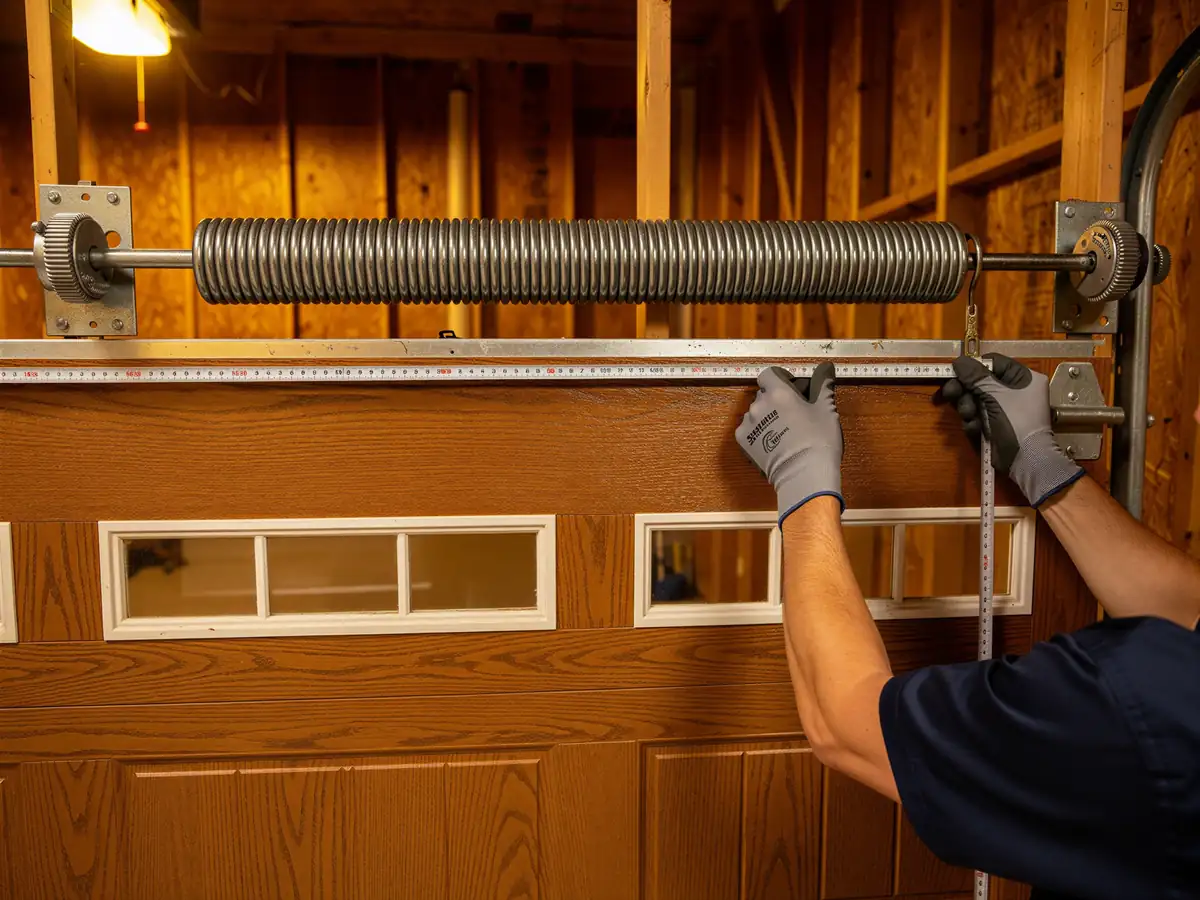
A bit earlier than the 1968 median you'll find across the wider Moline service area. That puts a lot of these doors in the first wave of steel sectional construction - 16-gauge panels, single-layer (no insulation sandwich), hung on a two-car 16-foot opening or a single 9-footer if the house is older still. The springs on these are usually a single torsion unit mounted on a center bracket, not the dual-spring setups you see on newer builds. If your door still has the factory hardware, it's pushing sixty years of cycles on springs that were never rated for that kind of run time.
Geneseo sits about 18 miles out from our Moline shop, inside a climate band we'd call cold-moderate
Enough freeze-thaw cycling each winter to work on steel tracks, weatherstrip, and any wood jamb that's started to cup. None of that shows up as a sudden failure. It shows up as a door that's gotten louder, or slower, or crooked by a quarter inch at the bottom corner, over a few winters.
- 18 miles
What Can Go Wrong
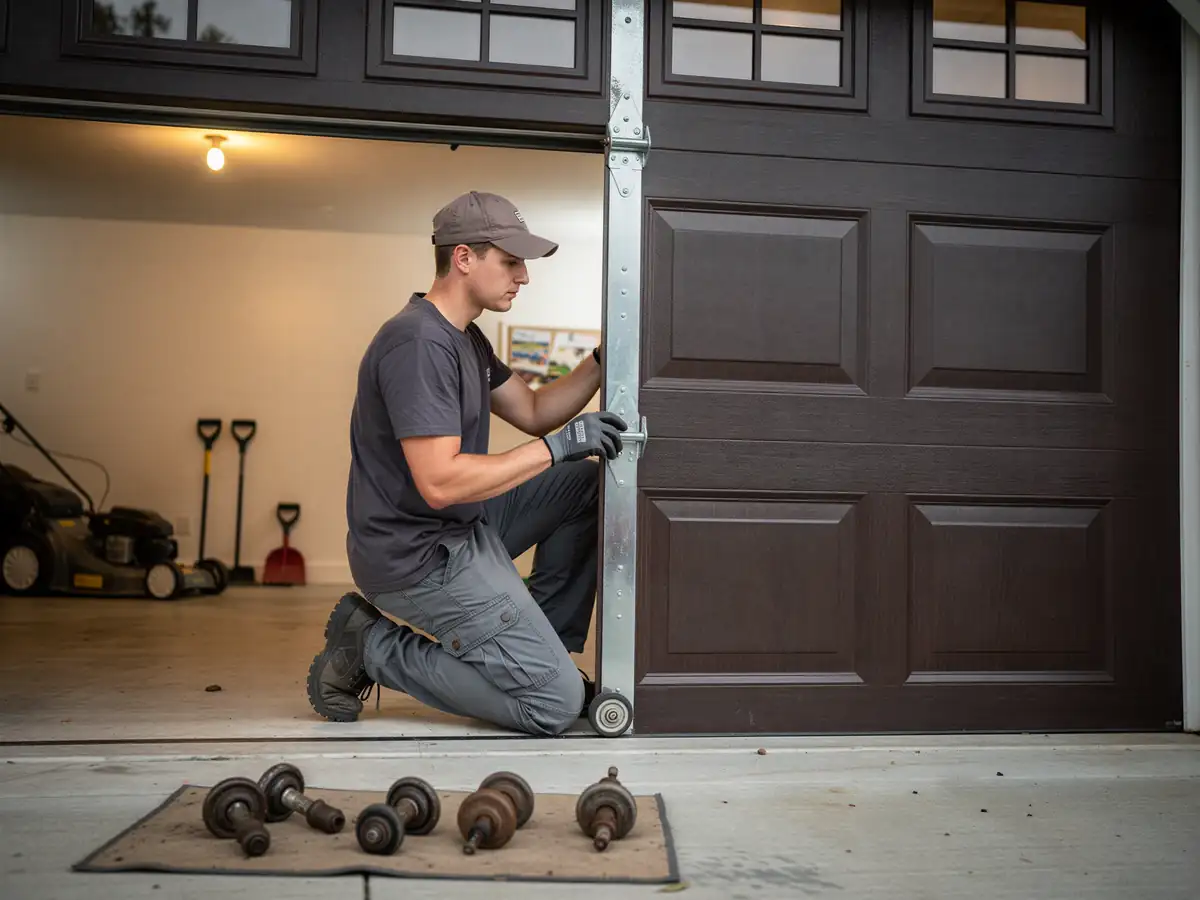
On a door this age, the torsion spring is usually the first thing to go - it's been wound and unwound two to three times a day for decades, and the steel just gets tired. When it breaks, the door won't lift, or it'll lift a few inches and stop, because the opener isn't built to carry that kind of dead weight alone.
The second common issue is the original single-layer panel itself. Over sixty-some years, the bottom panel takes the brunt of moisture and road salt kicked up from the driveway, and it can rust through from the inside before it shows on the painted face. We see this more in Geneseo's older stock than in houses built after the mid-70s, where galvanized coatings and better drainage details were more standard.
Track misalignment is the third. A center-bracket torsion setup puts more lateral load on the track than later dual-spring systems do, so a track that's slightly bent from one hard winter can start grinding the rollers within a season or two. None of these are emergencies the first week. They are emergencies the week the spring finally lets go while the door's halfway up.
Doing It Yourself
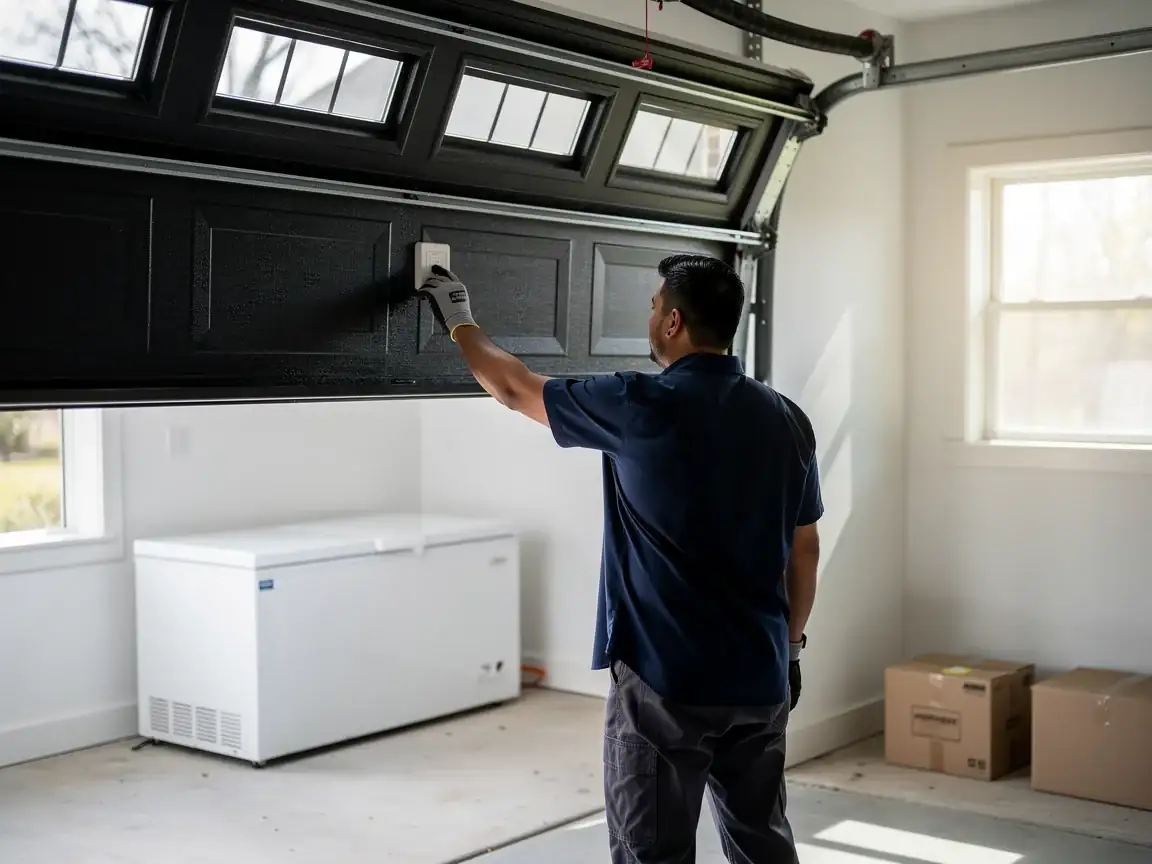
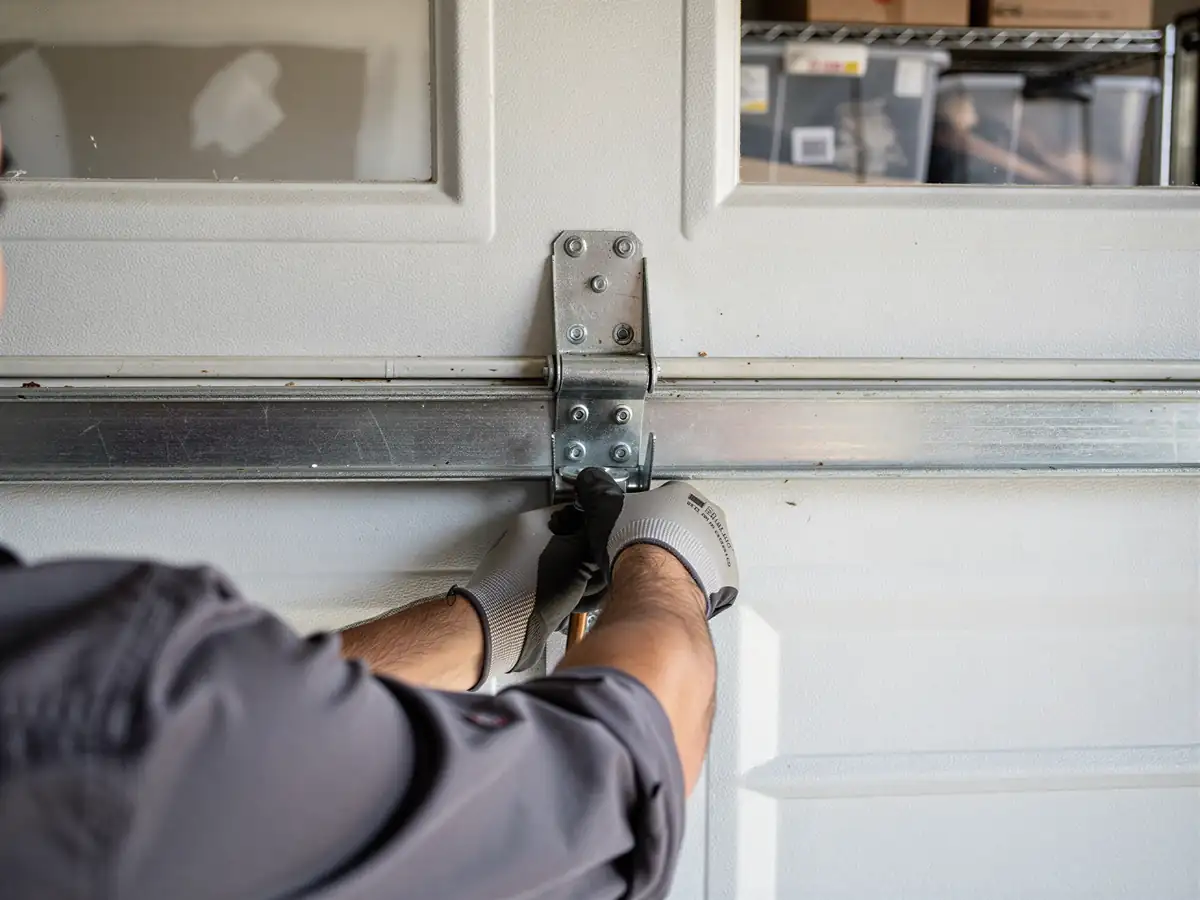
Weatherstrip, lubricating the rollers and hinges, and tightening loose hardware - all of that is fair game for a homeowner, and it'll buy you real time on a door this age. What isn't: the torsion spring itself. A single-spring system on a 1960s door stores enough energy to break a hand or worse, and because it's a center-mount design, there's no safety cable running through it the way later double-spring setups usually have.
We'll also say plainly: if the bottom panel has rusted through in more than one spot, patching it isn't worth your money. At that point you're better off replacing the section, or the whole door, than paying labor to shore up steel that's going to go again in two years. That's a judgment call we'll make honestly when we're out there, not a sales pitch.
What Is on the Truck
Because a lot of Geneseo doors are running original or close-to-original hardware
We carry torsion springs sized for single-spring center-mount systems, not just the dual-spring stock that fits newer builds - that's a part a lot of shops don't bother keeping on the truck anymore. We also carry galvanized track sections and roller hardware sized for the narrower jambs common on houses from this era.
We travel from our Moline shop, about 18 miles to Geneseo
So what's on the truck when we roll out is what we've got for the job - we don't keep a second stock split between towns. If a part turns out to be something odd - an obsolete panel profile, for instance - that's a return trip, not a same-day fix, and we'll tell you that up front rather than guess at it.
- 18 miles