Doing It Yourself
Before you call anyone, there are a few things worth checking yourself
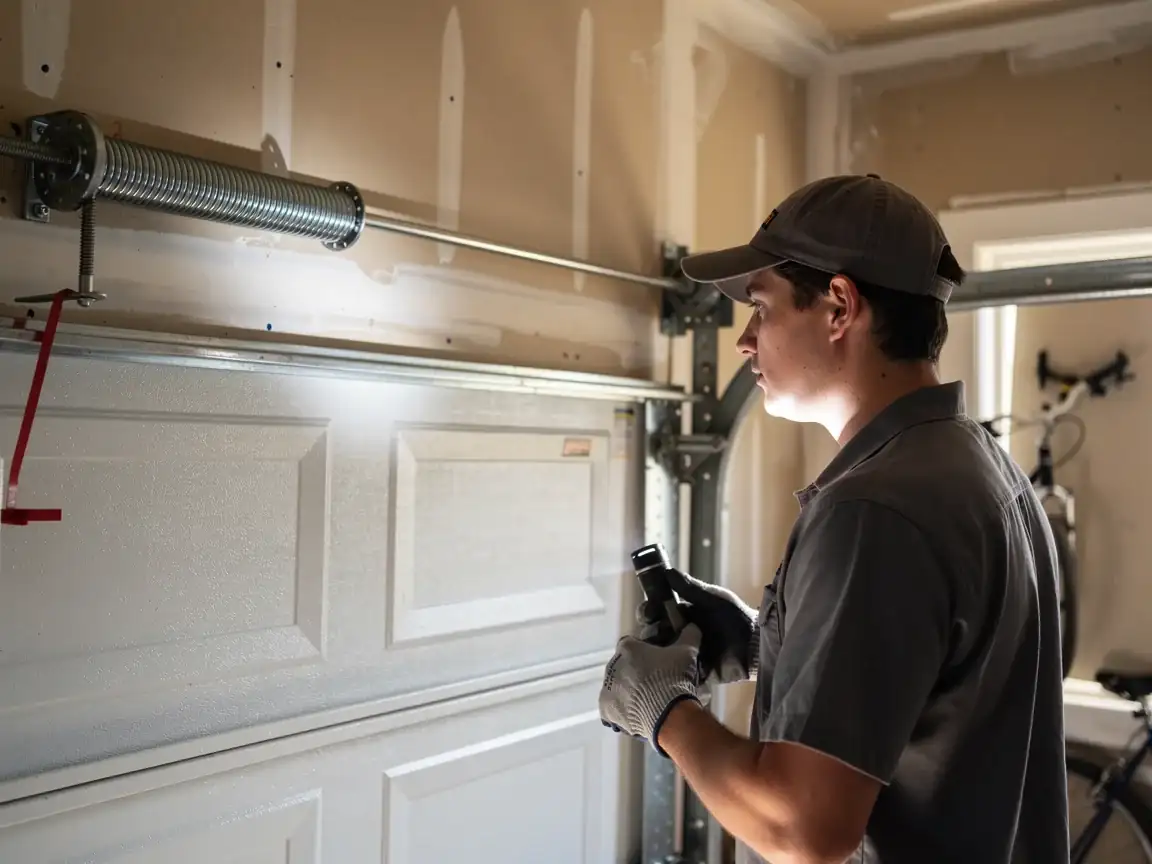
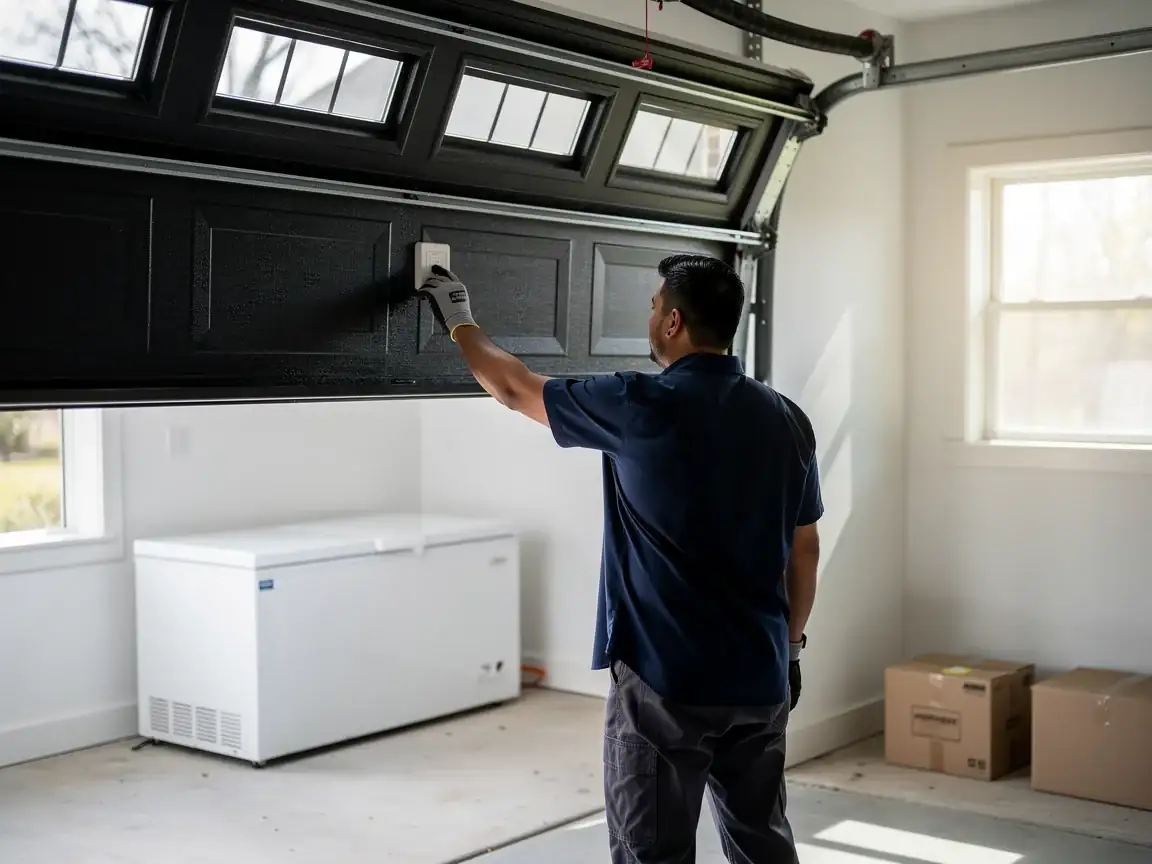
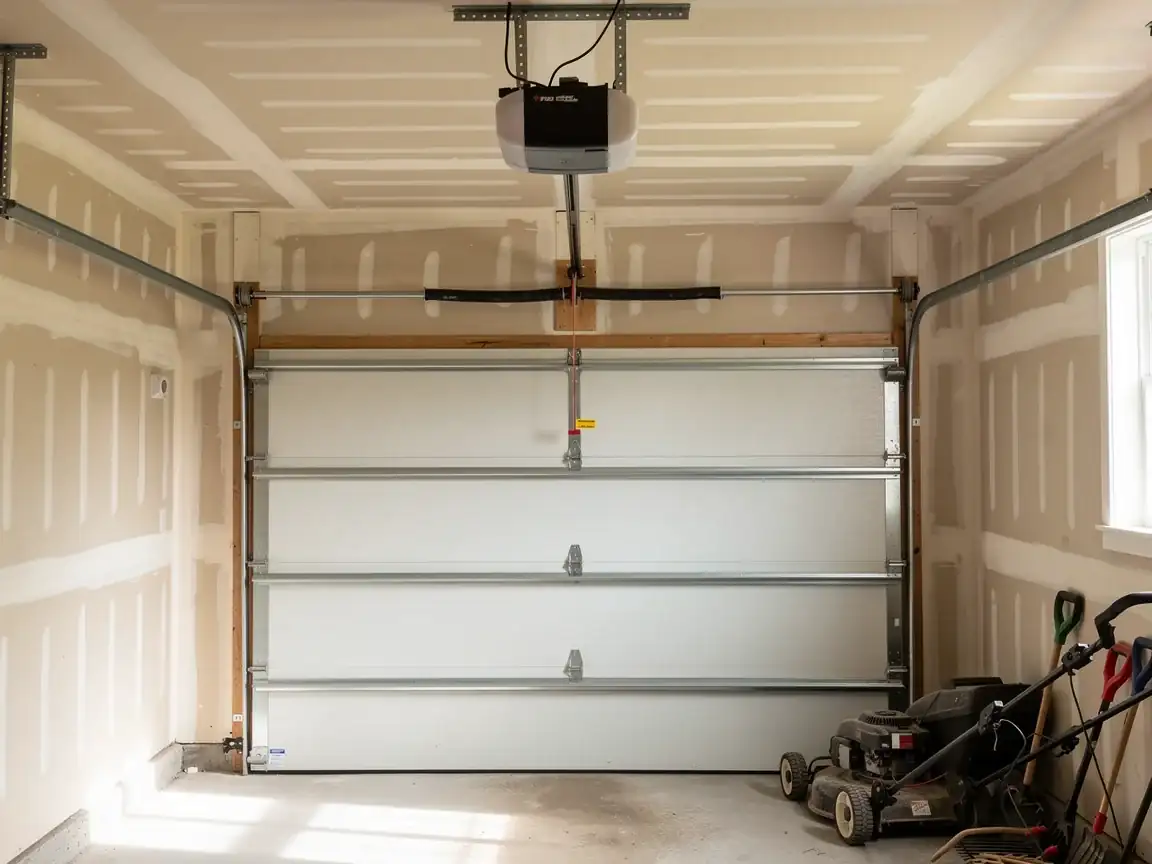
If the opener hums but the door won't move, look at the photo-eye sensors near the floor on each track - a kid's bike or a stack of totes can knock them out of alignment, and that alone will stop a door from closing. Check the wall switch and the remote batteries too; it sounds obvious but it's the actual cause more often than people expect.
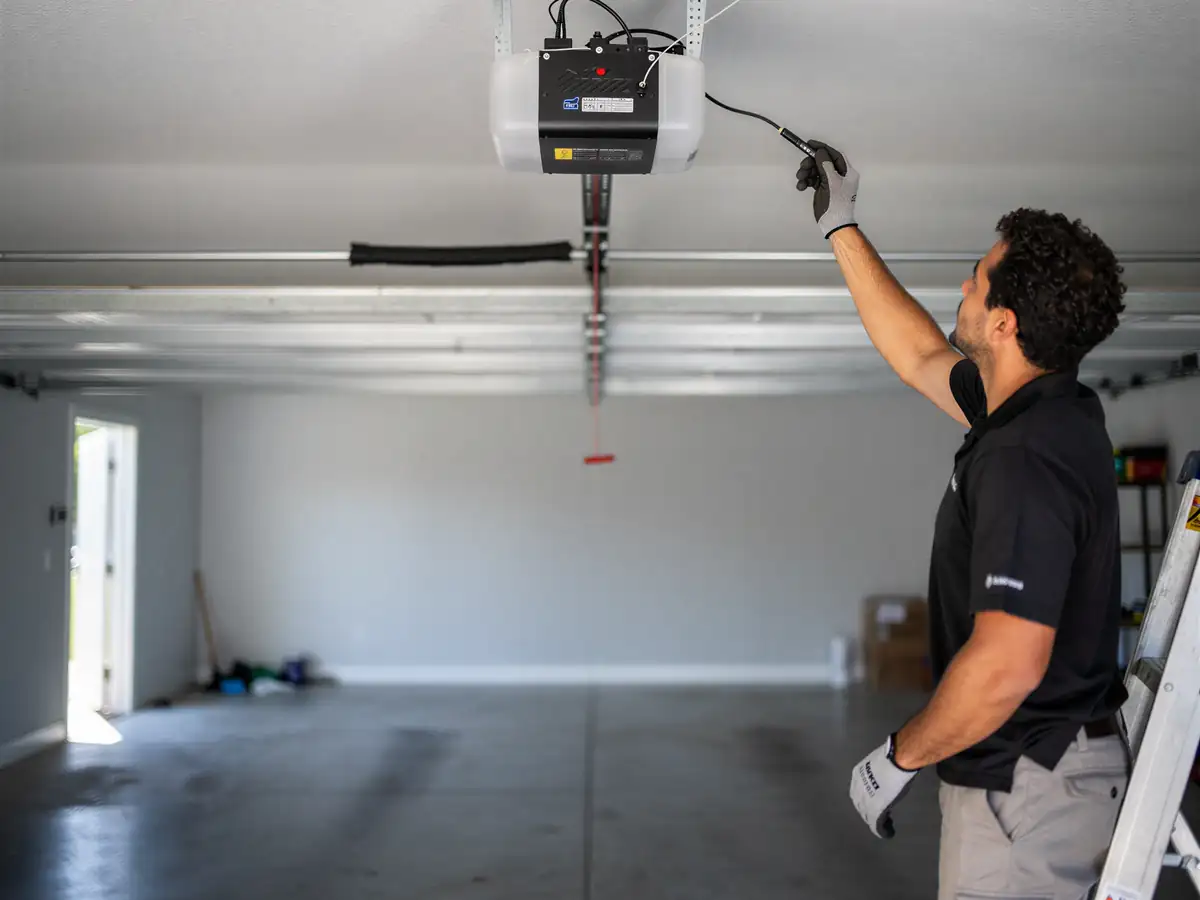
What you shouldn't touch is the logic board or the travel-limit screws on an opener that's original to a house built in this area's typical window
1952 to 1998, with most of the stock going up in the 1960s and 70s. Those boards were never designed to be field-adjusted by trial and error, and a wrong turn on the limits can send a door into the header or onto a car roof. If the opener is chain-drive and grinding, that's a sprocket or gear-kit issue, not a DIY job - the gear is plastic on purpose, so it strips before it strains the motor, and swapping it needs the unit opened up.
One honest limit here
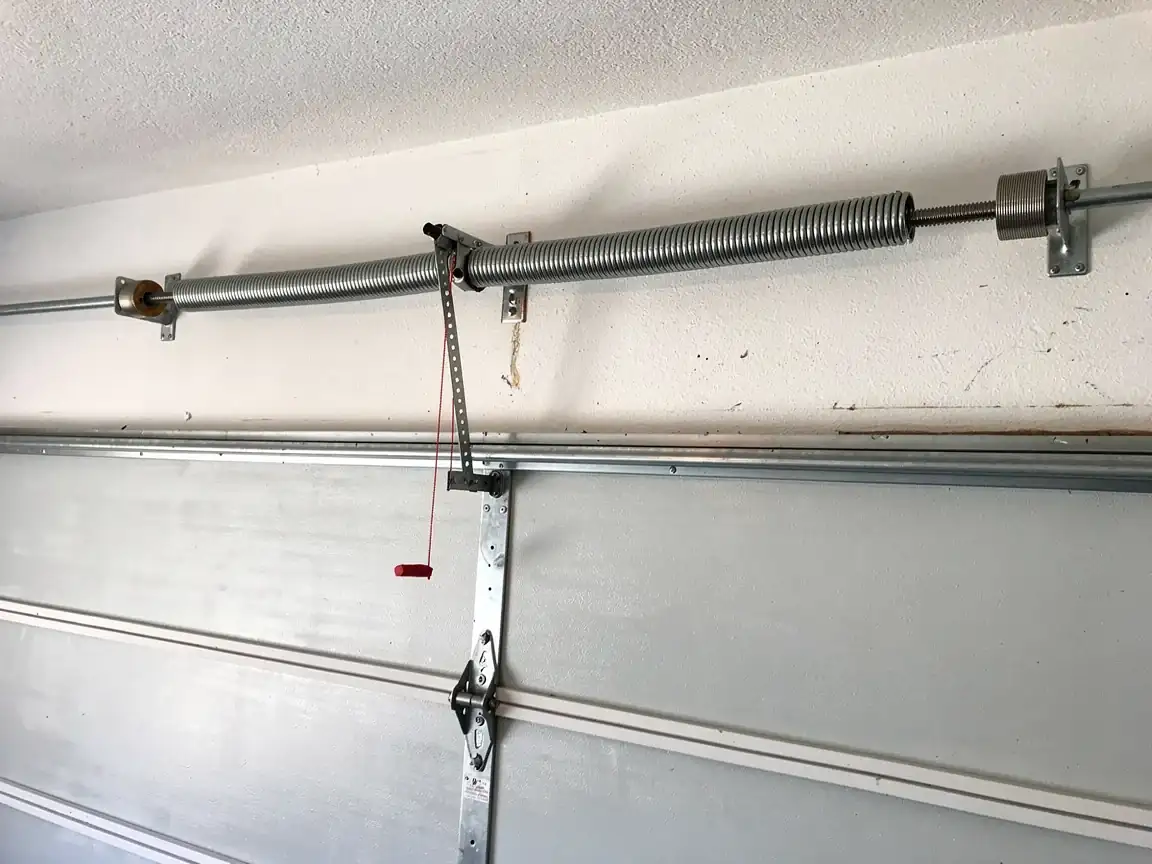
If you're not sure whether what you're hearing is the opener or the door hardware itself, don't guess at parts. A motor replacement on a spring problem fixes nothing.
What You Are Seeing
Homes in this part of the service area were mostly built between 1952 and 1998, with the median landing around 1968. That means a lot of openers here are either the original unit from that era - long since rebuilt or swapped once already - or a second-generation opener installed sometime in the 80s or 90s before current photo-eye and auto-reverse requirements existed. If your sensors look like they were added on later, bolted to the track rather than built into it, that's usually exactly what happened: a retrofit to meet code after the fact.
Common failure points on openers from this build era are worn drive sprockets on chain units, capacitors that have simply aged out on the motor, and logic boards that no longer hold a program reliably. You'll notice it as a door that reverses randomly, a remote that only works from six inches away, or a motor that runs but never engages the chain or belt.
The area sits in a cold-moderate climate band, and openers that sit in an unheated garage through those winters tend to show gear wear and lubrication failure sooner than the same unit would in a milder spot - the plastic gear and the grease both stiffen in the cold, and that's often what finally strips the gear that was already worn.
What It Costs
We don't publish a flat number for opener repair because the job splits into two very different categories. A worn gear kit, a bad capacitor, or a misaligned sensor is a parts-and-labor repair with the existing opener staying in place. A dead logic board on an opener from the original 1960s-70s building wave is a different conversation - those boards are often no longer made, and when a part isn't available, replacing the opener costs less than chasing down a board that may not exist anymore.
Median household income across the service area runs around $70,407, and Milan's own median sits lower at $61,188, which is part of why we try to repair before we recommend replacing. If the motor, gears, and board are sound and the problem is a $20 sensor or a worn sprocket, there's no reason to put in a new unit. We'll tell you straight when a repair isn't worth it compared to just swapping the opener.
What we won't do is quote a number over the phone before we've seen the unit - chain-drive, belt-drive, and screw-drive openers all fail differently, and a guess at that stage helps nobody.
How Long It Takes
The diagnostic itself is quick
Most opener problems show themselves within the first few minutes of watching the unit cycle. What takes longer is sourcing parts for an older opener. A sprocket or capacitor for a common brand is usually on the truck or close to it. A logic board for a unit that matches the 1952-1998 housing stock common across this service area is a different story; some of those are discontinued, and when that happens the job becomes a same-visit replacement instead of a repair, since waiting on a part that might not ship doesn't help you get your car out.
Milan sits about 5 miles from Moline
Which is where the crew and the parts stock come from - there's no branch location in Milan itself, so the job starts with that drive. Once the truck's there, a straightforward sensor or gear repair is usually wrapped up in one visit. A full opener swap takes a bit longer since it includes removing the old mounting hardware and in a lot of these older houses, the rail bracket doesn't match current opener kits without some adapting.
- 5 miles