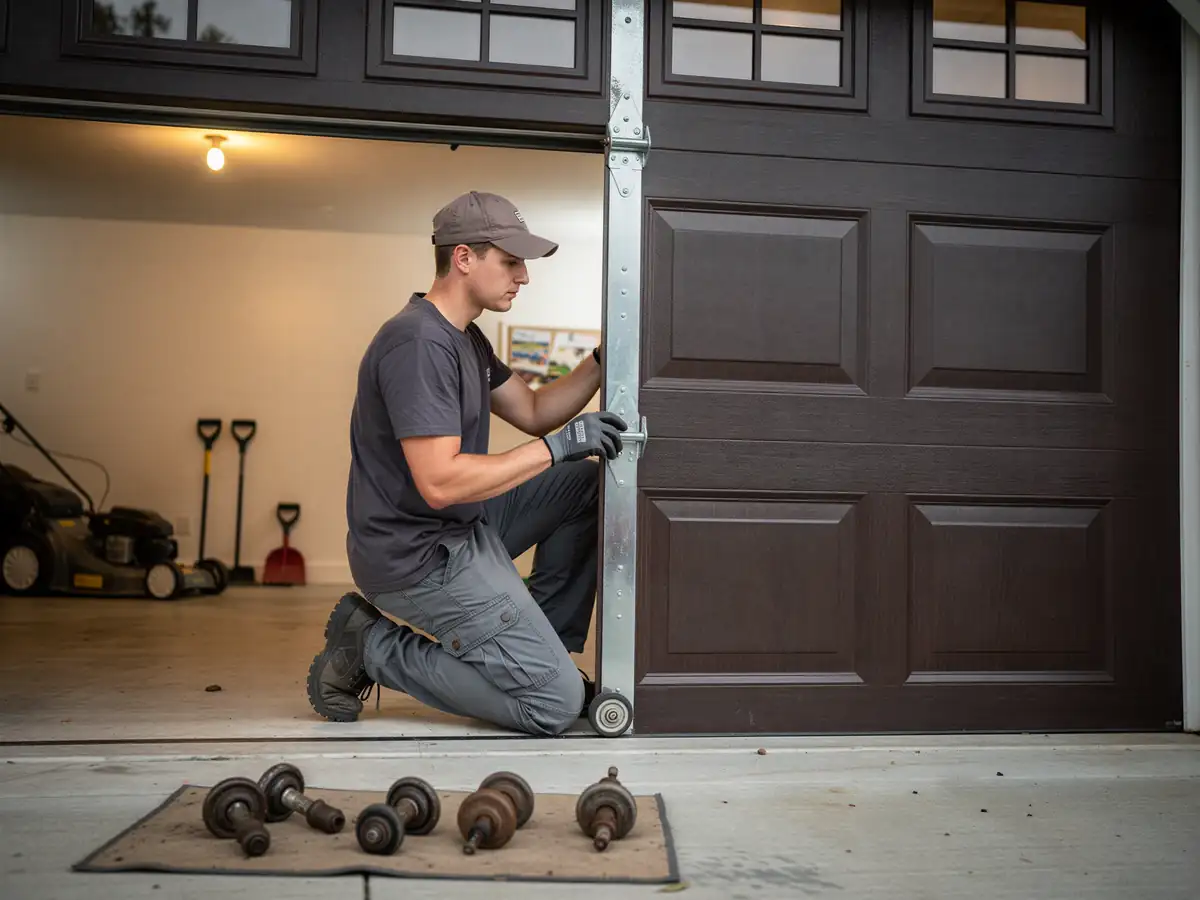
Doing It Yourself
Milan's housing stock centers on 1968, squarely in the service area's 1952-1998 build window
Which means the rollers riding your track right now are often the originals that shipped with the door in the late 1960s. Nobody swapped them out at some point between then and now, because nothing forced the issue - until the grinding started.
If you want to take a look yourself before calling anyone, here's what to check
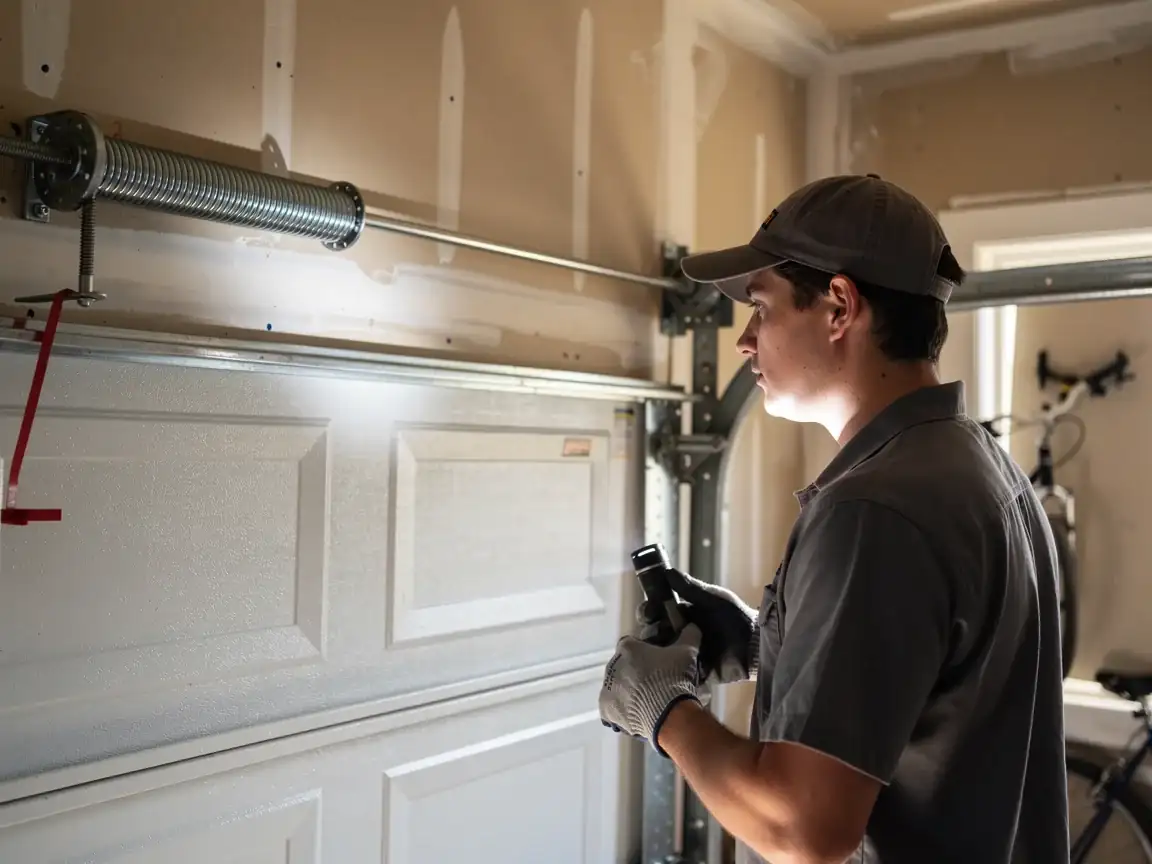
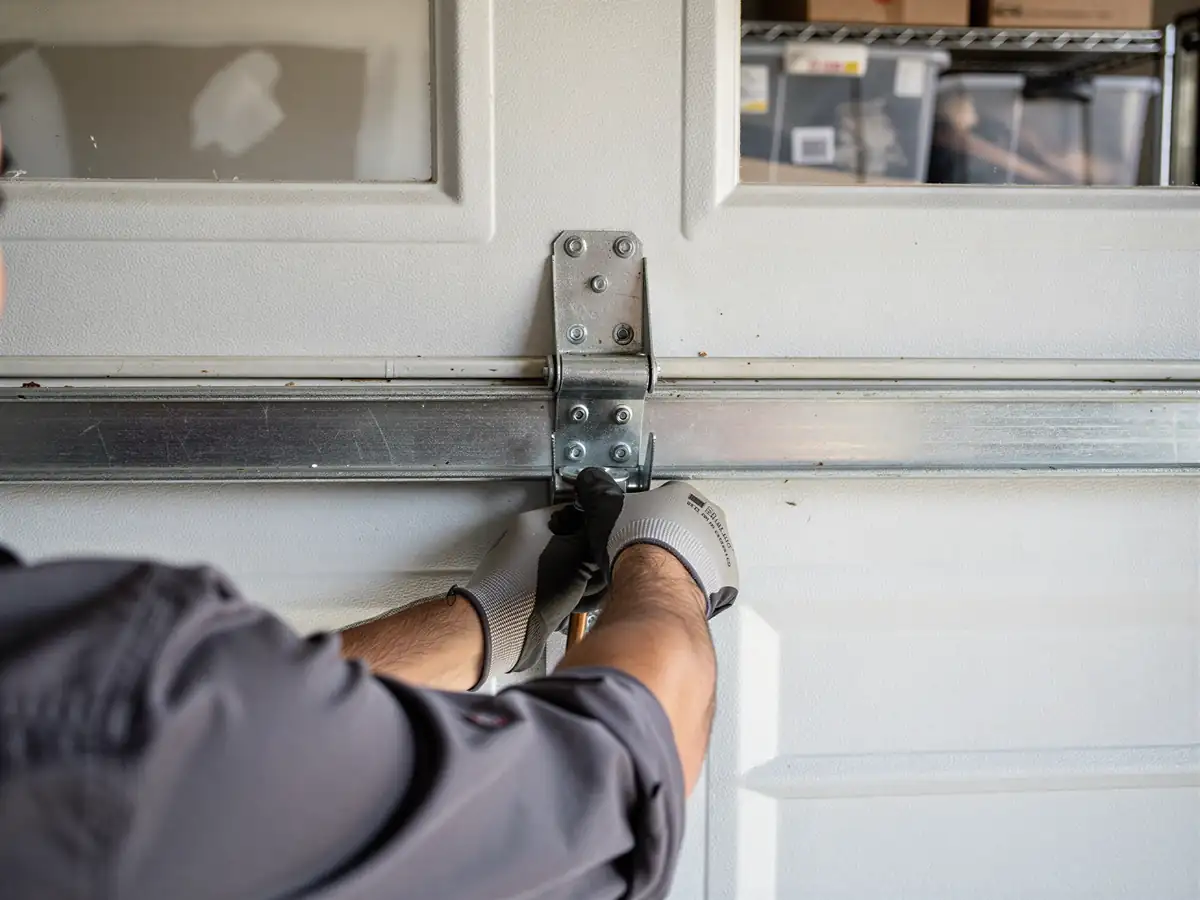
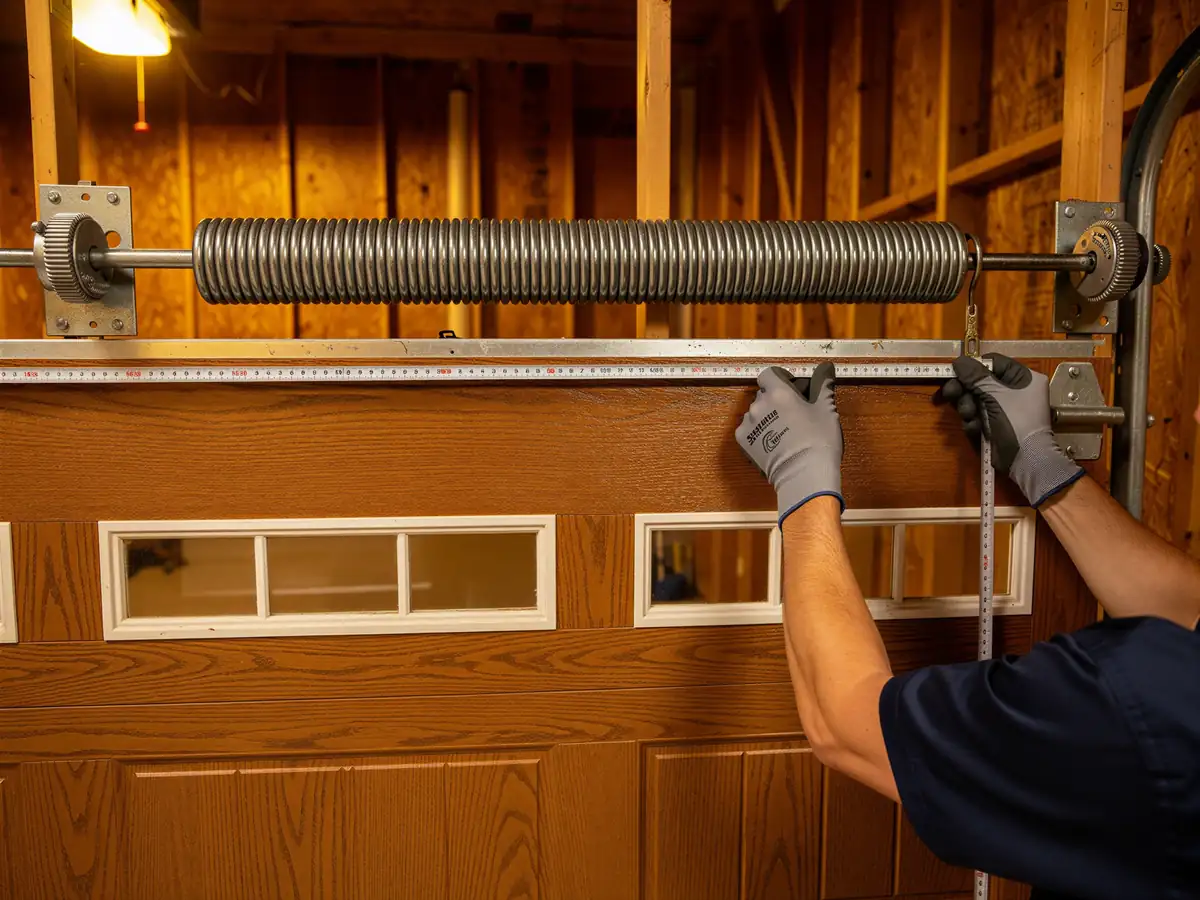
Pull the door down by hand (opener disconnected, obviously) and run a flashlight along both tracks. Steel rollers from that era ride on a plain steel stem with no bearing at all - they wear a visible flat spot over fifty-plus years, and the track itself develops a groove that matches it. If the roller wobbles side to side more than the track width allows, that's your noise.
What you can safely do yourself
Clean the track with a rag, check for loose track bolts, and lubricate hinges with a garage-door-specific lubricant, not WD-40, which washes grease out rather than replacing it. What you shouldn't do yourself: pull a roller out of the bottom bracket while the door is under spring tension, or work on anything near the bottom section if the door won't stay up on its own. That's a cable or spring problem riding along with the roller problem, and it's not a solo job.
What You Are Seeing
The complaint we hear from this side of the service area is almost always the same shape: a grinding or clunking sound that gets worse as the door travels, sometimes paired with the door hanging slightly crooked at the bottom of its run. That's a roller that's worn past round, or a track that's bent just enough to catch it.
With a build year centered on 1968, and most of the twelve communities we cover falling into that same 1960s-70s cohort, this is less an occasional fault and more a predictable one. Steel rollers on steel track, no nylon, no sealed bearing - that combination runs fine for decades and then wears out all at once, usually in the coldest part of the year when the steel contracts and the clearance tightens.
Sometimes what looks like a roller problem is actually a track problem: the roller's fine but the track has pulled away from the frame, or a mounting bracket has worked loose over fifty years of door cycles. We check both before replacing anything, because swapping rollers into a track that's out of alignment just buys you another service call in six months.
What It Costs
We don't quote a number here without seeing the door - roller count, roller type, and track condition all move the price, and we'd rather tell you that straight than guess low and surprise you later.
What we can tell you: with a median household income of $61,188 here, compared with $70,407 across the wider service area, a lot of homeowners choose steel rollers over the pricier sealed nylon kind when replacing the full set. Steel costs less up front and holds up fine in this cold-moderate climate band, though it's louder over time than nylon. Nylon runs quieter and lasts longer but costs more per roller - on a double door with ten to twelve rollers, that difference adds up.
One honest limitation: if the track itself is bent or the bottom bracket has pulled loose, roller replacement alone won't fix the noise or the crooked travel. We'll tell you when that's the case rather than sell you rollers that won't solve the complaint you called about.
How Long It Takes
A straightforward roller swap
Door comes off track, rollers out, rollers in, door rehung and balanced - is usually the shortest job on the truck. Complications come from the age of the hardware, not the task itself.
On a door with original 1968-era rollers, the stems are often rusted into the bottom brackets
And the track has usually picked up surface rust from fifty-some winters in a cold-moderate climate. Freeing a seized stem without bending the bracket takes longer than pulling a roller that was replaced ten years ago with modern hardware. If a bracket's rusted through, that's an extra part and an extra few minutes, not a different day.
We don't commit to a window here beyond that
Track condition on a given door only shows itself once we're looking at it in person, five miles out from the Moline shop.