Doing It Yourself
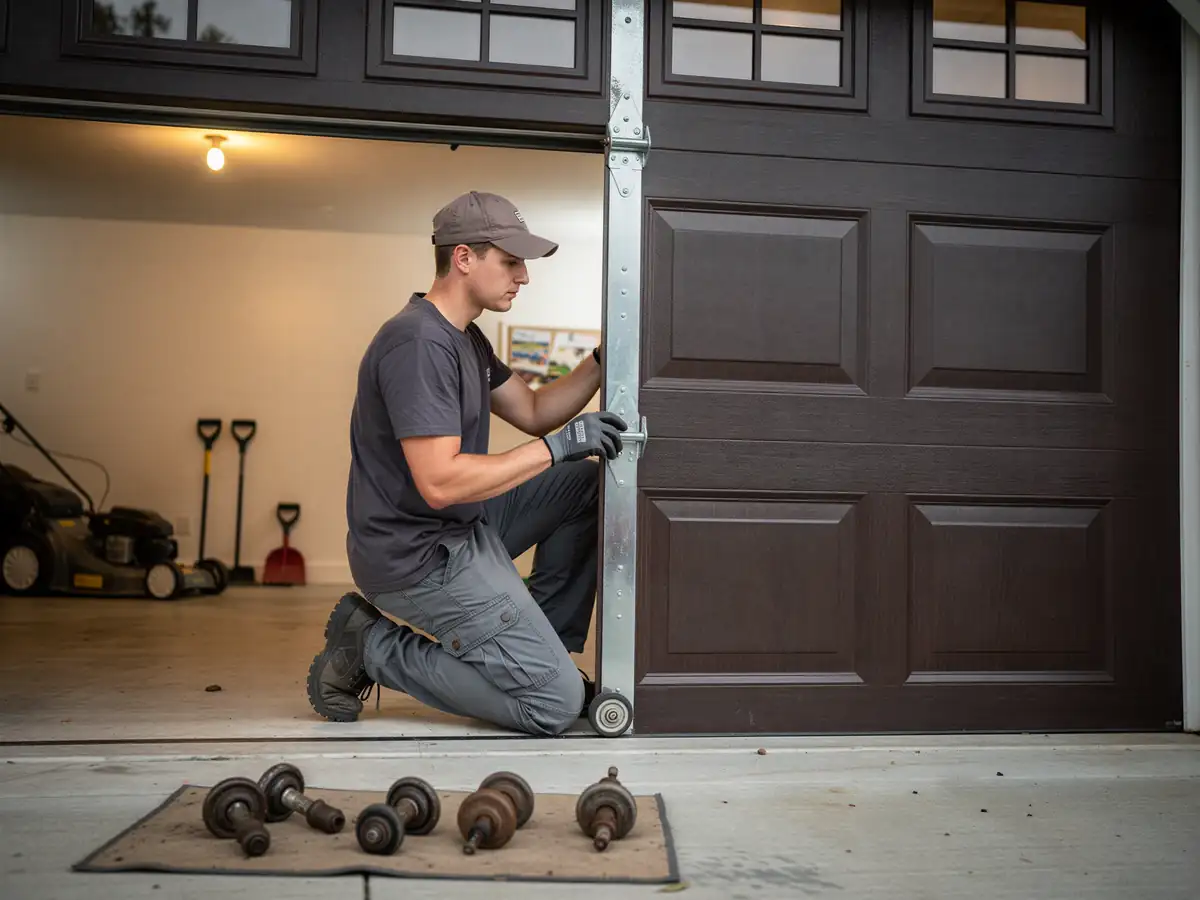
You can swap a single roller yourself if the door is down, the spring isn't the problem
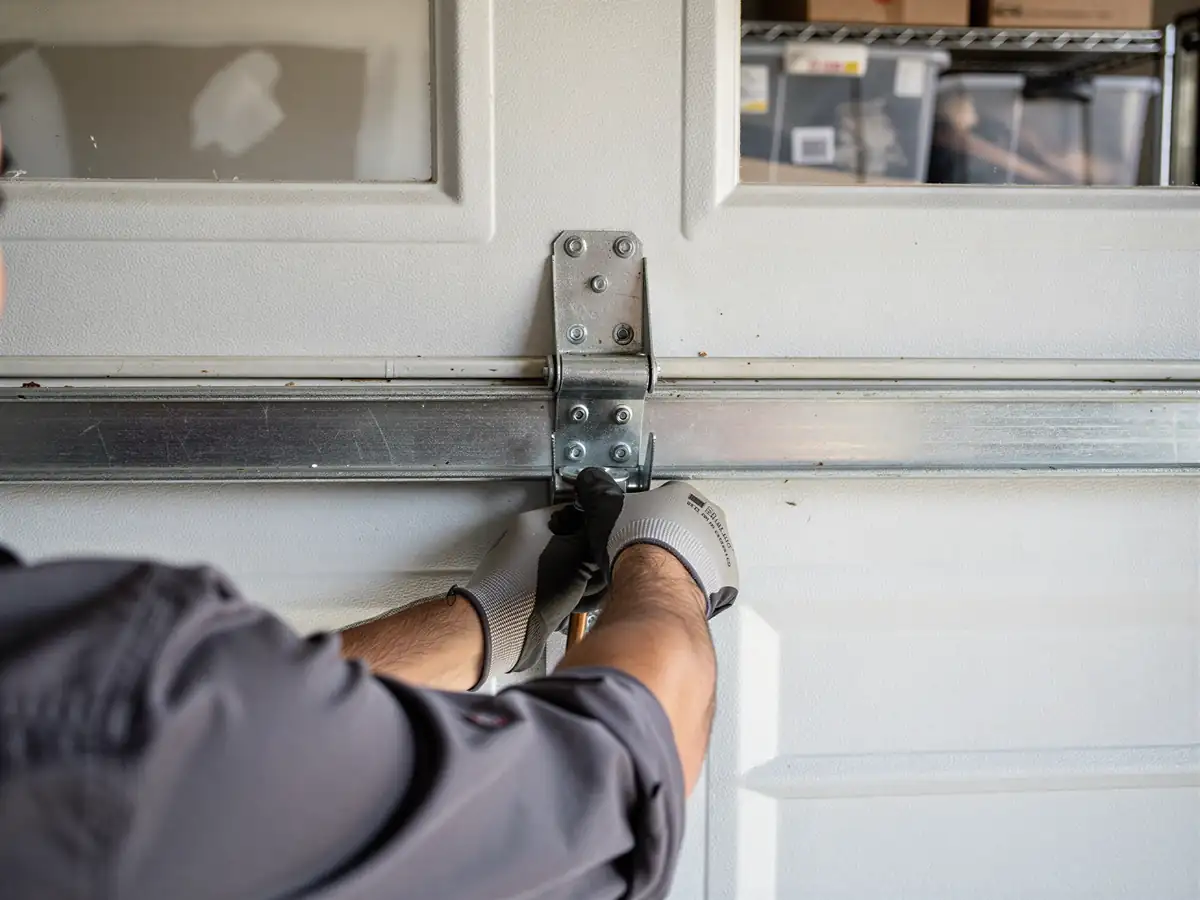
And you've got the right size in hand. The catch in Rock Island is the hardware itself. A lot of these houses went up around 1952, well before the newer stock you'll find further out in the service area, and that means steel rollers running in steel track rather than the nylon-on-steel setups that showed up later. Pulling a steel roller out of track that's 70 years old is a different job than pulling one from a 1985 door - the track edges are often bent inward from decades of steel-on-steel wear, and forcing a new roller in without checking that first just sets up the next failure.
- 70 years
If you've got one bottom roller rattling and the rest of the track looks straight, go ahead and do it
It's a 20-minute job with a pair of pliers and the door off its spring tension. If more than two rollers are worn, or the track shows rust pitting at the bends, that's where a DIY swap turns into a bigger bill than calling it in the first time. We'd rather tell you that now than have you call us after a second trip to the hardware store.
Getting It Booked In
We cover Rock Island out of Moline, about five miles up the road, so there's no local branch to call - it's the same crew and the same truck either way. When you book a roller job, tell us the door's rough age if you know it. For Rock Island that usually means mid-century stock, and knowing that before we load the truck means we bring steel-compatible fasteners and the wider nylon rollers that fit older track gauge, instead of showing up with parts sized for newer doors.
We also ask what's actually happening - grinding on the way up, a roller visibly hanging loose, a door that jumps track on one side. That tells us whether it's a roller problem or something else wearing the roller out, like a bent track or a loose hinge. Booking it right the first time saves a second visit, which matters more here than it sounds, given the truck's coming in from Moline either way.
What Is on the Truck
For a Rock Island call we bring nylon rollers in a couple of stem lengths, since the older steel track common here takes a different roller profile than newer doors. We carry 10-ball and 7-ball nylon rollers, the sealed-bearing kind that don't need the periodic oiling steel rollers demand, plus the longer lag-style stems that fit lifted track brackets you still find on doors from this era.
We also keep a run of standard track sections on hand, because a roller job on a house this old sometimes turns up a bent or rusted-through section once the old roller comes out. We don't carry every obscure roller size or odd replacement track gauge - if a door's been modified with non-standard hardware somewhere along the way, that part might need to be ordered in, and we'll tell you that up front rather than guess.
What Can Go Wrong
The most common failure on these Rock Island doors is a cracked or flat-spotted steel roller that's been grinding against bent track for years without anyone noticing
Because a slow rattle doesn't feel urgent until the door jumps the track entirely. By the time that happens, you're not just replacing a roller - you're straightening or swapping a section of track too, and sometimes a hinge that's been carrying extra load because of it.
The other thing we see on doors from this build era is rollers that were replaced once already
Sometime in the last few decades, with the wrong stem length for the original track gauge. That shows up as a door that runs rough even right after a roller swap - not because the new roller is bad, but because it doesn't quite match the track it's riding in. Worth a second look if a "fresh" roller job still sounds off.
Why It Happens Here
Rock Island's housing stock runs older than the typical spread across the wider service area - the median build year here lands around 1952, a good decade and a half ahead of the 1960s-70s midpoint you'd find on the other side of the territory. That matters for rollers specifically because steel track gauge and bracket spacing shifted over the following decades, and doors from the early 1950s often carry hardware nobody's manufacturing fresh anymore.
The region sits in a cold climate band with real freeze-thaw cycling, which doesn't spare any door regardless of age, but it compounds faster on steel rollers than nylon ones - steel doesn't flex with the cold the way nylon does, so cracking shows up sooner on these older setups. Combine decades of wear with winters that work metal fatigue harder, and roller failure on 1950s-era Rock Island doors tends to show up earlier than on newer construction elsewhere in the territory.
What It Costs
We don't have a flat number to quote here without seeing the door - track condition on houses this old varies more than it does on newer construction, and that's the biggest cost swing. A clean roller swap with straight track is a small job. One where the track needs straightening or a section replaced because of decades of steel-on-steel wear costs more, and we won't know which one you've got until someone's looking at it.
What we can tell you: nylon rollers cost more up front than steel but last longer and run quieter, which on a door this old is usually the better trade since you're not fighting the same wear cycle again in a few years. We'll give you a number once we've looked at the specific door - we're not going to quote blind on hardware this variable.